

On a variable May morning at the toe of the Athabasca Glacier, a new kind of machine hummed quietly onto the ancient ice.
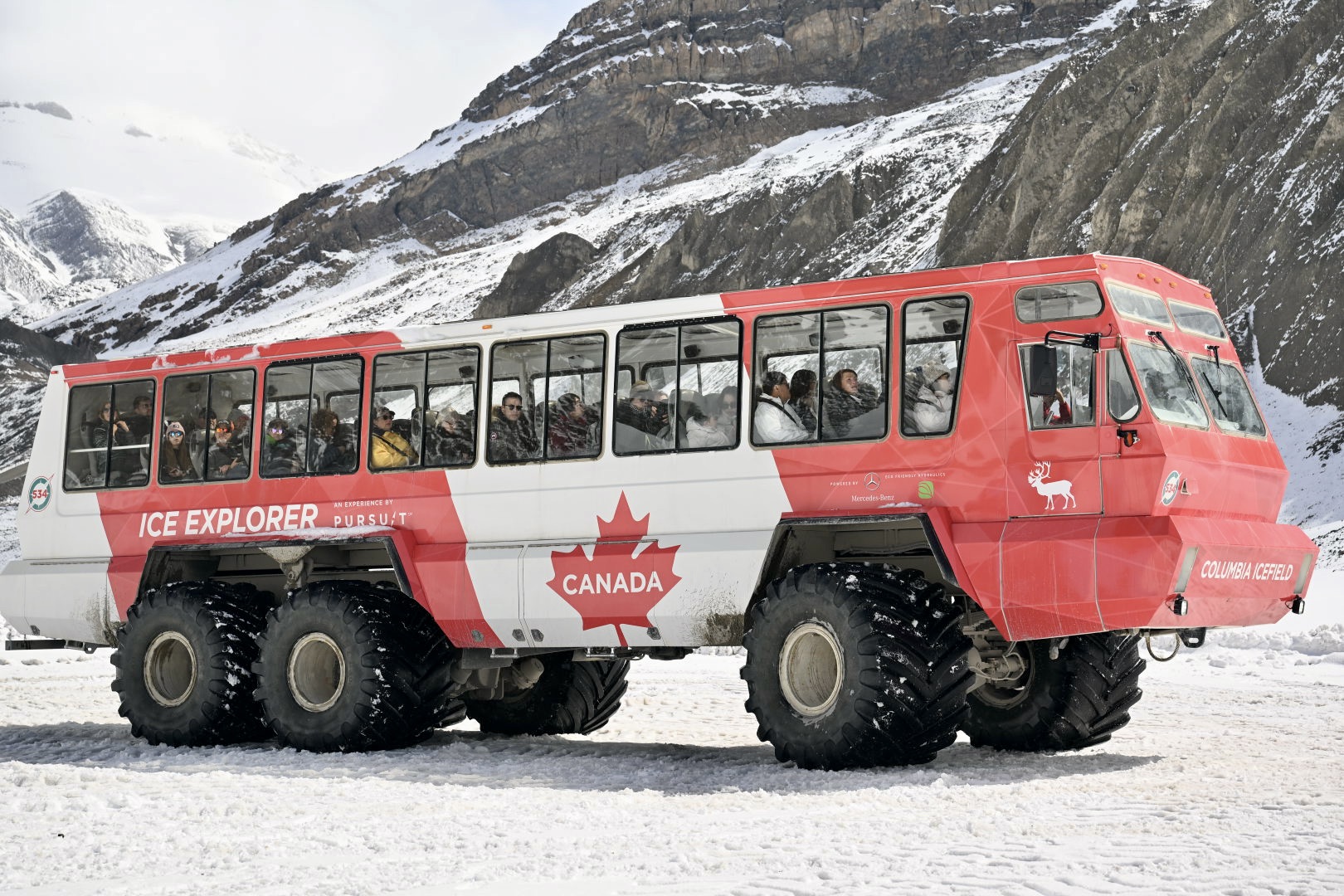
After decades of diesel engines roaring across one of the most visited glaciers in North America, Pursuit unveiled what it says is the world’s first electric Ice Explorer — a Canadian-built vehicle designed to ferry visitors onto the glacier with significantly lower emissions and far less noise.
But beyond the novelty of the eight-wheeled machine itself, the launch of the Electric Ice Explorer signalled something larger: a shifting relationship between tourism, climate responsibility and the people who have long been skeptical of corporate promises in the Rockies.
That tension was acknowledged openly during the May 20 launch at the Columbia Icefield.
“We are very lucky to be able to welcome guests to one of the most accessible glaciers in the world,” said Alex Grant, vice-president of operations for Pursuit’s Banff Jasper Collection. “Reducing the carbon impact of that is really, really important to us.”
The pilot project, developed with Manitoba-based EV builder Noble Northern and supported in part through sustainability consultancy GreenStep Solutions, operates without plugging into the grid. Instead, it charges through regenerative braking and bifacial solar panels mounted directly onto the vehicle.
For guests riding down the steep moraine road toward the glacier, the difference is immediate. Gone is much of the mechanical rumble that has long defined the Ice Explorer experience. In its place: the crunch of gravel beneath tires, wind across the icefield and the interpretive commentary of driver-guides echoing more clearly through the cabin.
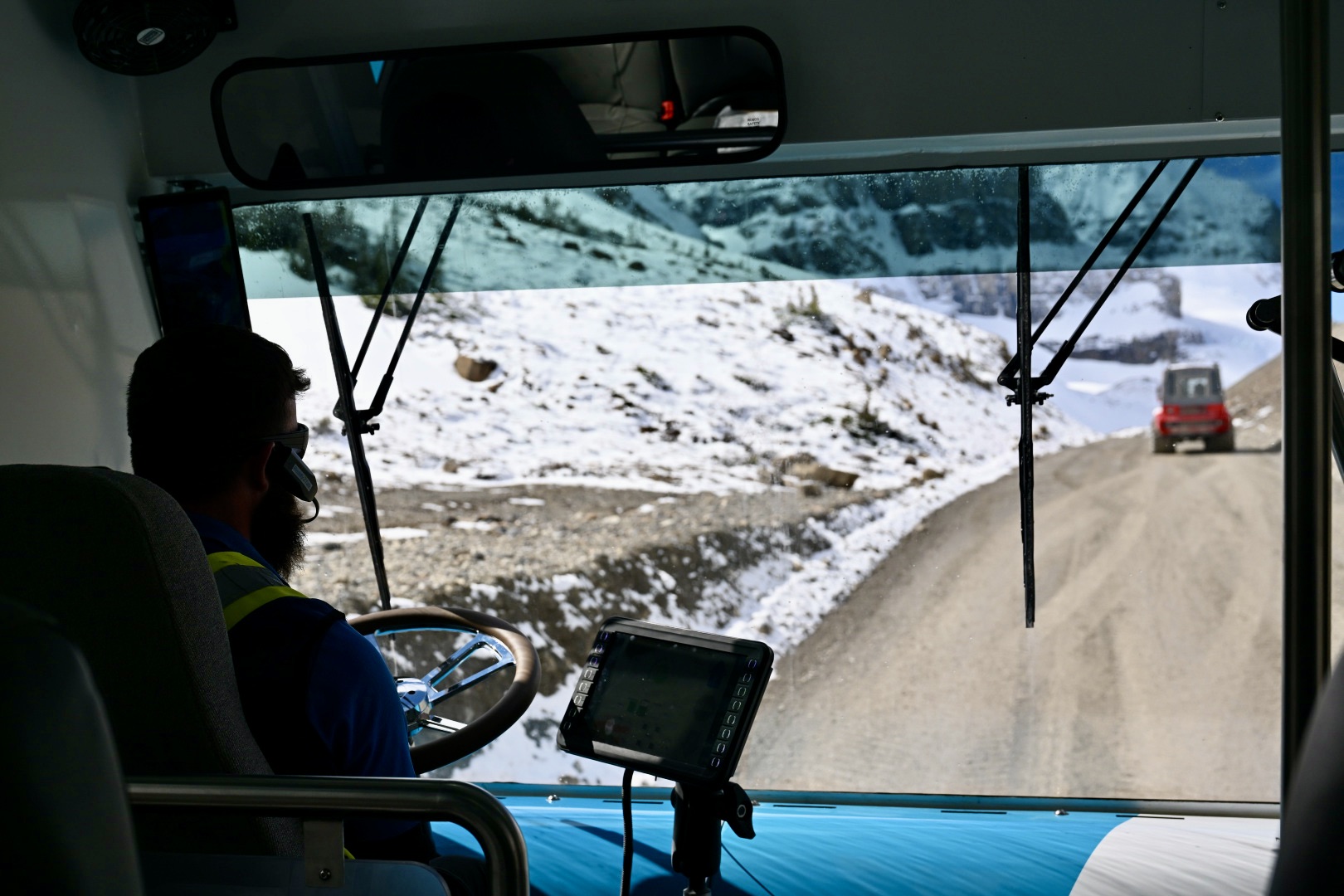
“This bus has some of the most advanced technology available,” guide Rocco Russo told passengers while descending one of the steepest commercially operated unpaved roads in North America. “Our regenerative braking is recharging our batteries as we head down.”
The vehicle itself is the result of years of experimentation and engineering adaptation.
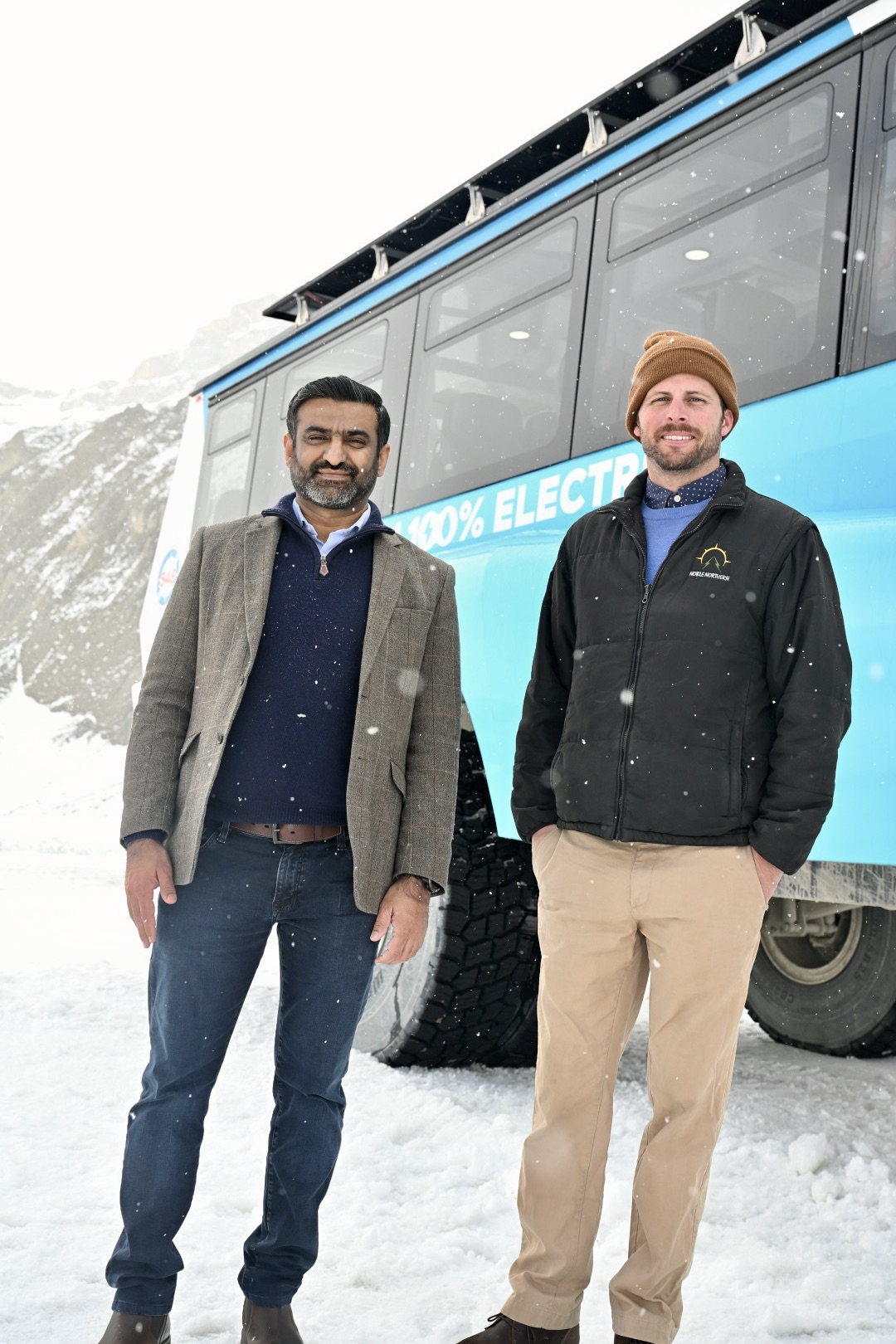
“We rebuilt this vehicle from the chassis up,” said Noble Northern president Tye Noble. “Five years ago, you wouldn’t have considered six kilowatts of solar to be possible on a vehicle like this.”
Noble said one of the biggest challenges was traction and power management on glacial terrain while also dramatically reducing weight. The redesigned frame is more than 50 per cent lighter than the original diesel version, while each electric motor independently produces enough torque to push the vehicle up the steep glacier access road.
“We are dealing with an environment that is very unique,” Noble said.
Pursuit estimates the vehicle could reduce between 200 and 300 kilograms of CO₂ emissions per day compared to a conventional diesel Ice Explorer operating the same route.
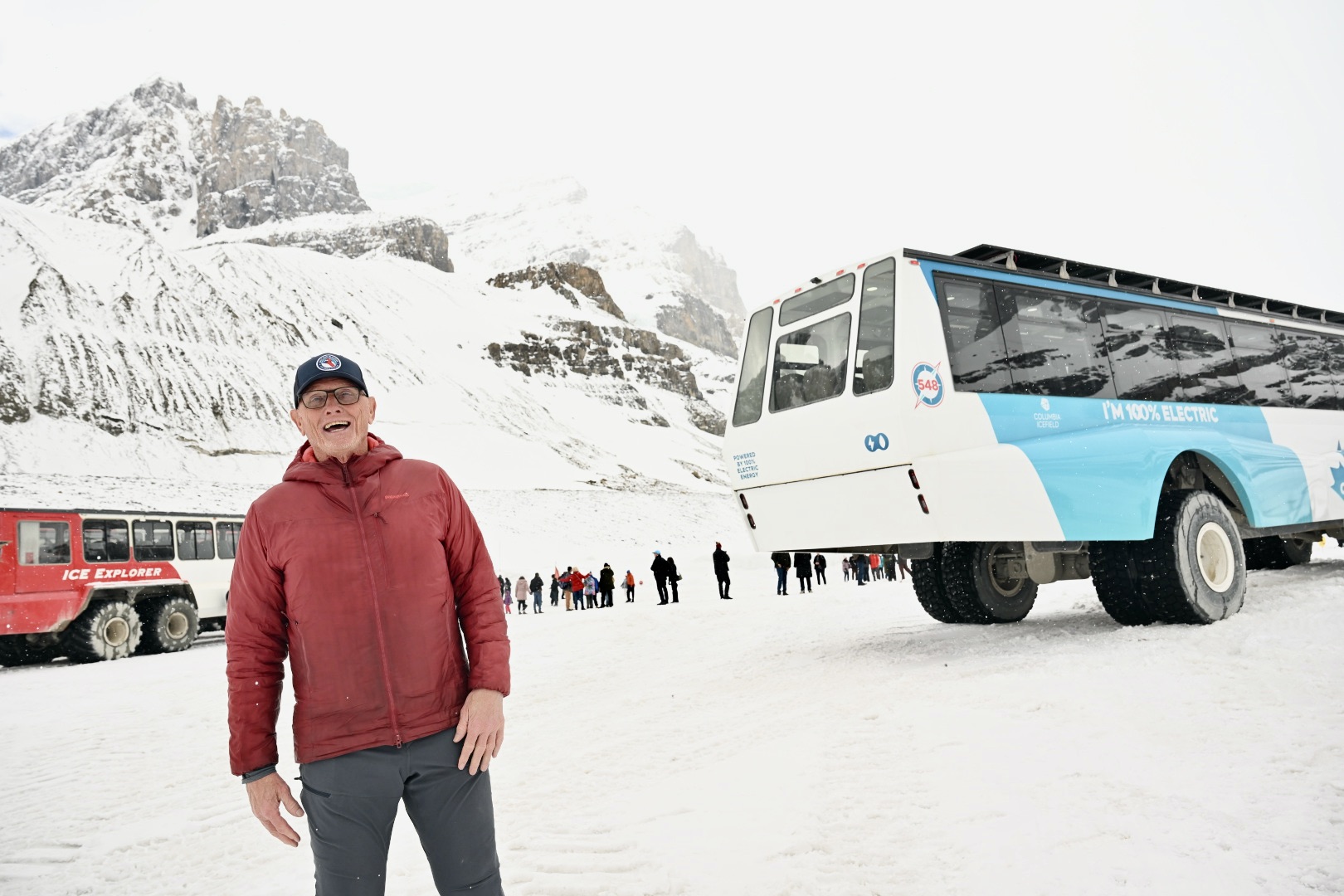
On the day of the launch, the most striking endorsement of the project came not from the company itself, but from longtime mountaineer and climate advocate, Jim Elzinga.
Elzinga, founder of Guardians of the Ice and a respected voice among Rockies climbers and conservationists, admitted he once viewed glacier tourism operators with suspicion.
“I used to be very negative about people that came here,” he said while standing near the glacier he has watched recede for more than five decades. “Then I realized, well, that’s not going to change.”
Over the years, Elzinga has documented the dramatic retreat of the Columbia Icefield. Measurements he referenced show the icefield shrinking from approximately 325 square kilometres in the mid-1980s to roughly 191 square kilometres today.
He has also witnessed a visible change in how tourism operators discuss climate impacts.
“Before, they would never talk about it,” he said, referring to glacier recession and climate change. “Now they are.”
That evolution, Elzinga said, changed his own thinking.
“Rather than kind of be negative all the time, I looked at it as an opportunity to educate people,” he said. “These things don’t happen overnight. They’re a progression, and you have to be pragmatic about it.”
For many residents in Jasper and other mountain communities, that pragmatism may resonate. Large tourism corporations have often faced criticism over growth, development and environmental strain in the national parks. But Elzinga believes engaging with companies willing to improve their practices may ultimately achieve more than standing outside the conversation.
“The more I’ve gone into it, the more I realize you either work with them or just be negative all the time,” he said. “That doesn’t help.”
Grant said those kinds of partnerships are increasingly central to Pursuit’s operations. He pointed to the company’s “Promise to Place” framework, which focuses on sustainability, inclusivity and community investment, including support for organizations in Jasper following 2024’s wildfire disaster.
“This is what it looks like to put our Promise to Place into practice,” he said.
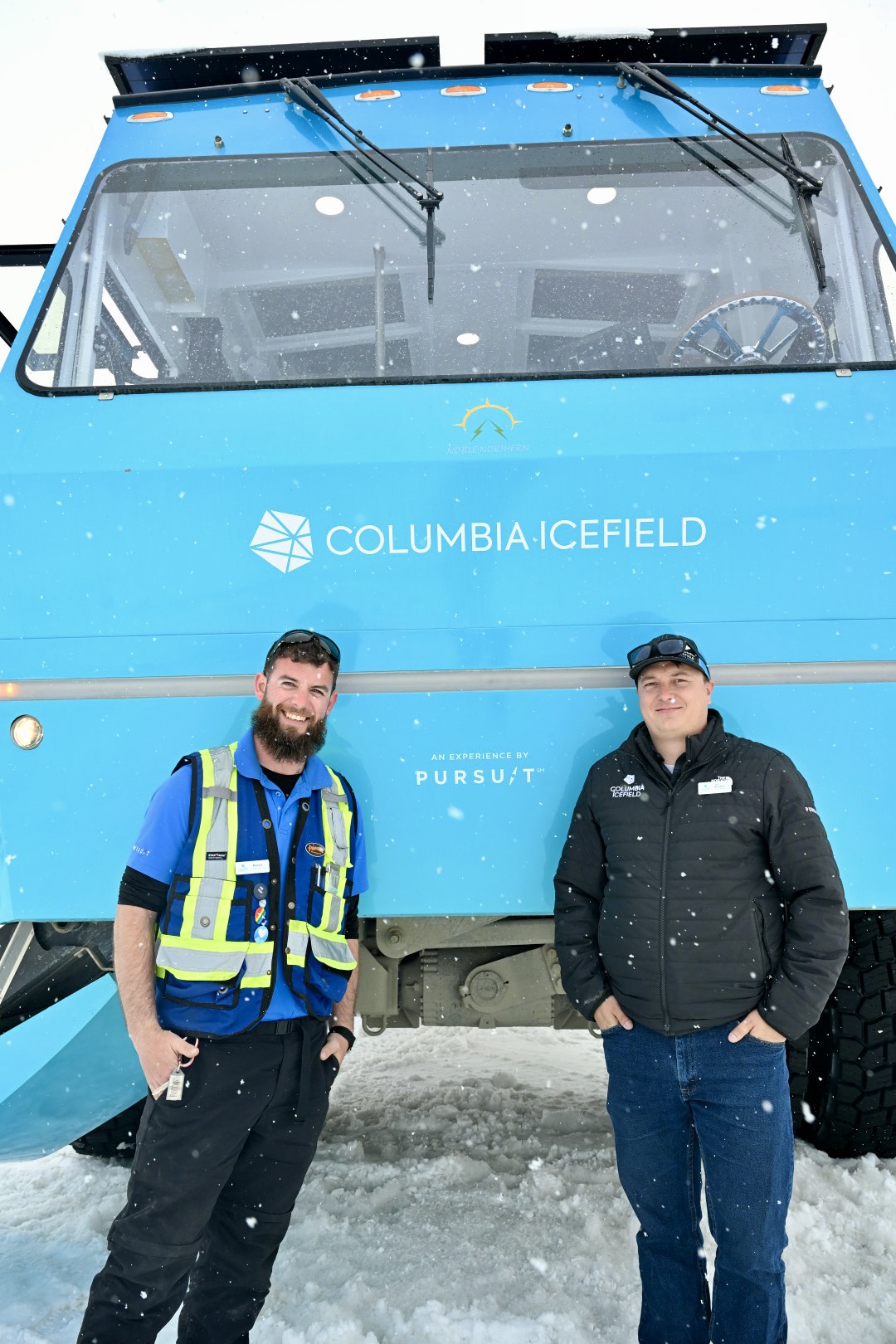
For now, the electric Ice Explorer remains a single-vehicle pilot integrated into the regular glacier tour rotation. Guests won’t specifically book it; instead, some visitors will simply find themselves boarding a quieter, cleaner version of a familiar Rockies icon.
Whether the future of glacier tourism becomes fully electric remains to be seen. But on a glacier that continues to shrink year after year, the symbolism of the first silent descent onto the ice was difficult to miss.
Bob Covey // bob@thejasperlocal.com