

Sub: More than a ribbon of tar and gravel, the Icefields Parkway is a meandering journey of stories and adventures.
In 1971, Rory Flanagan was fed up.
More than 40 years after the first shovel turned the rocky soil to construct a road to connect Jasper to Banff, the route still didn’t have a name. That was vexing Flanagan, Jasper National Park’s then-Superintendent.
For more than 30 years, this ribbon of asphalt had gone by myriad names: Hwy 1A, Route 93, the Banff-Jasper Highway, the Jasper-Banff Highway. In 1936, J.M. Wardle, the chief engineer for National Parks suggested calling it the George the Fifth Highway.
Dust-ups and the Dust Bowl
What you called the road depended on where you lived. Determined to put the acrimony between Jasper or Banff about its name in the rear-view mirror, Flanagan wrote to Ottawa to decree a new handle. Consulting a paper trail stretching back to 1936, including a list of never-adopted options presented to JB Harkin himself, Flanagan didn’t just suggest The Icefields Parkway, he declared that this would be its name. It stuck.
But backup 40 years. In 1931, Canada was in the throes of the Great Depression. In a maneuver befitting a John Steinbeck tale, the Canadian government seized upon the idea to build a road between Jasper and Banff. This would occupy thousands of out-of-work men and jump start the local economy.
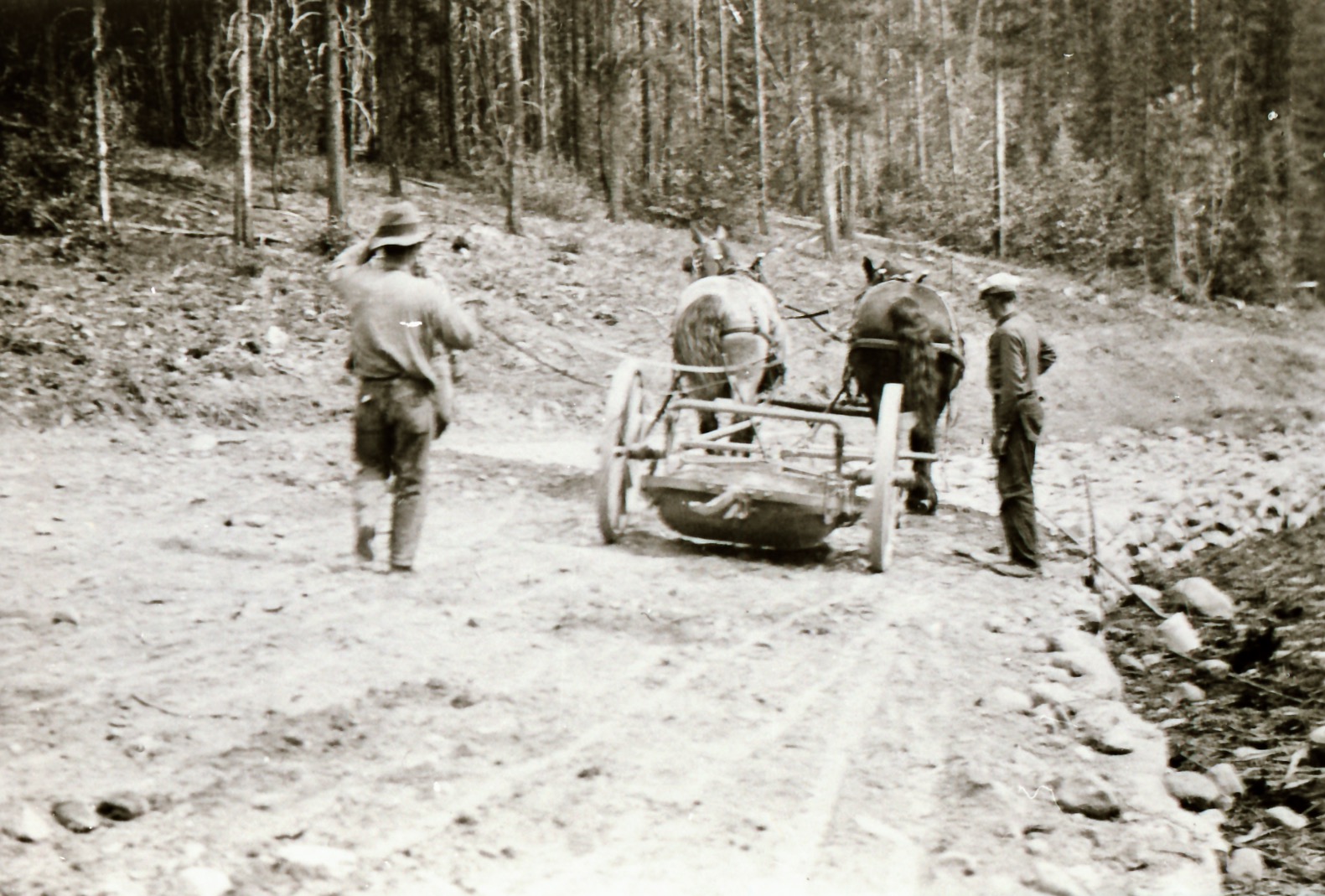
First posed nearly a decade earlier, the Dirty Thirties was the spark that lit the fuel. Immediately adopted as a “relief” project, the original parkway construction provided more than 2,000 men with purpose, food, shelter, and $5/month wages. Their mission: to carve a track south from Jasper and north from Lake Louise, eventually meeting in the middle, somewhere near the Columbia Icefields.
The road to capitalism
Less well known is that relief work ended just three years into a nearly decade-long project. In 1934, with an improving economy and workers losing interest in the isolated conditions and poor pay, the government changed its compensation package to the prevailing rate—the average wage paid to most workers in a specific trade, occupation, or industry within a given region.
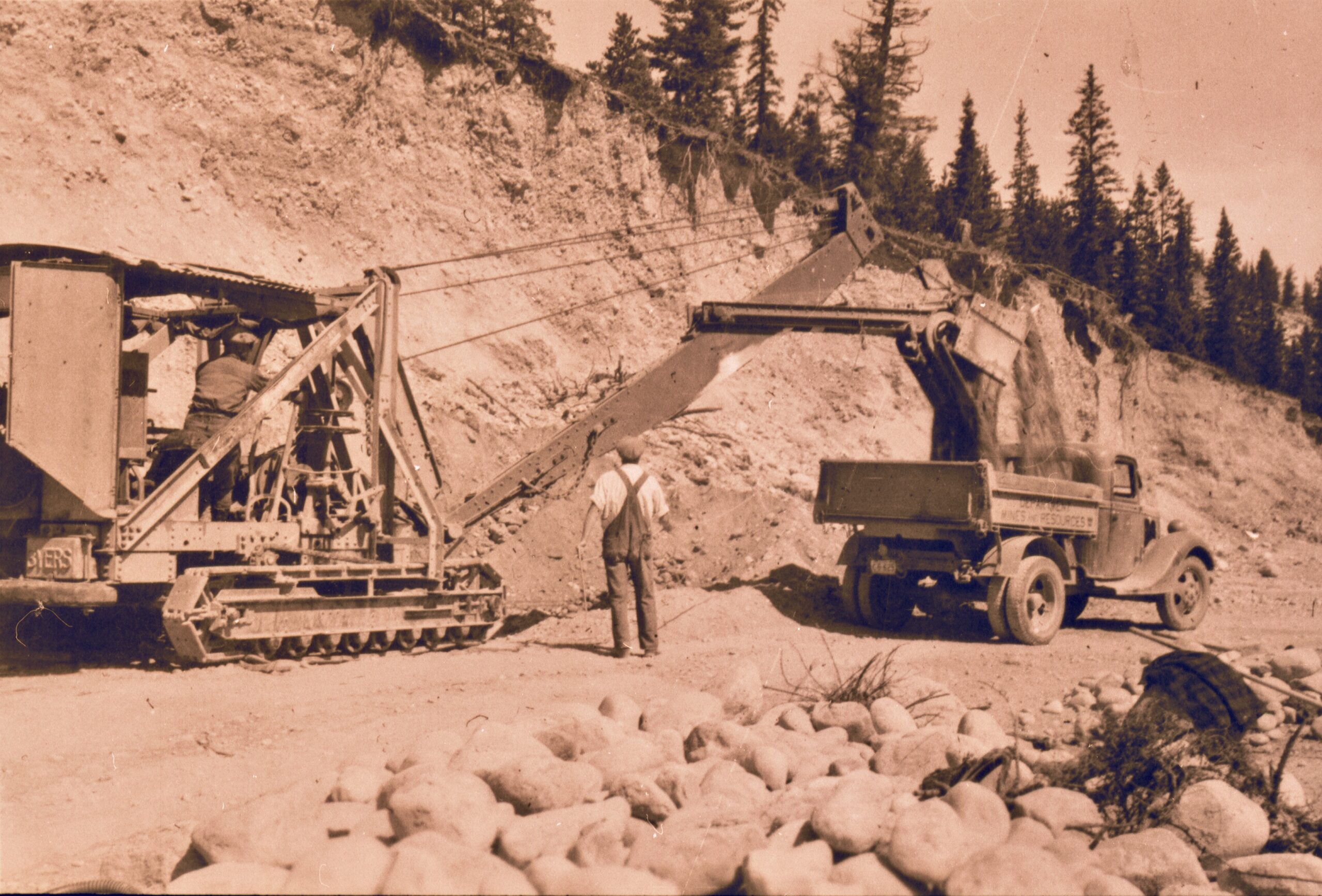
The lore that the Icefields Parkway is a highway built by hand is only one-third true; for the final six years of construction, heavy equipment replaced draught horses and pickaxes and workers earned at least $100/month, with freedom to come and go. The testimonials and images of conditions in relief camps are certainly compelling, but the “road to capitalism,” as described by Ramsay McDonald who worked on the Icefields Parkway during the prevailing rate era, resonates strongly with today’s Jasper.
History repeats itself
The stories of parkway construction echo those being written in Jasper’s current, post-wildfire rebuild: workers from across Canada capitalizing on a need, putting in superhuman hours, some for just a few months, many staying to create a life here. It was as tough to save a buck and find a place to live back then as it is today. Just as now, characters came and went, flowing to where the need was the greatest.
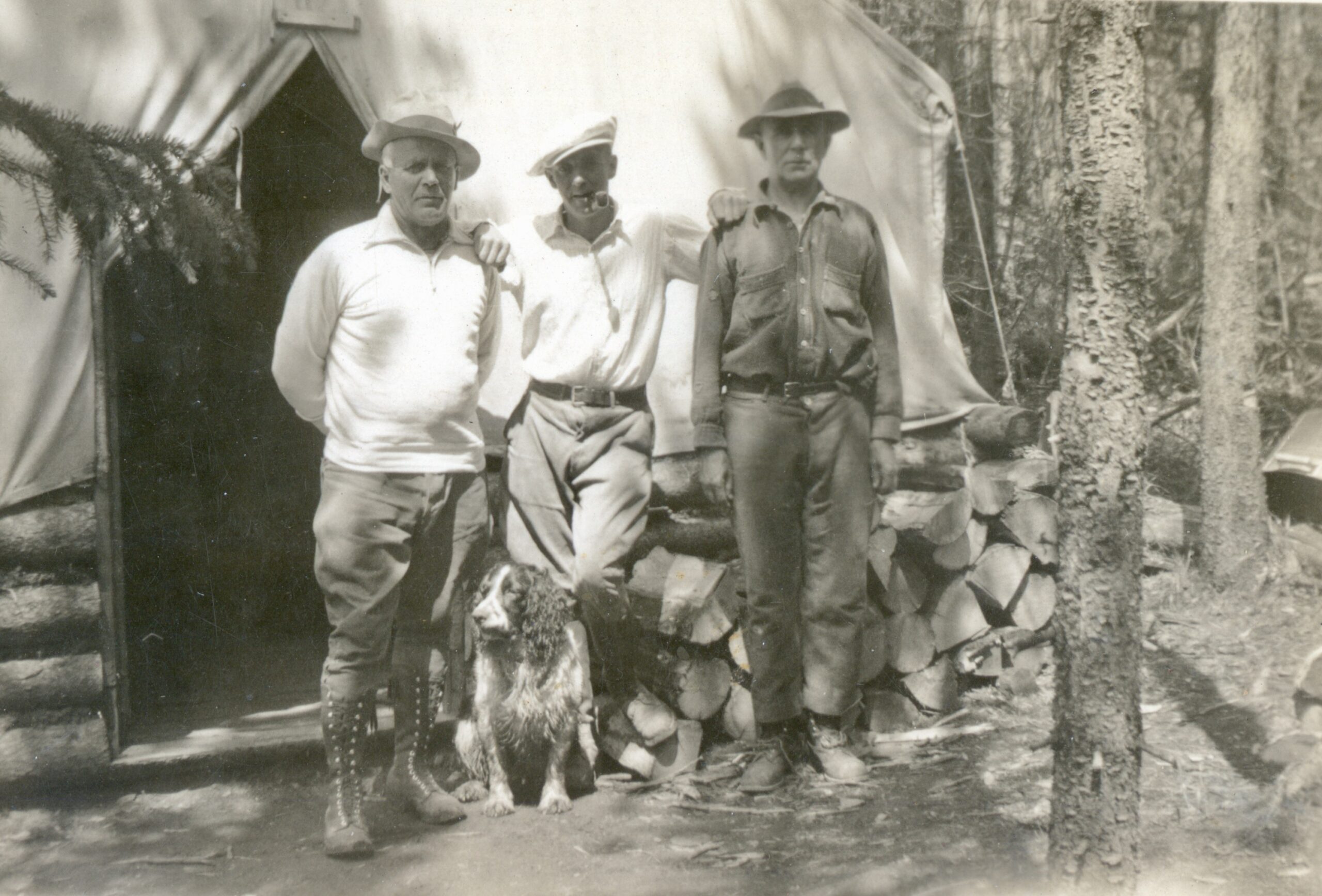
Back in the summer of 1939, the parkway was almost done. Preparations were being made for a grand opening in the following spring as the final stretch of highway to connect the two ends was being completed.
Glacial pace
But then Britain declared war on Germany and men and women from across Canada dropped what they were doing to enlist in the Allied war effort. With their country calling, and promises of higher pay and the highest glory, parkway construction camps began to lose workers to the military. It didn’t help that conditions to complete the parkway’s final 10 miles were brutal. Work slowed to a crawl.
The final leg to connect the south and north-bound segments at the Icefields took twice as long to complete as any other comparable stretch. When eventually the two ends met, and it was possible to drive from Lake Louise to Jasper, there was excitement and cause to celebrate. But it was June 1940, a war was on, and there was little mood to rejoice. Without fanfare the first cars bumped from Jasper to Banff and back along Canada’s newest stretch of tourist highway. Ten years of struggle went virtually unremarked.
A Road Well Traveled
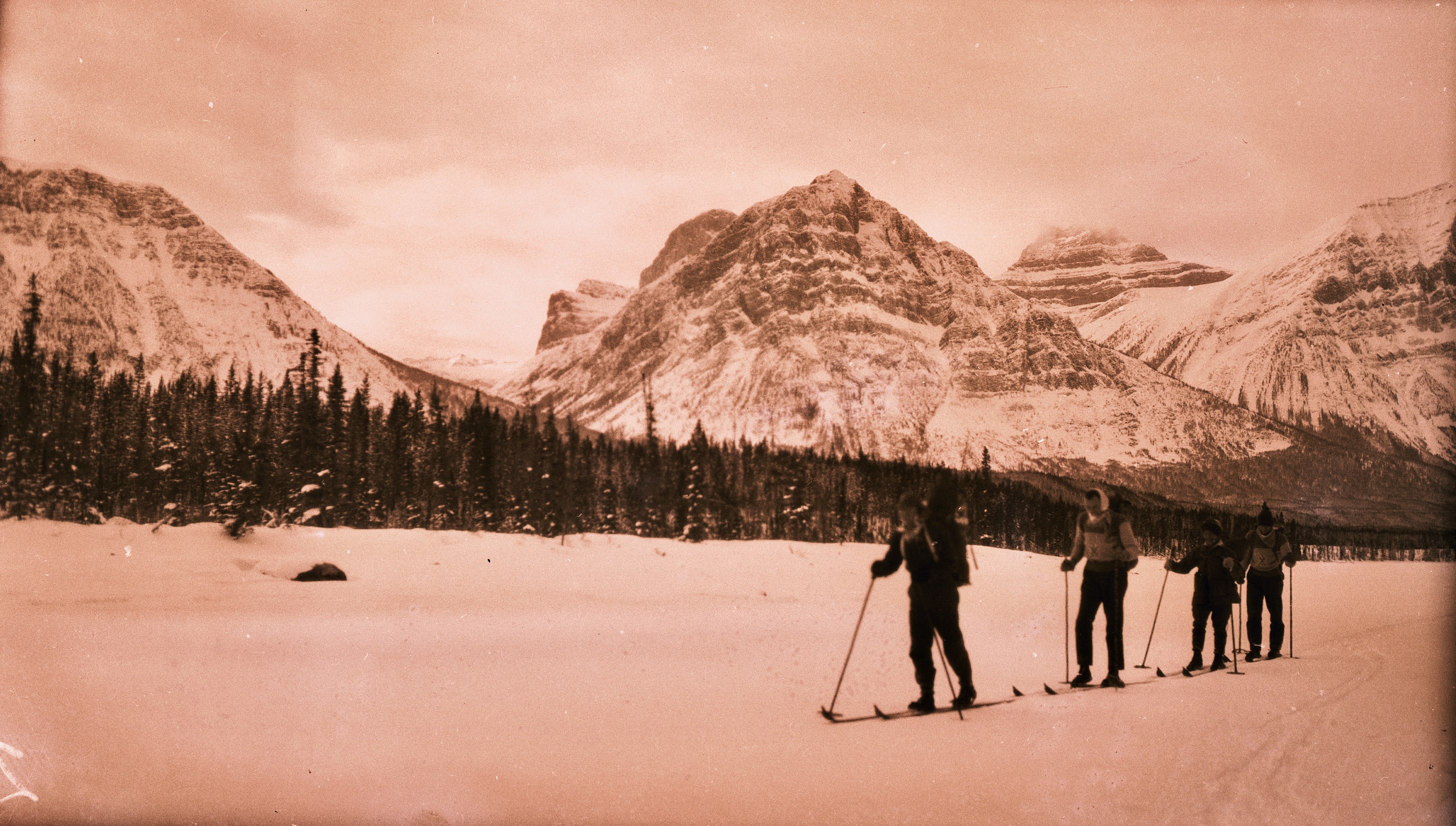
Of course, these weren’t the first travelers to complete the route. Indigenous guides for Mary Warren Schäeffer knew well the passes and trails that connected the Bow and Athabasca valleys. Doug and Vern Jeffery, Peter Withers and Frank Burstrom photographed their ski trek from Banff to Jasper in 1930. And before the highway was completed in 1940, impatient parkway poachers were making their way along the route by car, horseback, and foot, as work was ongoing. Fred Brewster, writing about the “Columbia Icefield Highway”, reflected on the thousand years of travel along this route while excitedly introducing the world to the experience of viewing Jasper’s “glistening mountains” from their cars.
Ribbon cutting
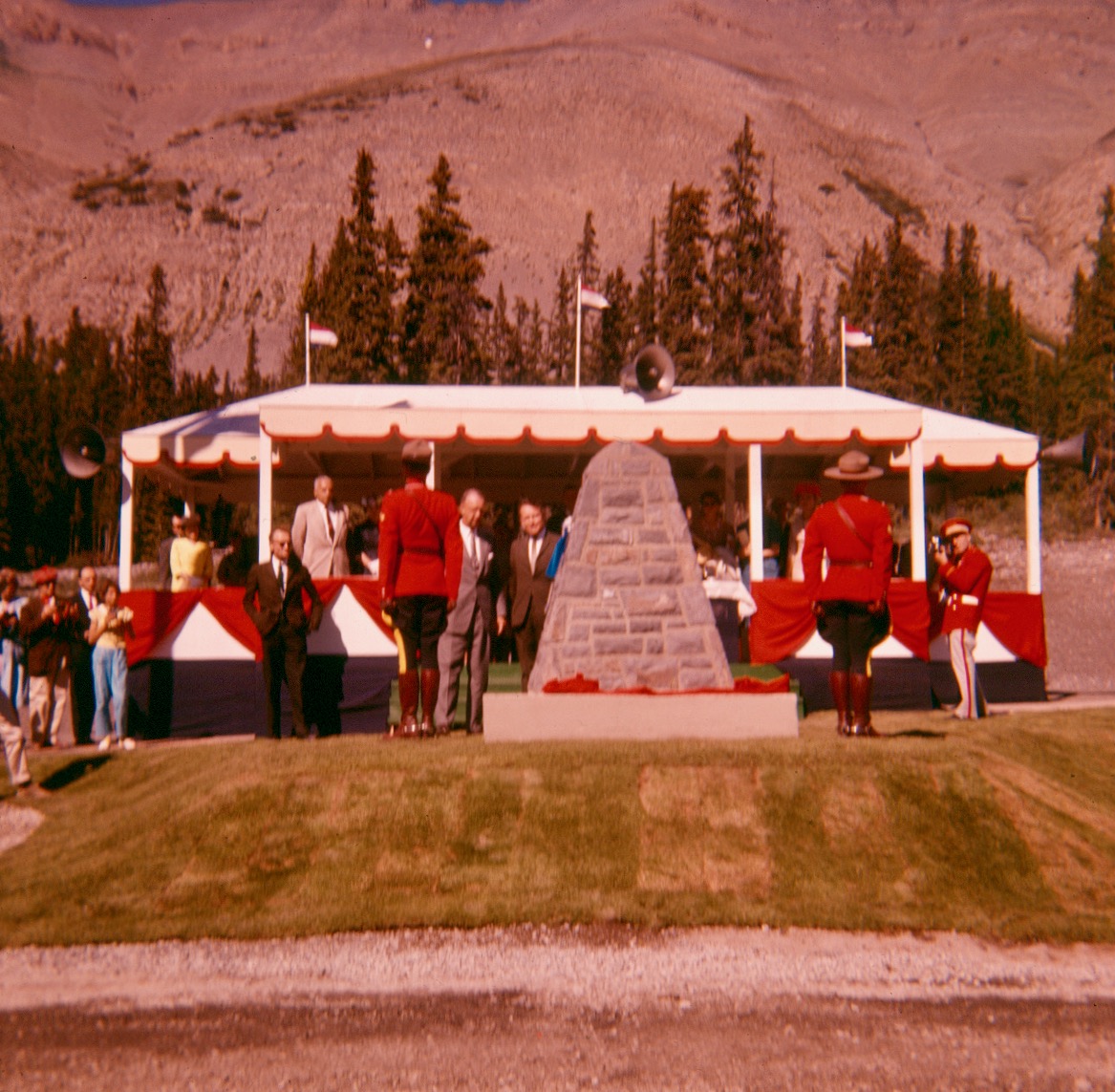
An opening ceremony was finally held for the yet-to-be-named Icefields Parkway on August 1, 1961. Complete with red-serge Mounties, politicians, pipers and boy scouts, a cairn was unveiled at the Athabasca Glacier Chalet, 21 years after the road was opened to traffic and seven years before upgrades were completed in 1968, according to a Parks Canada brochure.
That work, to reroute and repave the now very popular tourist road, had begun in 1958. The effort also corrected some rather dodgy surveying from the 1930s, in both Banff and Jasper.
Perhaps most notorious was construction of the Mile 5 bridge that crosses the Athabasca River just south of the Jasper townsite. Required to connect the new parkway sections east of the Athabasca River to Jasper, a local firm, Crawley & Mohr, got the contract for about a quarter of a million dollars and a completion date of August 1961. The project almost bankrupted Crawley & Mohr as the volume of cement needed to support the bridge deck escalated and challenges emerged to get materials to the site. A year behind schedule, and much over budget, the bridge finally opened and the new Parkway re-route from 93A to what is now Hwy 93N was “complete”, a year after the official reopening.
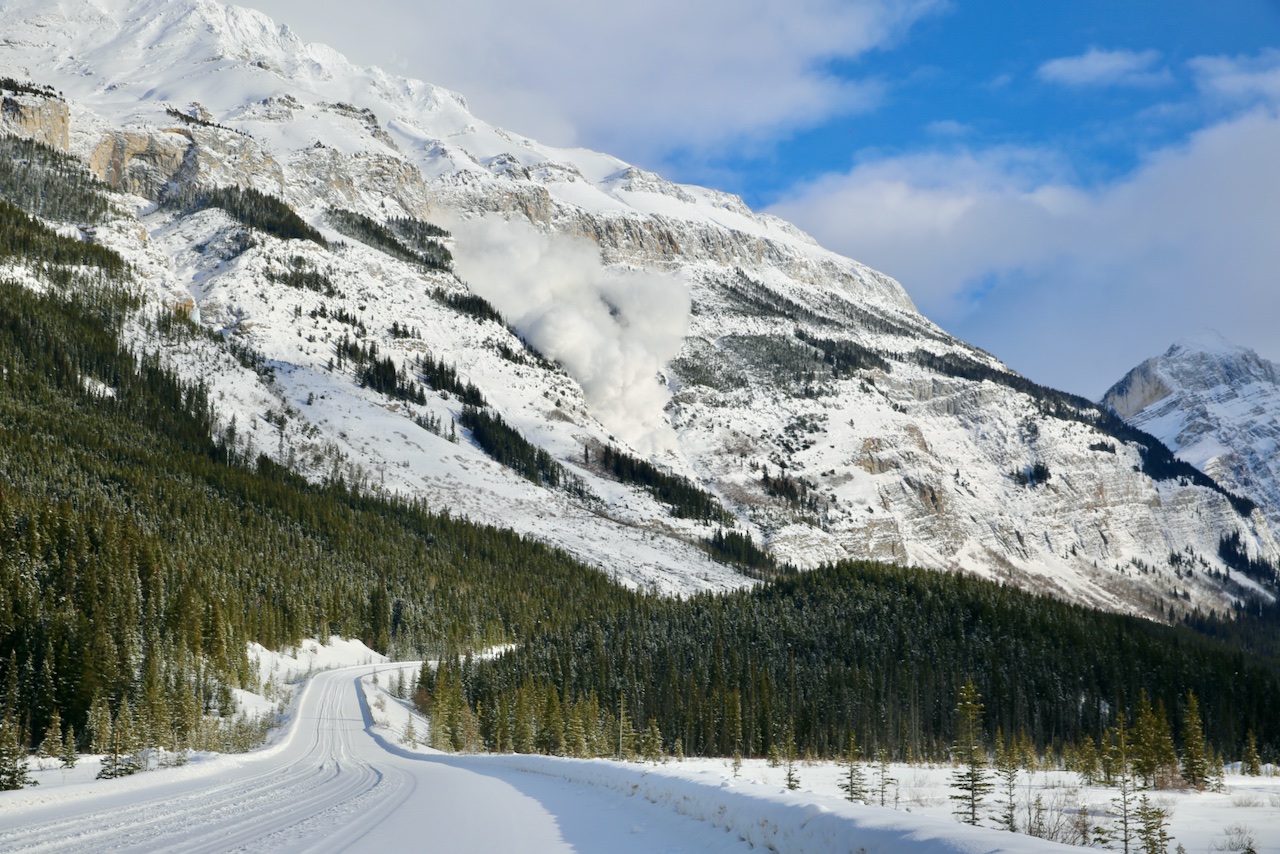
There is more, of course. Much more. The first-hand accounts of relief workers; the adventures of early and modern climbers, hikers, bikers, runners, and skiers along the route; road upkeep through mudslides and avalanches—even the plans to connect the Maligne Road to the Parkway through Maligne Pass and the Poboktan trail. More than a ribbon of tar and gravel, the Icefields Parkway is at least one of the most spectacular drives on earth, and at most, a rabbit hole of stories and adventures.
John Wilmshurst // info@thejasperlocal.com