

Thomas Lukaszuk says legitimate grievances with Ottawa need fixing—but breaking up the country isn’t the answer
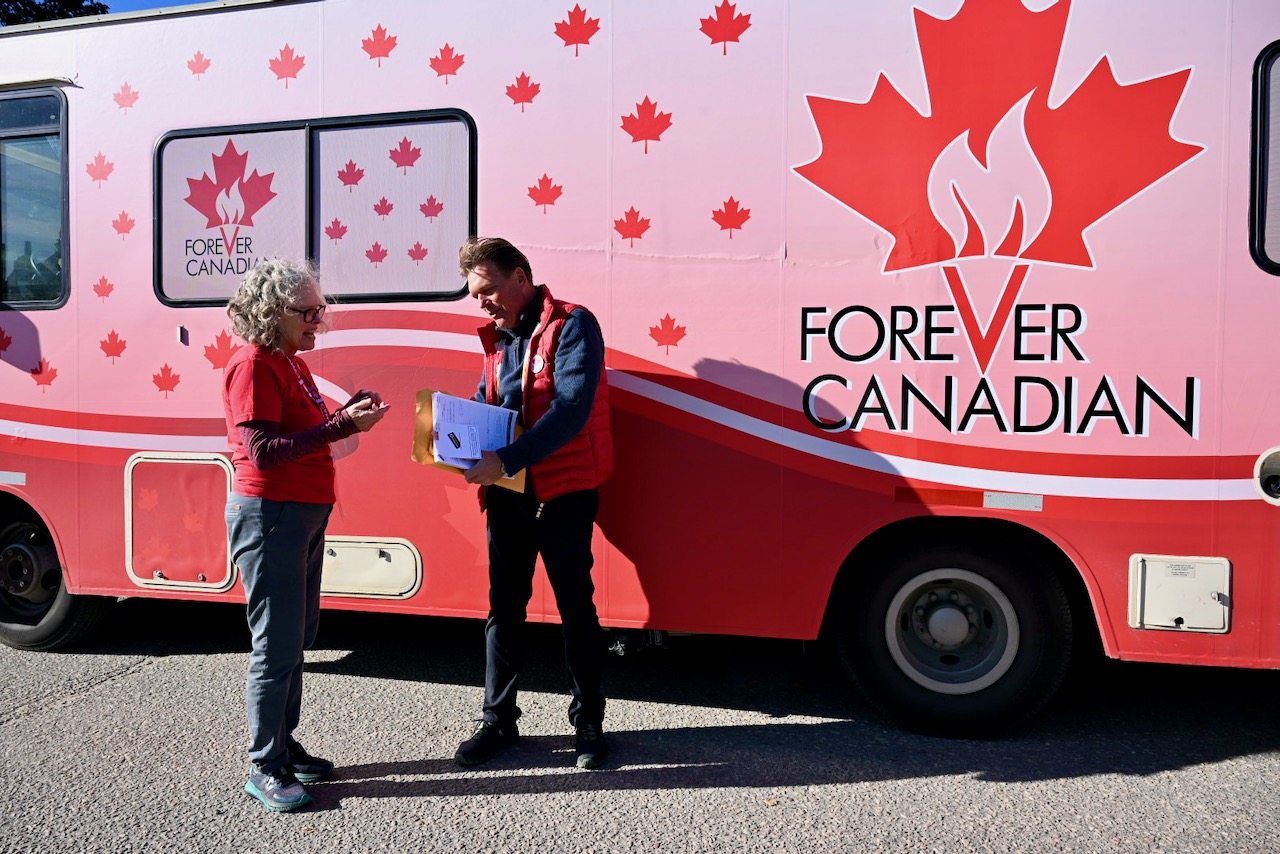
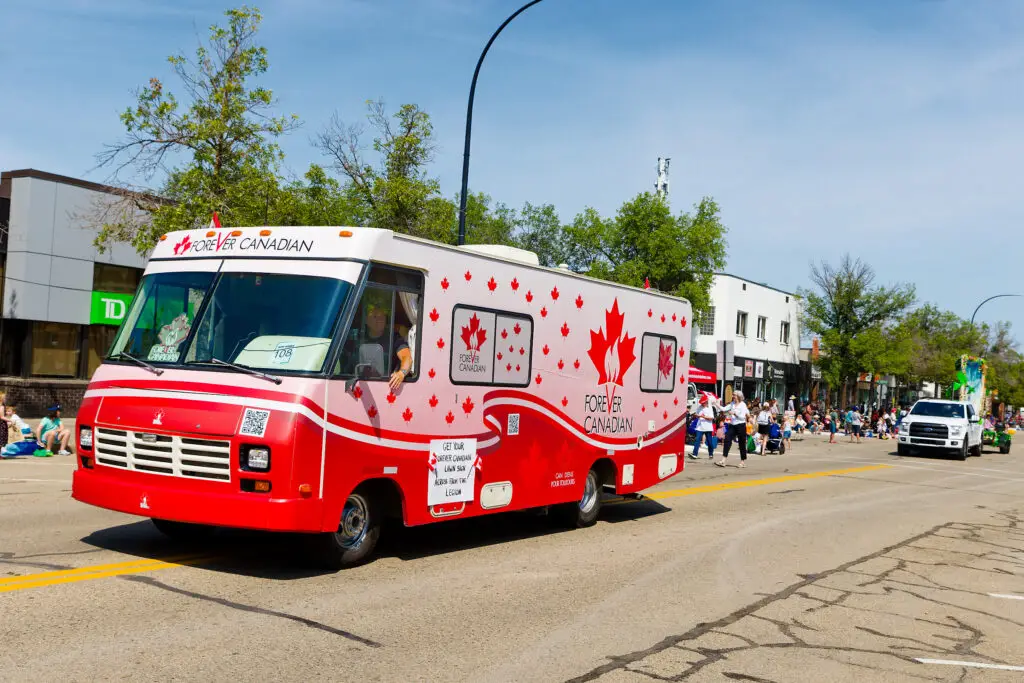
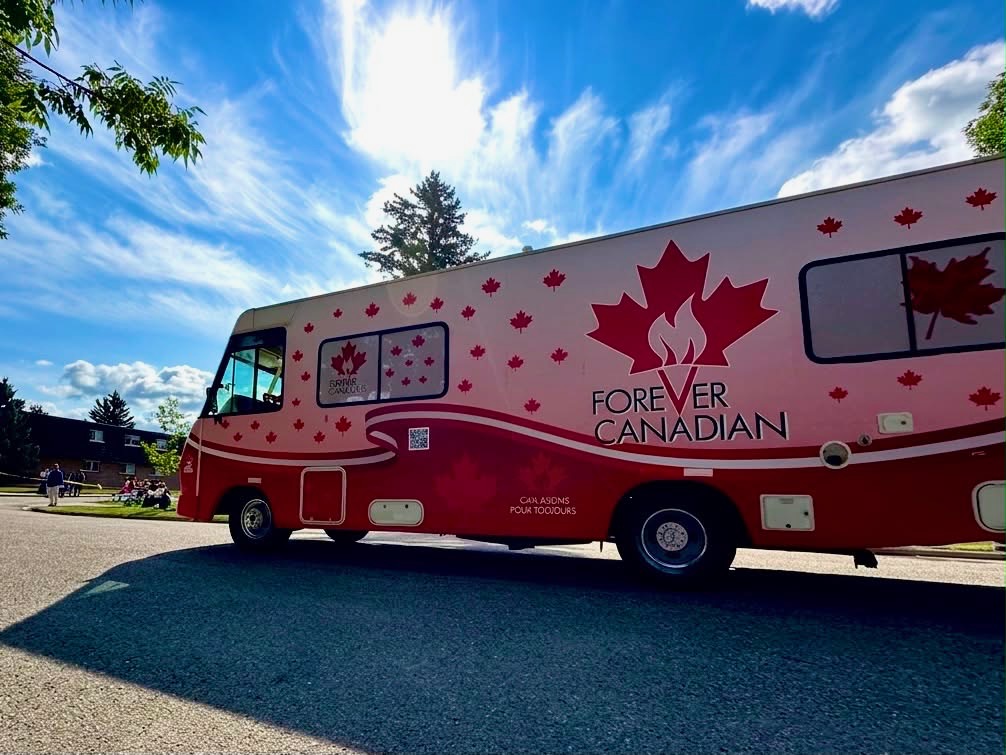
Thomas Lukaszuk is spending a lot of time in his 33-year-old motorhome these days.
The former Alberta cabinet minister and founder of Forever Canadian is touring the province with a message he says is resonating well beyond Alberta’s borders.
On Friday, Lukaszuk was in St. Albert. Saturday took him to Morinville and Westlock. Sunday, he’s heading to Hinton and Jasper (3-5 p.m. on Robson Street), followed by Athabasca and Fort McMurray.
His 1992 motorhome, known as the Unity Bus, is “in the shop about every two weeks or so,” Lukaszuk laughed during an interview August 7.
Along the many miles, Forever Canadian’s original purpose—to collect signatures for a petition supporting Canadian unity—has taken on a life of its own.
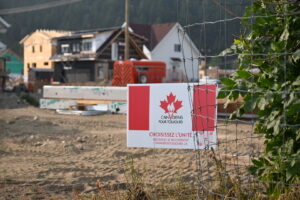
“We have distributed, I believe, in excess of 45,000 lawn signs. You see them popping up everywhere across the province…and, believe it or not, we’re now getting requests for our lawn signs outside of Alberta. So this has become somewhat of a national unity movement.”
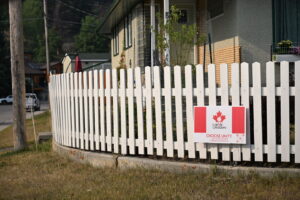
Lukaszuk says the organization has 18,000 registered volunteers, while federalists in Quebec and Ontario have begun adopting its branding and approach.
The movement’s resurgence comes as Alberta prepares to put a series of questions to voters, including whether the province should pursue separation from Canada.
Lukaszuk is careful to distinguish Forever Canadian from the No to the Nine campaign.
“Our campaign is focused on promoting Canadian unity,” he said, noting supporting Canadian unity doesn’t mean defending the status quo.
Forever Canadian acknowledges legitimate grievances behind Alberta’s growing frustration with Ottawa, Lukaszuk says, including questions around parliamentary representation, Senate representation and the equalization formula.
But separatism is not the answer.
“It would actually exacerbate them and create new issues for Alberta and make the situation worse.”
A peculiar place in the debate
For Jasper, the separation debate has an unusual dimension.
The community sits inside Jasper National Park, on federal land, while also having a distinctly Alberta political and economic identity.
Lukaszuk argues that makes Jasper particularly interesting in any discussion of separation.
“Even if separation was to come to fruition, [Jasper] would remain in Canada,” he says.
He points to the community’s position within a national park and says it is difficult to imagine Canada surrendering its national parks in the event Alberta separated.
“I often remind separatists that the Rocky Mountains would not be part of Alberta if their dream was to ever come true.”
‘Being Canadian is not where you were born’
For Lukaszuk, Forever Canadian has resonated because Canadians have been forced to think about national identity in a way they haven’t had to for generations.
Canada became accustomed to an unusually secure geopolitical position, he says: a friendly neighbour to the south, a protected border, NORAD, NATO and a massive trading relationship with the United States.
But that security has been shaken and the result, he argues, has been a renewed interest in what it actually means to be Canadian.
He describes Forever Canadian as an expression of “healthy patriotism, not nationalism.”
As he travels, Lukaszuk says, people routinely approach the campaign to tell him why Canada matters to them personally.
One man recently asked if he could put a sticker on Lukaszuk’s bus. It featured the Canadian flag and a simple message:
“Being Canadian is not where you were born, and not where you live, but who you are.”
Lukaszuk says the sentiment captures something he’s heard repeatedly from Albertans.
“I hear often statements to the effect that no one has the right to take that away from us,” he says. “It’s part of my identity. It’s who I am.”
For generations, he says, Canadians rarely had to ask what it would mean not to have a Canadian passport, or not to be part of the same country as Nova Scotia, British Columbia or the Northwest Territories.
“I never thought, what would it be like not to have a Canadian passport and not to be Canadian? It never crossed my mind.
“Well, now it has.”
The conversation he wants to have
If Lukaszuk could choose one person to sit down with for half an hour, it wouldn’t be Prime Minister Mark Carney.
It would be Premier Danielle Smith.
If he could, he’d try to persuade the premier to withdraw the referendum.
Lukaszuk acknowledges that doing so could come at a considerable political cost to Smith, particularly given the strength of separatist sentiment among some UCP members.
But he argues that political calculation is precisely the problem.
“She’s doing what’s good for her party membership to stay in power, but not what’s good for Alberta,” he says.
He believes the referendum is already damaging the province economically and, perhaps more seriously, socially.
He tells the story of a neighbour whose family gathered for Mother’s Day dinner. A conversation about separatism turned into an argument, and family members eventually left separately.
Lukaszuk says similar stories are becoming common: neighbours fighting with neighbours, parents and children no longer speaking over politics.
“You’re dividing Albertans in such a way that it will take decades for us to heal,” he says.
That, he argues, is the hidden cost of the referendum.
Don’t ‘play with fire’
Lukaszuk’s warning extends beyond committed separatists.
He is particularly concerned about Albertans who don’t actually want to leave Canada but might support a separation referendum simply as a way of sending Ottawa a message.
His message to them is simple:
“Don’t play with fire.”
He points to Brexit as a cautionary example of what can happen when voters use a referendum to express dissatisfaction rather than voting for the outcome they actually want.
Some British voters who favoured remaining in the European Union assumed the referendum would easily go their way and therefore didn’t vote, Lukaszuk argues. Others used their vote to send a message and were surprised by the result.
The lesson, he says, is that a referendum is not an opinion poll.
“If you don’t want separation, don’t assume that the federalist side is going to win this referendum,” he says. “Voter participation is very important.”
For Lukaszuk, the stakes are now larger than Alberta’s relationship with Ottawa.
He sees Canada entering a period of geopolitical uncertainty in which internal division could make the country more vulnerable to external pressure.
“We live in very turbulent geopolitical times,” he says. “This is not the time to divide ourselves internally.”
His prescription is unity—not complacency.
Canada, he argues, can acknowledge that its federation is imperfect, revisit policies that no longer work and address legitimate Western grievances without abandoning the country itself.
“There are real issues, and separatists are bringing up sometimes some good points,” Lukaszuk says. “We need to focus on resolving those issues, but in a collaborative way.”
“Separatism should never be an option.”
For now, that argument is riding around Alberta in a 33-year-old motorhome, one lawn sign and one conversation at a time.
Bob Covey // bob@thejasperlocal.com