

For cyclists, the steepest climbs eventually give way to downhill. For people living with MS, there isn’t always a finish line.
For Michael MacFynn, one of the most difficult sections of the Hinton MS Bike Ride comes roughly 30 kilometres into the first day.
The trail narrows. The climb steepens. Legs start to burn. And as the forest closes in and his mountain bike tires slow, there is a point when MacFynn really starts to question if he’s actually going to make it through the rest of the ride.
“It really wants to suck your soul,” MacFynn said.
But just as he starts to feel sorry for himself and he considers getting off his bike, MacFynn’s thoughts turn to his wife, Bonnie, who was diagnosed with multiple sclerosis in 2015.
Unlike someone living with MS, he has a choice. Although it’s hard, MacFynn can choose whether to keep riding. That ability to choose, he says, keeps him moving forward.
“Even though it hurts and even though I find it challenging, it’s important to push through,” he says.
The Hinton MS Bike Ride is a two-day, 90-kilometre mountain biking event that takes riders through remote, off-road terrain between Hinton and Brule. In 2026, 125 participants across 23 teams have raised $136,000 (and counting) to support people living with MS and fund research into the disease.
For MacFynn, however, the ride is about more than distance pedalled or fundraising totals. It has become an annual commitment for his family—and a way to acknowledge the realities of living alongside MS.
“MS looks different for everybody who gets it,” he says.
An invisible disease
Since her diagnosis, Bonnie has been unable to work. Some days, fatigue, pain and inflammation leave her confined to bed. Even changes in weather can trigger symptoms.
And those experiences are often invisible to others. One of the least understood aspects of MS is the loneliness it can create, MacFynn says.
“It can be really isolating.”
That isolation can make it difficult for someone living with MS to ask for help. It can make it hard for people to maintain connections with their community. And it can make it hard for families to manage the demands of daily life.
“You have to plan far in advance and ask for help,” he says. “That’s not an easy thing for a lot of families to do.”
A family commitment
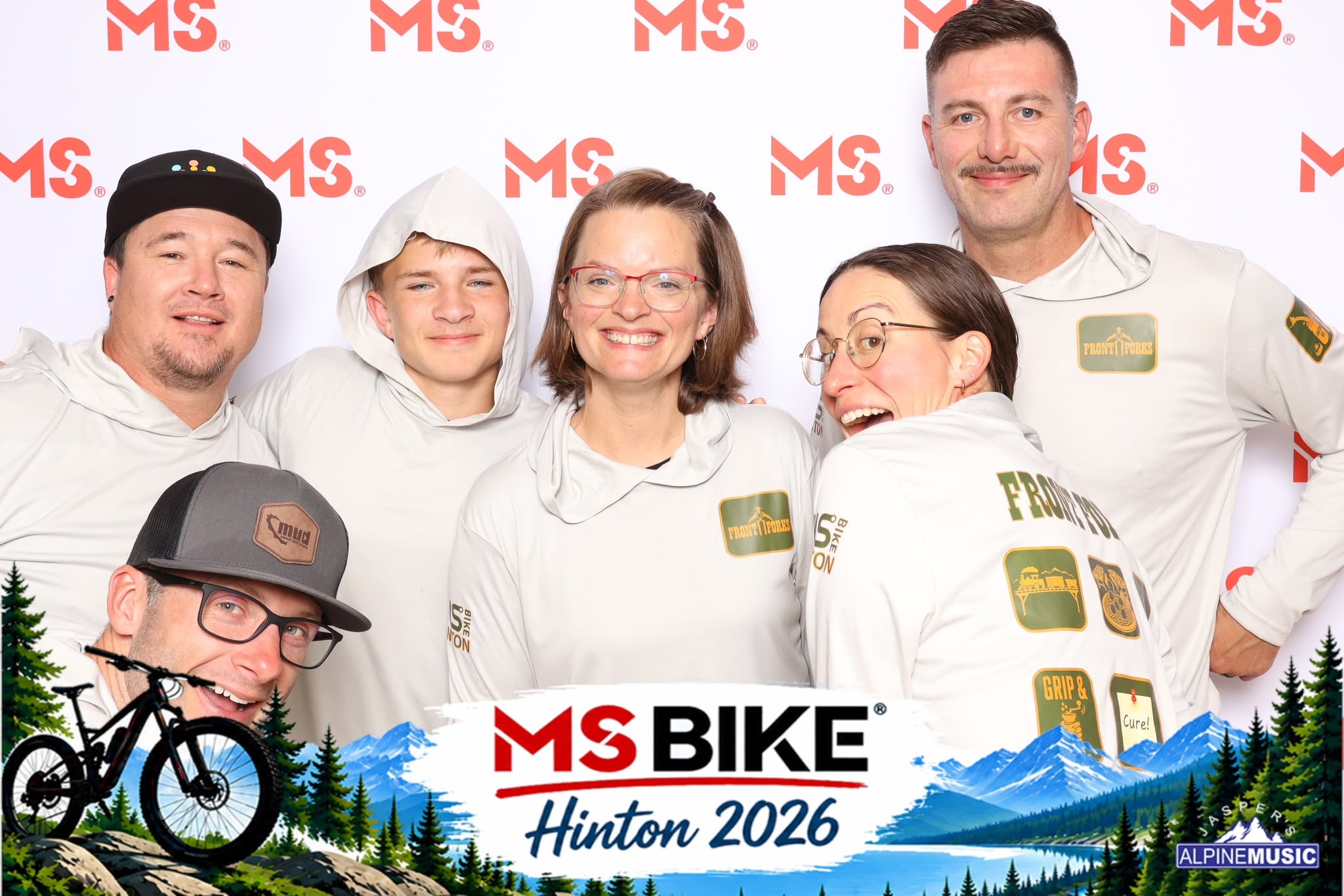
The MacFynns’ children, Sam and Isaac, have had to live with MS, too. They’re counted on to help with household responsibilities—more so than some of their peers, according to Michael. In the beginning, that added burden was hard for the kids. It didn’t always seem fair. But a decade of living alongside MS has influenced them in countless ways. This year, 14-year-old Sam chose to participate in the MS Bike Ride rather than attend hockey tryouts—a significant decision given the importance of hockey in his life.
“That was a big life decision for him,” MacFynn said.
It was also a big physical commitment. While Sam had completed two and three-hour bike rides before, those were nothing comparable to pounding out 90 kms of aggressive trail riding with the MS Bike Ride. But he did it. Combined with the $1,125 he raised by himself, Sam made his dad extremely proud.
“He crushed it,” MacFynn said.
A community built through MS
MacFynn joined his Hinton MS Bike Ride team—SD Front Forks—after Bonnie’s diagnosis. For years, SG Front Forks was the largest team, and raised the most money, for the Hinton MS Ride. But more than putting their name in fundraising lights, being part of a team has helped the MacFynns navigate the practical and emotional challenges of the past decade.
“MS gave us a community of people that understand what it means to have MS and what it means to struggle with MS,” MacFynn said.
It has also reinforced the importance of recognizing that hardship does not have to be dismissed.
“We often deflect when we go through struggles,” MacFynn said. “Maybe we don’t have it as bad as somebody else over there … but that doesn’t mean we don’t struggle. And that doesn’t mean that we don’t need help.”
The MS Society continues to ask for help from Canadians to meet its goals. Alberta’s researchers—who lead studies at the UofC and the UofA, primarily—are world renown. Although in the 75 years since MS research began a cure for the disease has not been discovered, MacFynn said it’s critical to keep up the fight—not unlike when faced with the choice whether or not to ride that steep hill.
“I have a choice,” he said. “That’s why we keep showing up.”
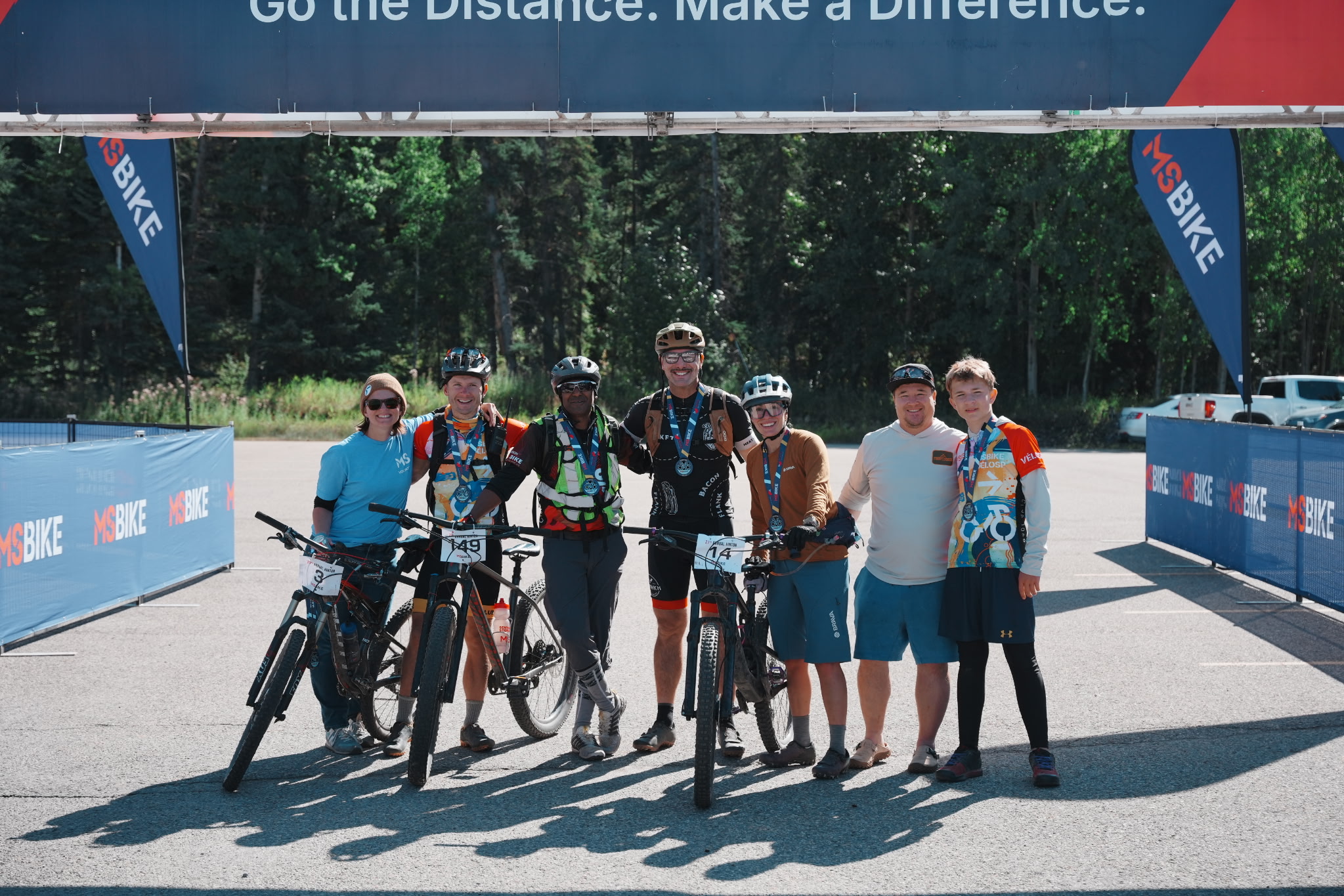
To donate to the MS Bike Ride (fundraising is open until September 30) or find more information on the MS Society and the ride, go to msbike.ca and click on Locations-Hinton.