

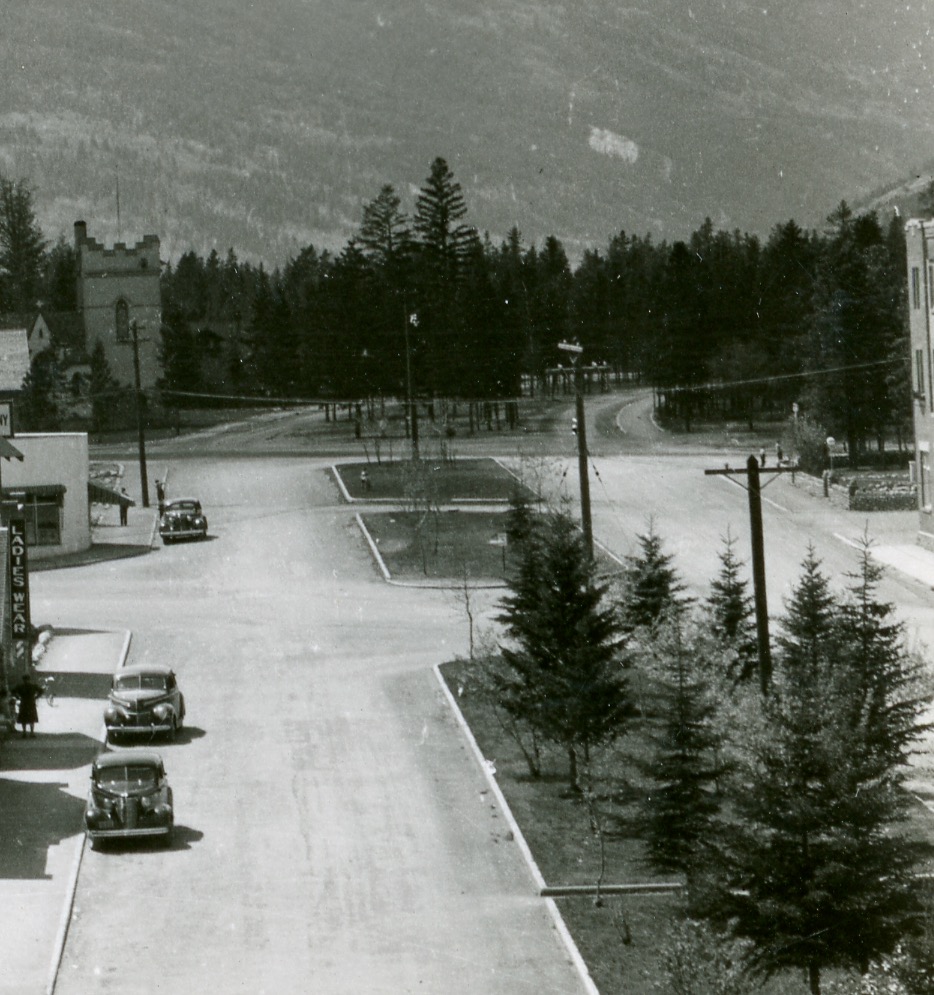
It’s late spring in Jasper, 1940. There is still snow in the mountains, but its melted up to 2,000 meters and the town is green-ish.
There’s a woman riding her bike down Connaught Drive in her shirt sleeves and a kid is tearing through the alley connecting Connaught to Miette Avenue, as if his mother, standing in front of the Ladies Wear shop with her arms crossed, has given him a nickel to get a bag of candy at the grocery store. She can now shop alone.
A few empty lots break up the Connaught “skyline”, and there is a man standing on the sidewalk on the west side of Connaught either transfixed by the view or getting his bearings. He’s not looking at his phone.
This is a timeless Jasper scene. One that could have happened yesterday but was captured on film more than eight decades ago. Look at the photo. If you know Jasper you will see immediately these familiar landmarks and yet striking differences.
The Chaba Theatre is there, and that could be Willard Jeffery on the sidewalk on his way to his theatre and now long-gone General store right beside it. You can see the Pyramid Hotel, where the Whistlers Hotel and the Whistle Stop Pub is now and the Hudson Bay Store on the corner of Patricia and Miette. You can even see a corner of the Atha B. where, well the Atha B. still stands, and the fortress-like Anglican Church can be seen in the near distance where its ruins stand now.
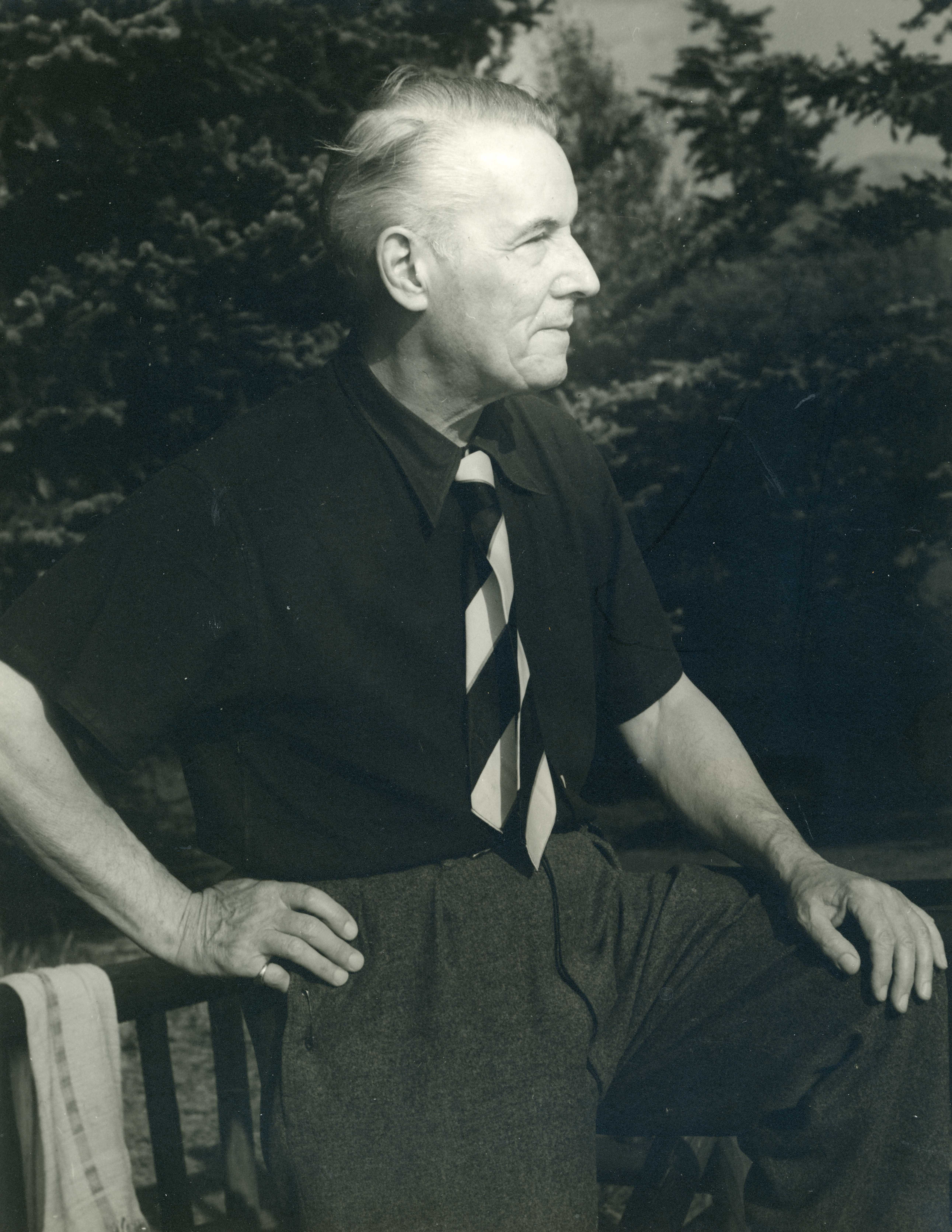
The photographer, G. Morris Taylor, had been in Jasper for 10 years, having moved with his wife, Helen from Atlin, BC, which at the time was a waning tourist destination. They started a photography studio specializing in portraits, events, fashion, and postcards. The single lens reflex (SLR) camera and 35 mm film is a few decades from common use, so tourists wanting to create memories of their trips hired photographers and bought postcards.
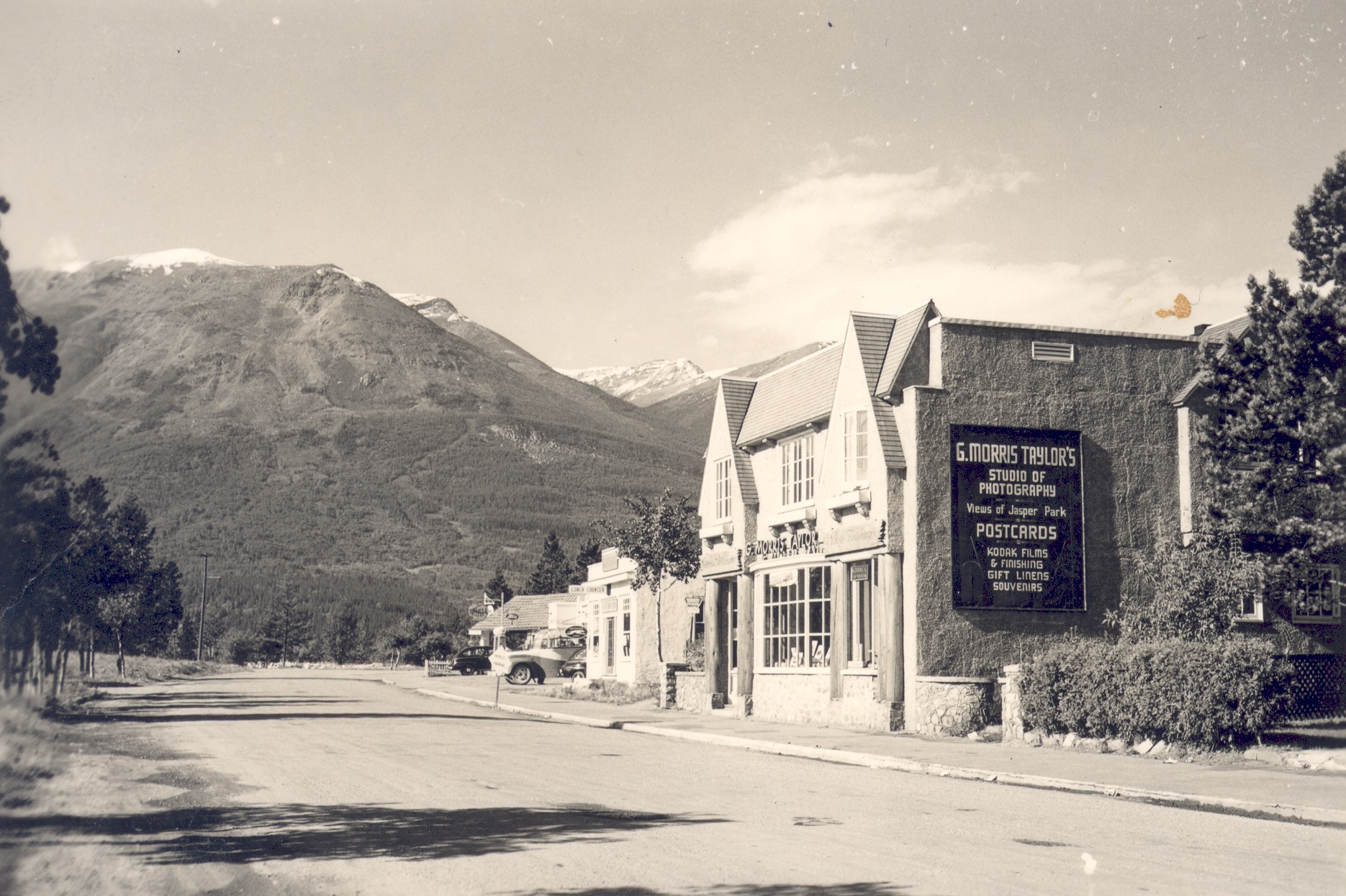
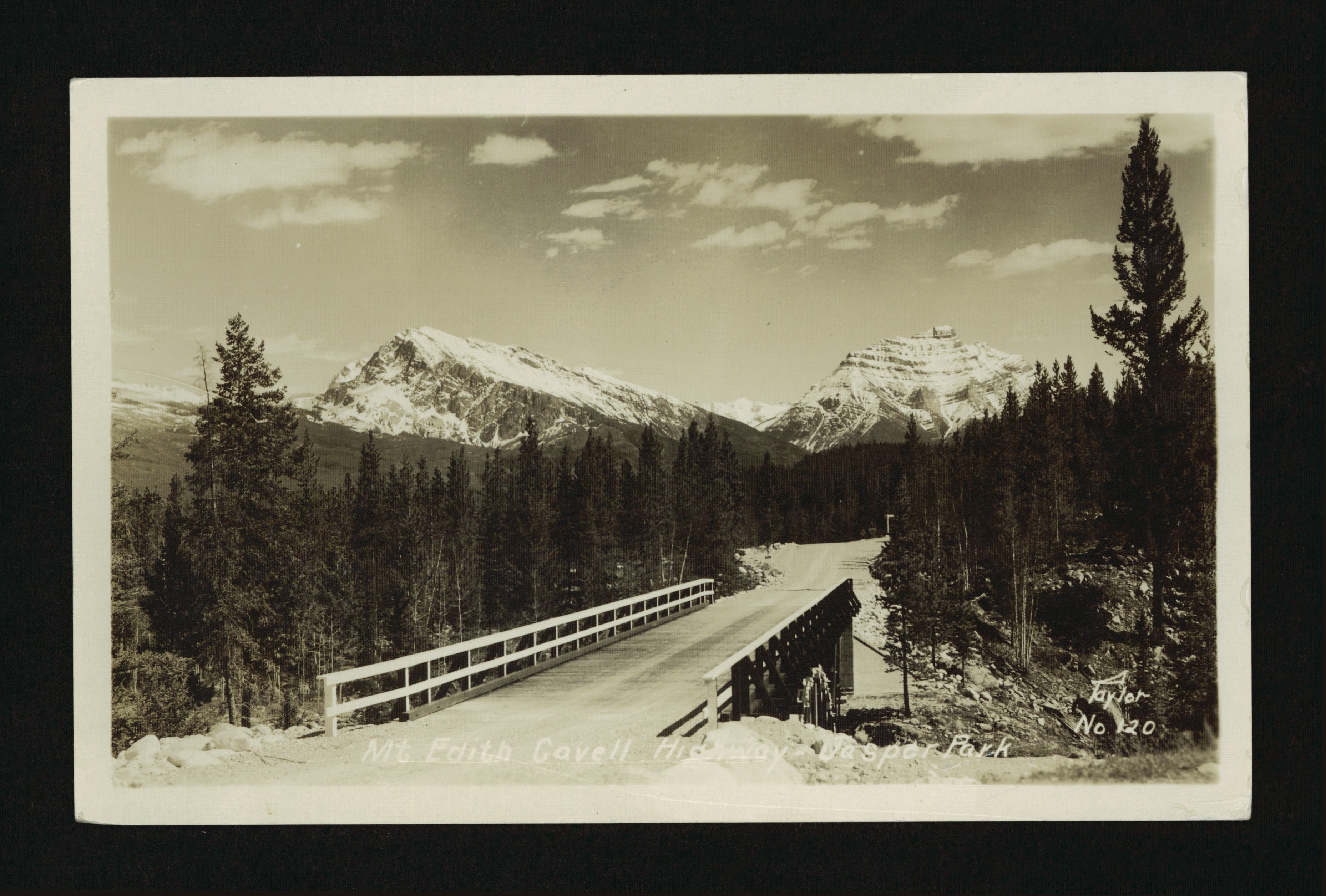
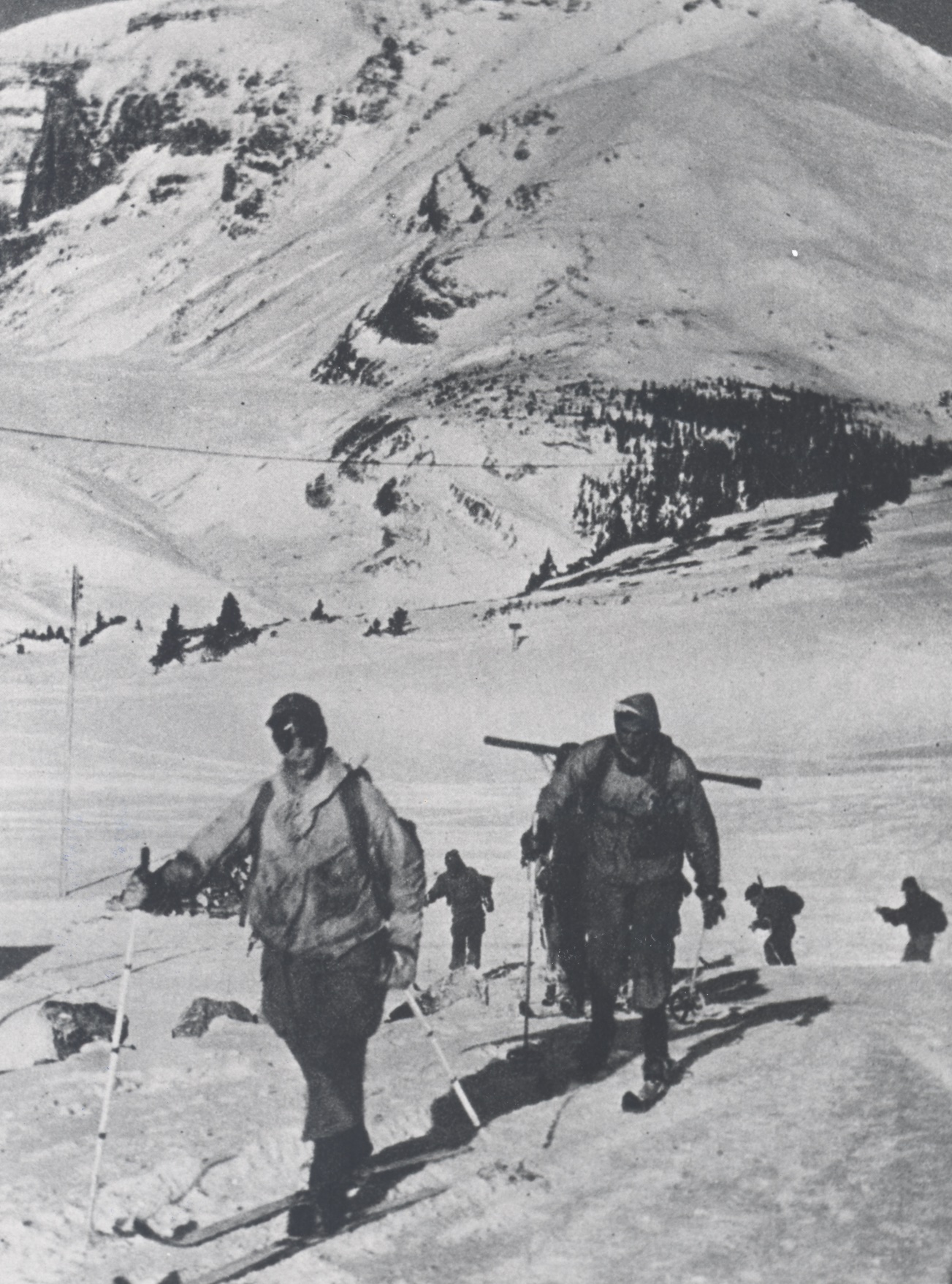
During his 18 years in Jasper — he sold his business in 1948 and moved to San Bernadino, California — Morris built a life around photographs and tourism, printing postcards on themes from wildlife and Jasper landscapes, and photographing regular visitors and celebrities alike (Bing Crosby and Robert Service, author of The Cremation of Sam McGee), events such as the 1939 royal visit and the many activities of the Lovat Scouts, the storied Scottish regiment who trained in Jasper before shipping overseas in 1944.
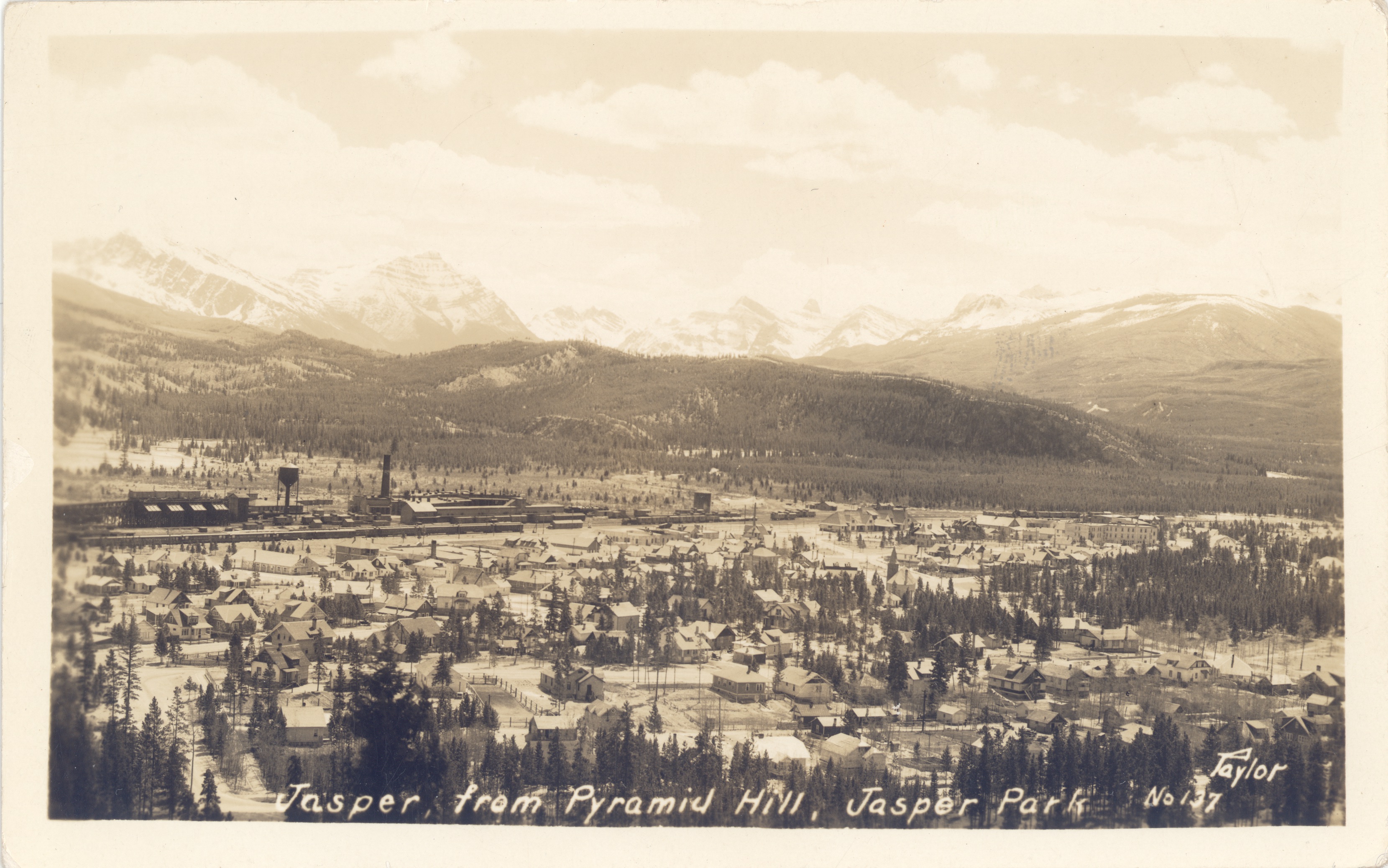
Morris was part of a promising photography scene in Jasper. When he and Helen arrived in 1930, there was already a photo finishing shop in town, H.J. Perrier photography. More would come. They weathered the Great Depression by moving both their young family and shop to the basement of the Masonic Hall, the party spot of the time.
Although Jasper was quiet in the winter, the summers picked up as thousands of tourists arrived by rail, all keen for a portrait of their Jasper adventure and postcards for friends and family back home.
In 1932, Captain W.J. Holland flew his Boeing A-213 float plane “Totem” to Jasper hoping to show off what this new plane could do and make a few bucks, touring folks around the park at five bucks a pop. He hired Morris to promote his business, resulting in one of Morris’ most iconic and striking photos — the Totem floating in Amythest Lake, the Ramparts resplendent in the background as pilot and passengers perch atop the floatplane’s cabin.
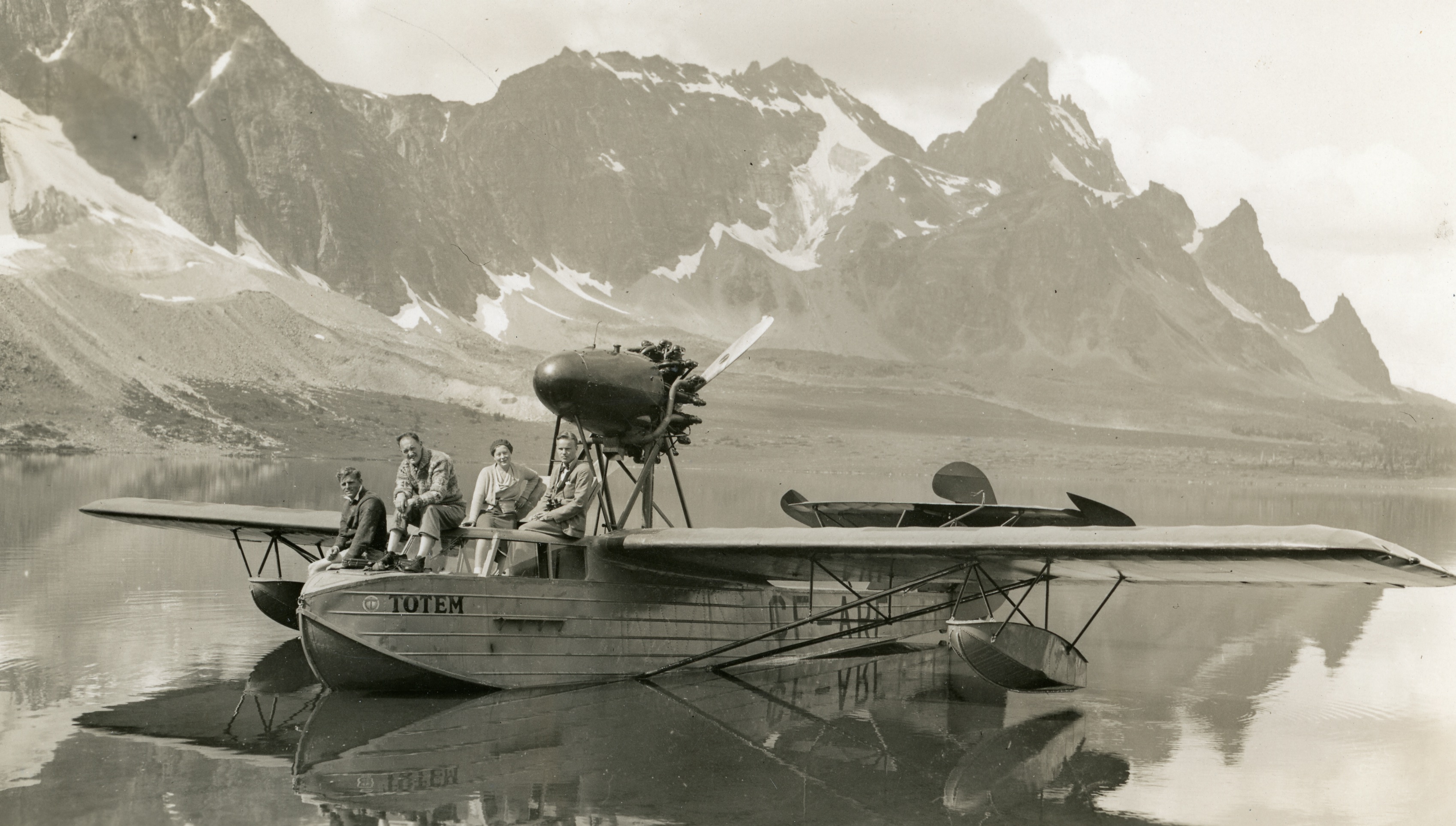
Business was not great in fact, so Holland soon decamped to Banff, setting up on Lake Minnewanka hoping things would be better there. They were not.
But eventually the depression eased and by 1936, Helen and Morris had saved enough to build their own shop and studio at 630 Connaught Drive. Six years living under a dance hall was enough. If you’ve been around Jasper for a few years, their new building was where Vicious Cycle was before 2024 and is now the gap between the Jasper Brewing Company and Jasper Curry Place (the Venchiarutti Building). Far enough west on Connaught that you can’t see it in his photo.
What you can see is change. Whistlers Mountain is there, of course, but there is no Sky Tram. It would not be built for another 24 years. The cars in the photo are very different as well, never mind that you can only see 6 in the scene, all parked. The Icefield Parkway would be completed within weeks, so perhaps more cars would be visible were Morris to have waited a few months to take this picture. Where Around the Corner is, there is an ice cream shop. In front of the train station, lantern-topped stone pillars anchor the corners on finely groomed lawns. The scene, compared to today seems quaint, if a bit eerie—as if a pandemic had just been declared. That would take another 80 years.
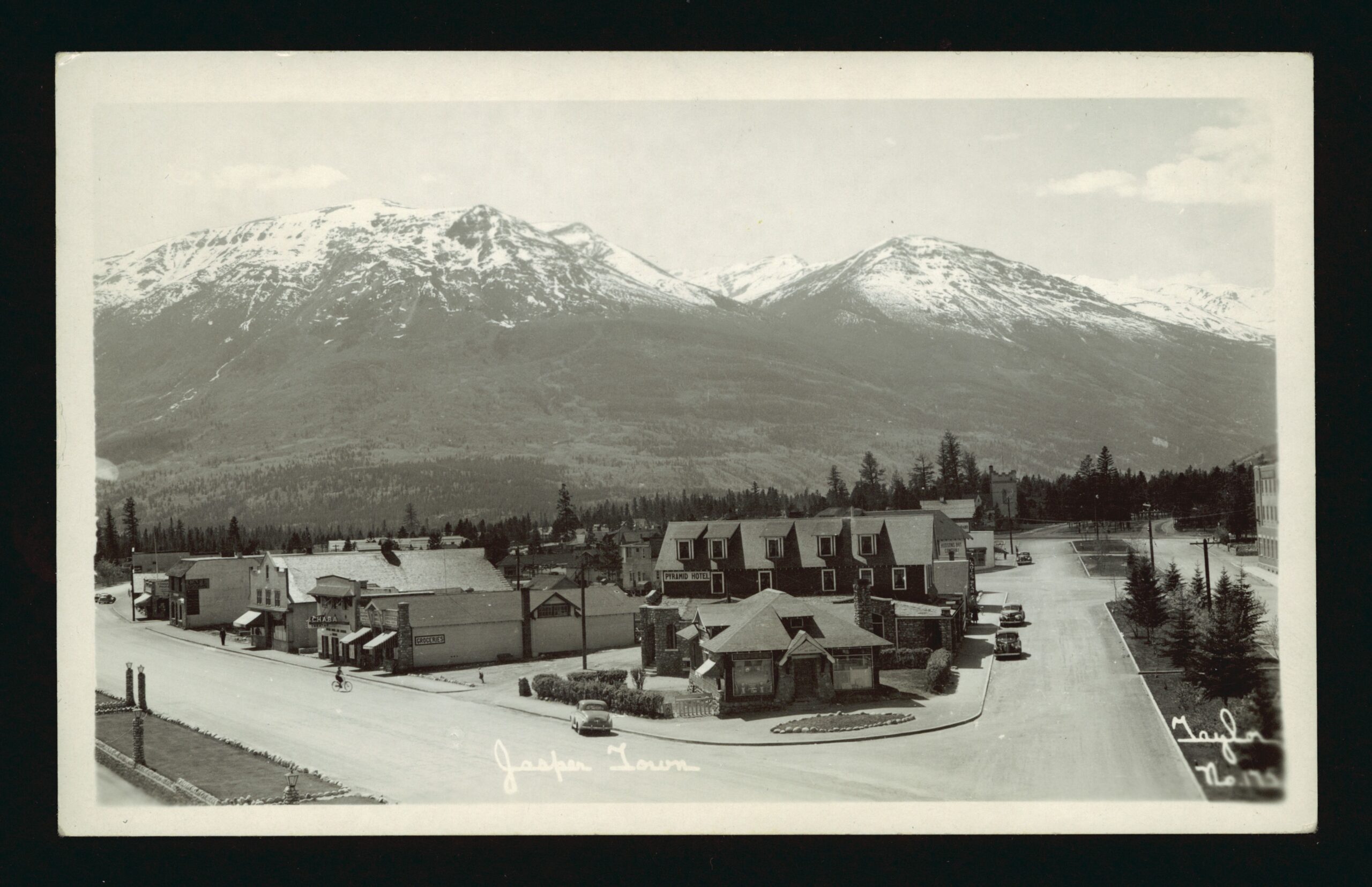
Different too is the photographer’s perspective; elevated, but clearly east of where the train station ends, overlooking the intersection of Connaught and Miette. He must have been standing on the Coal Dock, also no longer there, but a building that served the railway for years before diesel engines made it obsolete. For lots of reasons, Morris’ perspective on Jasper is no longer possible, or at least likely.
The photographer Richard Avedon has said that all photographs are accurate but none tell the truth. The beauty of a photo archive is that it can bring photographic truths into focus by telling the story of time. The story of Jasper in 1940 bears both a faint and a familiar resemblance to the Jasper of today…at least at the intersection of Connaught Drive and Miette Avenue.
There are many more “truths” in the Yellowhead Archives to explore.
John Wilmshurst // info@thejasperlocal.com