

A sudden ban on watercraft and wading gear in Mount Robson Provincial Park has sent shockwaves through the Jasper and Valemount paddling communities.
New aquatic protective measures have closed access to one of Western Canada’s most celebrated whitewater runs in the name of protecting the Fraser River watershed from a deadly aquatic parasite.
Implemented May 4 by B.C.’s Ministry of Environment and Parks, the provincial restrictions prohibit both motorized and non-motorized boats, as well as fishing waders and boots, throughout the park. The move is aimed at preventing the spread of whirling disease, a highly contagious parasite that attacks trout, salmon and whitefish, often killing juvenile fish before they reach maturity.
The disease was recently detected in Lake Louise. In March, Parks Canada announced wide-spanning restrictions of its own in Canada’s mountain parks.
Although the disease has not been detected in Mount Robson Provincial Park, provincial officials say preventative action is necessary because there is no known treatment once the parasite enters a river system.
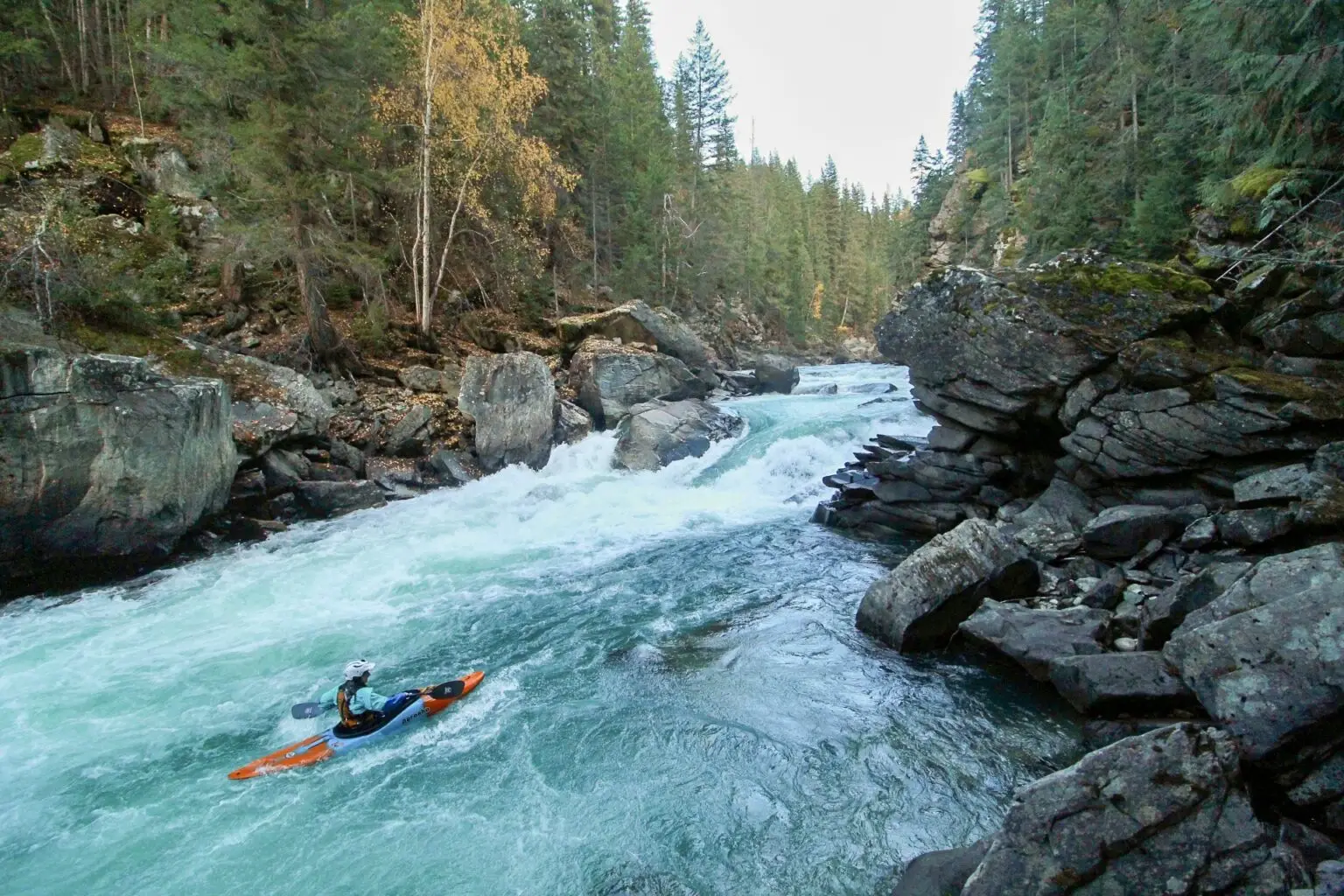
For many local paddlers, the closure represents more than the loss of recreation. The Upper Fraser River, which flows beneath the towering presence of Mount Robson, is regarded internationally as a premier whitewater run, drawing experienced kayakers and rafters for its powerful rapids, wilderness scenery and technical challenge.
“The Upper Fraser is a world-class Class IV run, and for many of us, it’s where we decompress after long days, challenge ourselves, and build strong friendships on the water,” said Justin Hachman, proprietor of Stellar Descents, a Valemount-area rafting company. “It’s a huge part of our mental health and our community.”
It’s also a big component of Stellar Descents’ training regiment; Hachman’s staff use the Upper Fraser to keep their skills sharp.
Despite the disappointment, Hachman said the paddling community largely understands the gravity of the threat.
“We support the decision,” he said. “Whirling disease is devastating to fish populations—especially young trout and salmon. In infected rivers, mortality rates for juvenile fish can be up to 90 per cent.”
The parasite, which can spread through contaminated boats, boots and other wet gear, can persist in river sediments for decades.
The Fraser River system carries enormous ecological importance, supporting salmon populations that sustain wildlife, fisheries and communities far downstream. Some salmon spawn upstream of Rearguard Falls near Mount Robson (as well as below), making the headwaters especially sensitive.
“The stakes are incredibly high,” Hachman said. “If our headwaters are affected, it could mean massive declines in salmon and trout populations and a disruption of our river ecosystem.”
The restrictions have frustrated some paddlers, particularly because many river users already follow “Clean, Drain, Dry” decontamination practices intended to stop the spread of invasive species and aquatic diseases. But Hachman acknowledged that inconsistent compliance — especially among travellers moving gear between provinces and countries — creates ongoing risk.
“The reality is, while many river folk understand and follow Clean, Drain, Dry, not everyone does,” he said.
Rather than simply opposing the closure, Hachman hopes the controversy leads to stronger long-term systems that protect waterways while eventually restoring responsible recreational access.

“When you write letters and advocate, make sure you are thinking about how to make better systems, not just asking for access,” he said. “We are stewards of this land and have responsibilities to the ecosystems we influence.”
Bob Covey // bob@thejasperlocal.com