

A lack of visitors to Jasper National Park remains the biggest challenge for businesses recovering from the 2024 wildfire, according to a new economic assessment on the community.
Ben Brunnen, principal and founder of Verum Consulting, told council on Tuesday (June 9) that other challenges indicated by their survey include a lack of amenities, difficulty attracting and retaining employees and a lack of staff accommodation.
“The retail and restaurant sectors were more likely to indicate a lack of visitors,” Brunnen said. “Higher operating costs were a top factor for the accommodation sector, and a lack of staff accommodation was more of an issue for restaurants, retail and accommodation.”
The assessment was commissioned by the Jasper Park Chamber of Commerce (JPCC), Tourism Jasper, Community Futures West Yellowhead and the Jasper Employment and Education Centre.
Tyler Riopel, CEO of Tourism Jasper, said the aim was to determine the economic impacts of the 2024 Jasper wildfire on the business community and what would be required to support long-term recovery.
“Decisions being made now will help shape not only how our community continues to recover but how we position ourselves for future prosperity,” Riopel said.
Brunnen cited visitor counts from Parks Canada that showed visitation dropped by 54 per cent from 2.5 million in 2023 to 1.1 million in 2024 when the wildfire happened. While visitation recovered to 2.1 million in 2025, that was still 14 per cent below pre-fire levels.
Visitor spending was on track to generate $604 million in 2024 and $640 million in 2025, but Brunnen estimated it ended up being $326 million in 2024 and $479 million in 2025.
“Getting back up to the trajectory you were on won’t happen unless there is some concerted effort to shift that curve upward to grow the economy,” he said.
Paul Butler, JPCC executive director, added how visitation would increase over the coming years as commercial accommodations and campground offerings were rebuilt, but the rebuild was raising operating costs for businesses.
“Profitability is at risk,” Butler said. “There’s a lot of people on the street and visitation is growing, but a lot of that visitation is not spending well, and it’s difficult to capture the impact of that spending when your operating costs are going to remain high.”
According to the business survey, 58 per cent of respondents indicated they required more than 24 months to return to pre-fire levels of profitability. All were concerned about higher insurance premiums as well as wages, utilities, lease rates and other costs.
“Not all businesses are able to absorb this cost equally,” Brunnen said. “Local restaurants, retail shops, smaller hotels and tourism businesses are more likely to be hurt by these costs.”
Of 548 businesses registered in Jasper, 73 responded to the survey, representing a response rate of 13 percent. Brunnen said the responses were generally reflective of the makeup of Jasper’s business landscape. Mayor Richard Ireland asked if better visitor spending data were available than simply an annual survey of a select number of businesses willing to volunteer their revenue projections.
“Maybe the 13 percent that responded are a fair reflection but maybe they’re not,” Mayor Richard Ireland said. “It would be really helpful if we could have access to verifiable, quantifiable data to help us make some decisions.”
Marketing to attract visitors was identified as a top recovery priority, followed by financial support, staff accommodation and infrastructure repair.
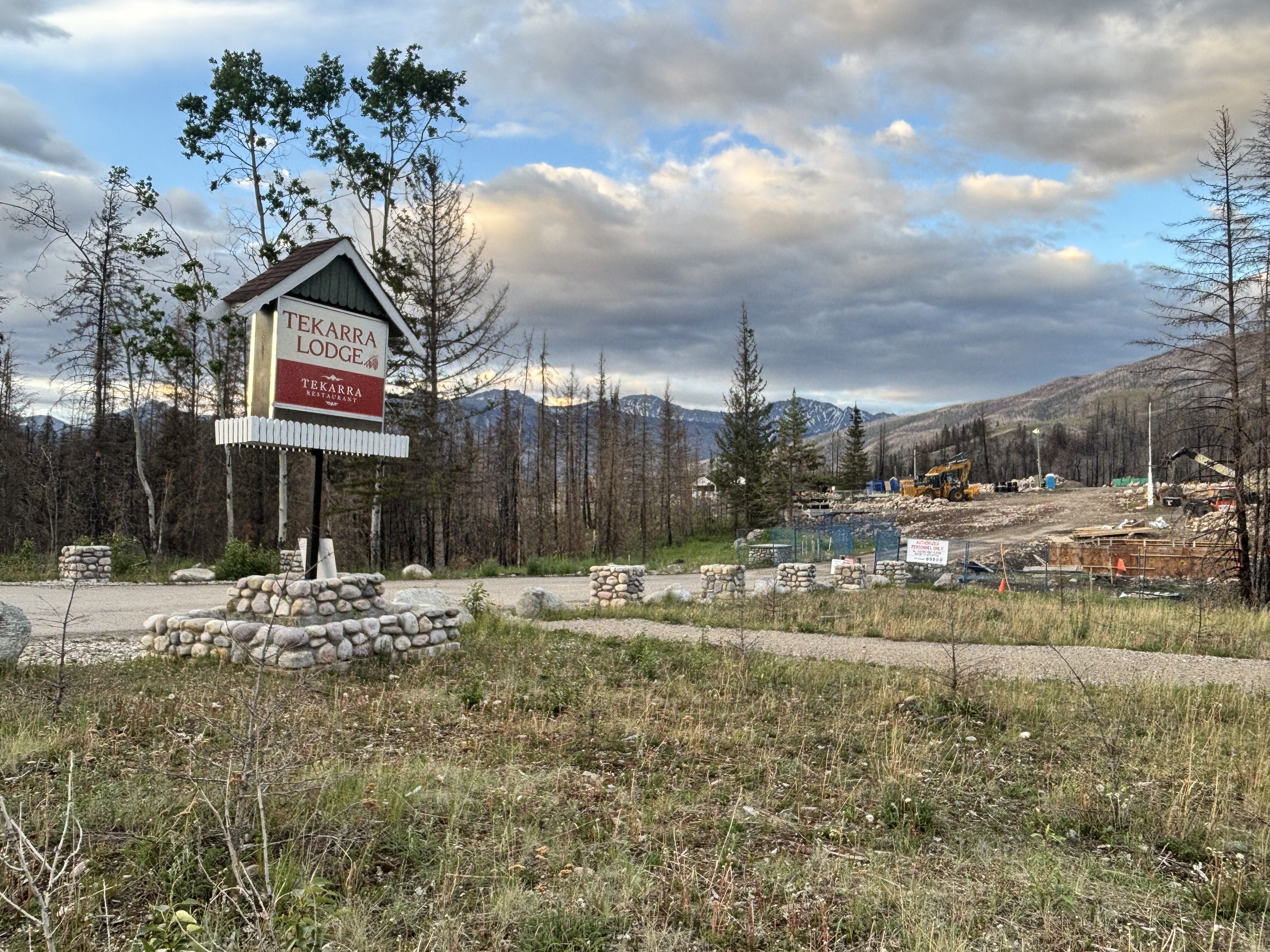
A second survey targeted commercial property owners whose businesses were destroyed in the 2024 wildfire. This revealed 70 per cent of respondents planned to rebuild their property, with less than half expecting to rebuild within the next year.
Recovery recommendations
Reducing the tax ratio between non-residential and residential was among the assessment’s recommendations for facilitating Jasper’s economic recovery.
Committee of the whole voted 6-1 to direct administration to return prior to budget presentations with a report identifying opportunities for supporting the recommendations. Coun. Kable Kongsrud was opposed, since he wanted to engage with the business community rather than wait for a report to come back.
“I do want to make sure that the business community knows that we’re listening,” Kongsrud said. “We need to get together and then move forward.”
To identify strategic actions that align with the Jasper Destination Stewardship Plan, Verum Consulting interviewed between 35 and 40 business and other stakeholders in Jasper.
Brunnen said Jasper has a higher tax ratio between residential and non-residential compared to other tourism communities in Alberta and British Columbia, with its 5:1 ratio tied only with Revelstoke and Banff having a lower ratio of 4.2:1.
He recommended the Municipality work with the partners to develop a tax policy that removes inequities in the tax base and adopts tax targets comparable to other municipalities.

In advance of fall budget discussions, municipal staff are expected to return with a draft tax policy in July that would address the ratio.
Coun. Wendy Hall asked if the other tourism communities in British Columbia have smaller ratios because of their status as resort municipalities, which gives them extra funding to help mitigate the impacts of heavy seasonal tourism.
Brunnen confirmed they do receive this support, adding that one of the other recommendations was for Jasper to strengthen relations with the Alberta government.
Ireland expressed doubt that the Province would offer this support to Jasper, noting it was looking at investing in four-season resorts elsewhere in Alberta.
“Despite what we think are compelling arguments focused on the provincial interest, they never seem to make it to the top of the heap,” Ireland said.
Brunnen replied it may be possible to convince the Province if local stakeholders had a shared vision and set of priorities so they can “sing from the same song sheet.”
Coun. Kathleen Waxer said putting more of the tax burden on residential properties would lead to higher rents, making it difficult to attract workers.
“There’s always such a delicate balance to ensure that we are making informed and strong decisions,” Waxer said.
To enhance the “place” of Jasper, priorities identified include developing and enhancing shoulder and winter season experiences, improving access to Jasper, and facilitating enhanced mobility within town and the surrounding park.

Brunnen said stakeholders recognized how the Municipality has invested in transit but wanted to be more “meaningfully engaged,” with a greater focus on business and staff transportation needs being prioritized in a cost-effective way.
Among other recommendations, he also emphasized the need to develop more housing options, develop the local workforce and remove barriers to local business recovery.
Peter Shokeir, Local Journalism Initiative // info@thejasperlocal.com
-with files from Bob Covey