

Paid parking will resume a month earlier in Jasper next year.
On October 6 council voted to extend the annual season from May 1 to Oct. 31, with the added month expected to generate an estimated $113,000 in revenue.
“It seems to me that April clearly is a month that we should be capturing,” Coun. Danny Frechette said during a committee of the whole meeting on Sept. 30.
Jasper introduced paid parking in 2021, primarily to generate revenue from visitors who put additional strain on municipal infrastructure. The program has since undergone several expansions and rate increases. Residents are exempt, and paid parking generated $1.34 million in 2025.
In March, committee directed staff to explore year-round paid parking. Coun. Wendy Hall argued at the time that the Municipality was “leaving money on the table” by not operating the program during the winter.
A municipal survey last summer drew 182 respondents and explored options for extending the season. Christine Nadon, director of Protective and Legislative Services, said staff focused on April as an extension because it has the highest visitation of the months outside the existing paid parking season.
Moving to year-round paid parking could generate an estimated $306,305 in additional revenue, with more than one-third of that increase coming from April alone.
Keeping the current season was the most popular individual option in the survey, but more respondents collectively favoured extending paid parking into April or operating it year-round.
Administration recommended adding April only, balancing the potential for additional revenue against concerns that year-round paid parking could deter regional visitors during slower months.
Coun. Ralph Melnyk supported the one-month extension, saying the Municipality should wait until it has a clearer picture of downtown parking after reconstruction.
“We are still going through a lot of rebuilding in our downtown,” he said. “Once the downtown core reconstruction is done, we’ll have additional parking stalls available.”
Coun. Laurie Rodger said the business community was reluctant to extend paid parking even into April. He suggested ending the season after Thanksgiving instead of Oct. 31, noting visitation is low during the final two weeks of October.
“That would do something to smooth things over,” he said.
Melnyk favoured keeping the Oct. 31 end date to capture busy weekends during the Jasper Dark Sky Festival. Mayor Richard Ireland added that the Municipality needed fixed dates for parking signage, making an end date tied to Thanksgiving impractical because the holiday changes each year.
More parking zones under consideration
Staff will return to council with more details on potentially expanding paid parking zones.
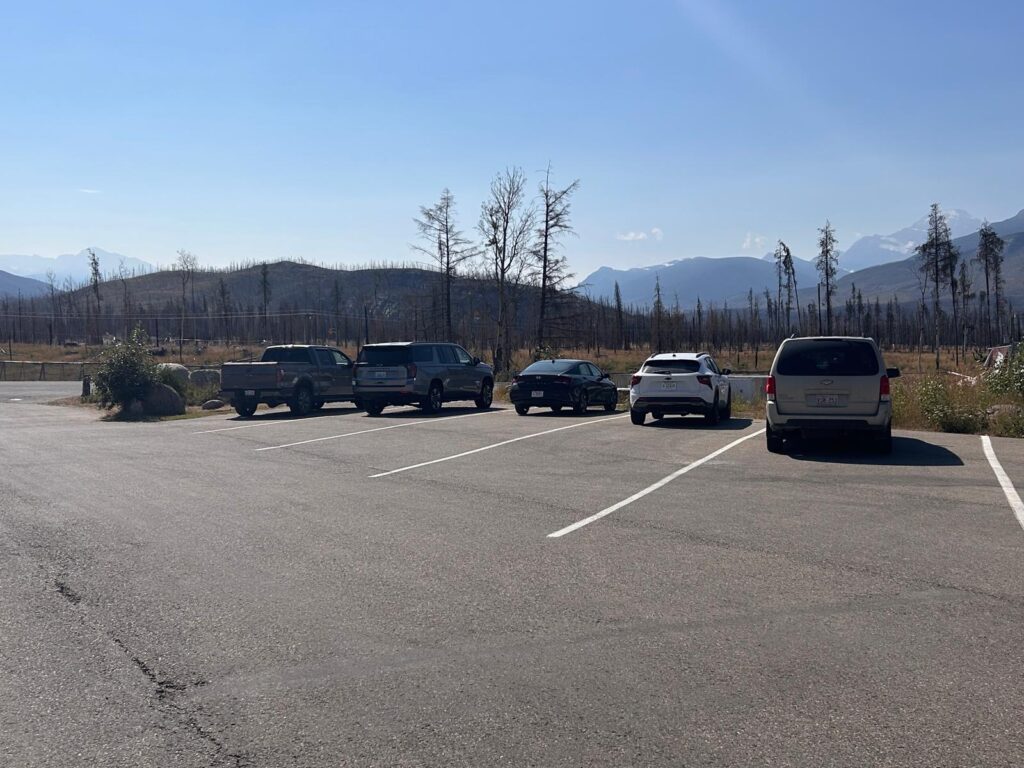
Nadon identified the RV parking lot across the railway tracks as one possible area for more active management, including patrols and signage. The lot is used primarily by visitors, she said, and has presented problems for the Municipality.
“There’s been some things happening out there,” she said. “We had a big gas spill that went unreported, and then we had to clean it up. It cost us a lot of money to do that.”
Angled parking near Commemoration Park along Pyramid Lake Road could also be considered.
Committee further asked staff to explore ways to collect data on how residents and visitors use paid parking spaces.
“We are walking away from revenue that we can’t even calculate based on the numbers that we now use by allowing residents to park for free,” Ireland said.
Jasper continues to grapple with parking pressures
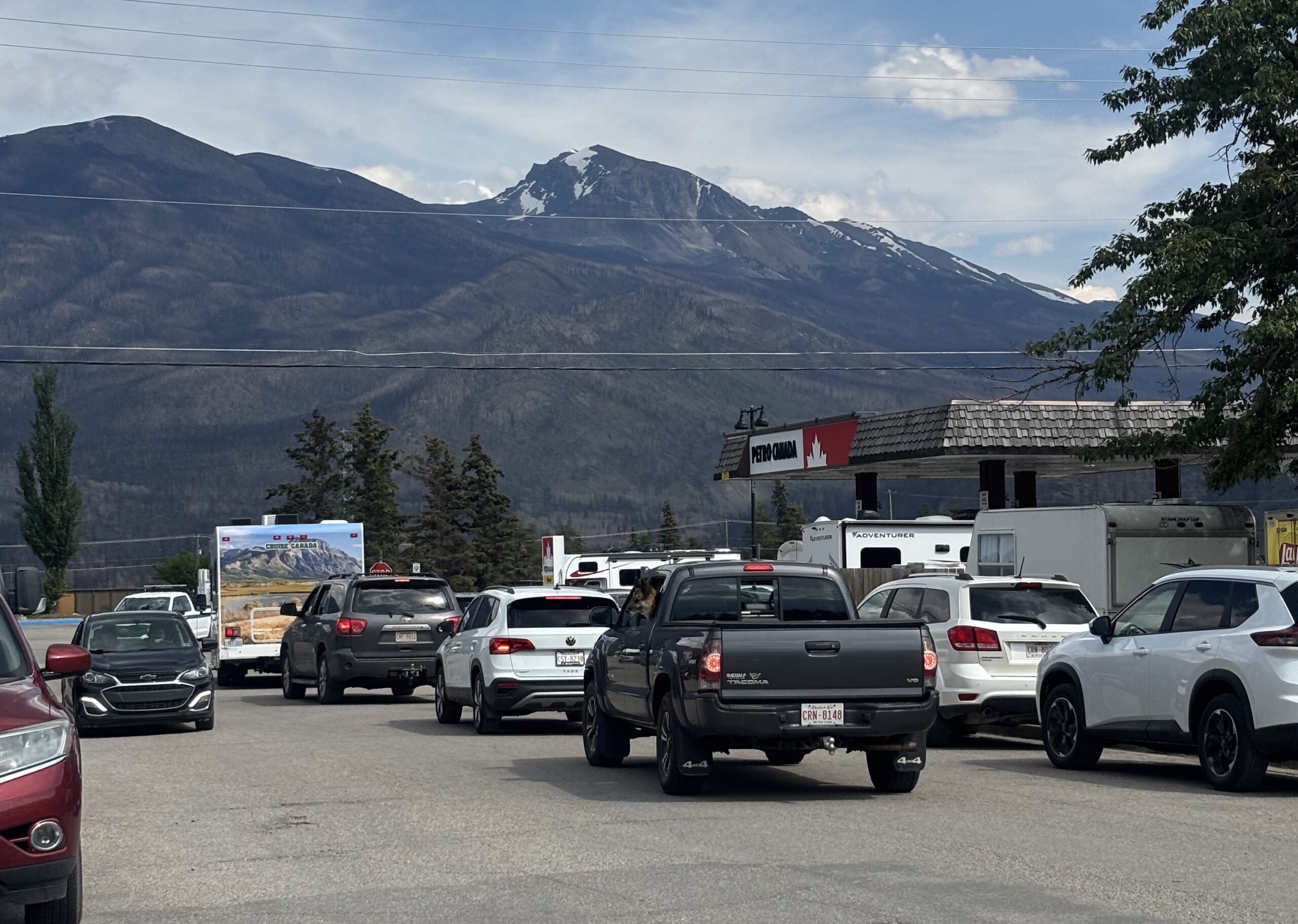
Parking remains a challenge in Jasper, where summer visitation adds pressure to limited street space and residential parking.
Jasper National Park recorded 484,869 visitors in July and 473,964 in August, underscoring the seasonal demand.
Beth Sanders, director of Urban Design and Standards, said Jasper faces unique parking pressures because of the influx of summer visitors.
The Municipality’s land-use policy sets minimum parking requirements for housing. In 2025, council considered asking Parks Canada to remove parking minimums, but ultimately did not proceed following community pushback.
“When we’re wanting to build a new apartment building … there’s more land being used for parking than there is for housing,” Sanders said.
On-street parking is a public amenity in residential neighbourhoods and elsewhere, but curbside space also serves loading zones, bus stops, bicycle parking and patios.
“We have many competing interests about how our streets are used,” Sanders said.
Sanders suggested a curbside management strategy could help balance those demands, although it would have budget implications. Administration recommended completing work on the transportation master plan and streetscape guidelines before developing such a strategy.
“There is action happening on parking,” said Chief Administrative Officer Bill Given. “Both of those planning exercises and plans that would come forward would absolutely discuss and recommend strategies around parking.”
In the meantime, the Municipality is promoting walking, cycling, transit and car sharing as ways to ease congestion.
Hall acknowledged that parking would remain a contentious issue in Jasper, where residents value the independence of having their own vehicles.
“I don’t think we should lose sight of that,” she said. “At the same time, I’ve always been way more concerned with where people sleep at night than where they park their cars.”
She added that if the Municipality wants residents to drive less, it must provide realistic alternatives.
Peter Shokeir, Local Journalism Initiative // info@thejasperlocal.com