

Jasper could introduce winter bus service to Marmot Basin in November 2027 as part of a proposed five-year transit expansion plan that would more than double the Municipality’s annual operating subsidy.
On Tuesday, September 29, committee of the whole referred the proposed expansions to budget discussions. The ski hill route would depend on a cost-sharing agreement with local businesses and other partners. Council is expected to consider the 2027-2031 transit business plan next week.
“Frequency is freedom,” said Coun. Kable Kongsrud. “If we’re going to make this bus project work, we have to have it rolling and give people a chance to get on, and everybody has to get behind it.”
Jasper Transit launched in 2023, providing service within the townsite and to popular nearby destinations.
In June, council reviewed four options for expanding transit over the next five years: more frequent summer service, year-round townsite service, longer winter service hours and a winter route to Marmot Basin.
Director of Operations and Utilities Courtney Donaldson said staff incorporated the options into the five-year business plan as directed by council. Approval of the plan, however, would not automatically authorize the expansions.
Under the proposal, a dedicated bus would serve Marmot Basin during its winter operating season, from November to May. Service would run every 90 to 120 minutes, roughly between 6 a.m. and 6 p.m., using a bus equipped with ski and snowboard racks.
Marmot Basin president and CEO Jason Paterson previously told council the service would be “an investment in our economic success and accessibility of our entire community.”
“Administration’s recommendation is contingent on developing a detailed service model and cost-sharing arrangements with external partners,” Donaldson said. “Work is already underway with the Chamber of Commerce and business stakeholders.”
A detailed service and funding agreement would need to return to council by the end of the second quarter of 2027 to meet the proposed November launch.
Coun. Danny Frechette pointed to a discrepancy between businesses supporting transit expansion and those calling for the Municipality to scrap the system altogether.
“I think we’re headed in the right direction for the future, and an expansion is what’s going to make it work,” he said.
The plan also proposes extending winter service from eight to 12 hours daily to reduce gaps in the early morning and midday, addressing one of the most common requests from riders.
Further changes would follow: increased summer service frequency in the second quarter of 2028, followed by limited year-round fixed-route service within the townsite in the second quarter of 2029.
Transit costs and municipal subsidy
If all the proposed expansions proceed, annual operating costs would rise from $933,000 in 2027 to more than $1.89 million in 2031.
Annual operating revenue is projected to increase by about $300,000, reaching $612,400 by 2031. Revenue from the Marmot Basin route, including fares and partner contributions, would account for roughly half of that total.
The remaining $1.28 million would be covered by an operating subsidy split evenly between the Municipality and Parks Canada, with each contributing $643,300 annually.
That would more than double the Municipality’s annual subsidy, from $315,950 to $643,300. Municipal funding would come from tax revenue and visitor-paid parking.
Administration said the plan draws on stakeholder engagement, a summer 2025 rider survey, customer feedback and transit performance data.
A more recent survey of 97 transit riders and 100 non-riders found that riders more strongly favoured increased summer frequency and longer winter service hours, while non-riders showed a stronger preference for the Marmot Basin route.
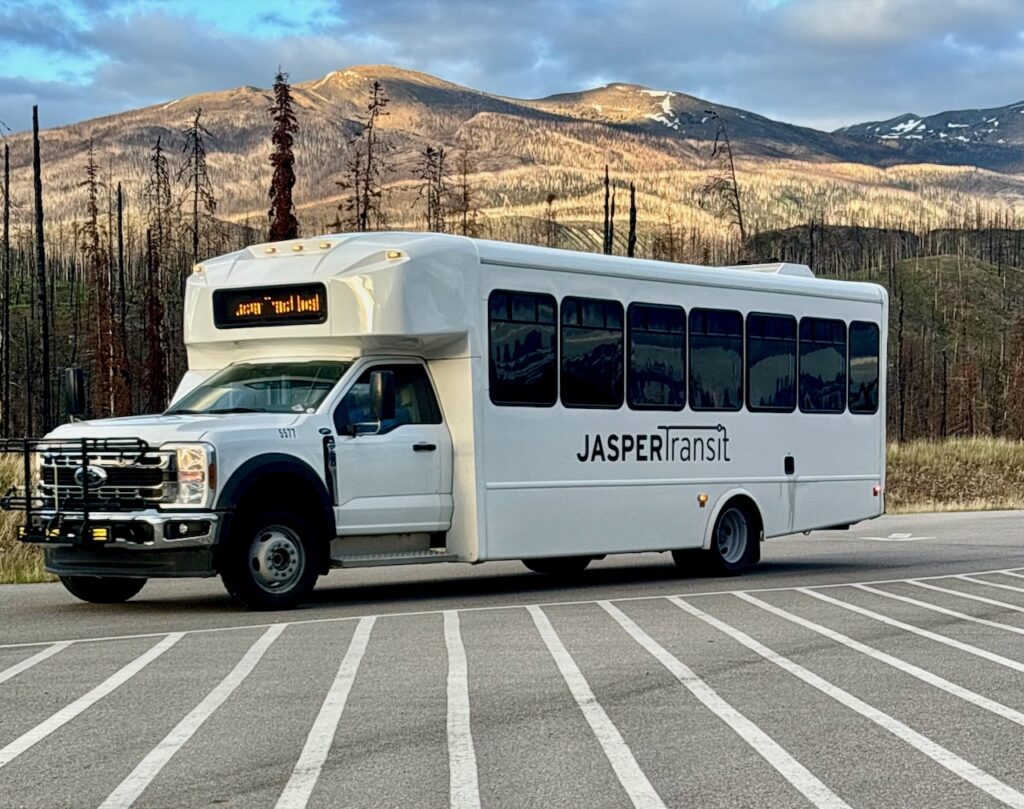
Transit manager Erin Toop said the proposed rollout balances the priorities of riders, non-riders and businesses. Winter service hours would be expanded first in part because the change would be relatively inexpensive and straightforward to implement.
“We could turn that service on right now if we wanted to do that,” Toop said.
Coun. Wendy Hall reiterated her support for transit, noting that the benefits of a long-term investment may not be immediate but could grow alongside the community.
“If we genuinely want residents to leave their vehicles, we have to give them an alternative that is easy and reliable,” she said.
Peter Shokeir, Local Journalism Initiative // info@thejasperlocal.com