

David MacPhee returned to the place his adopted family was forced to leave more than a century ago, carrying stories of grief — and a hope that reconciliation can make tomorrow different for his grandchildren.
When David MacPhee looks at the mountains around Jasper, he doesn’t simply see mountains.
He sees home.
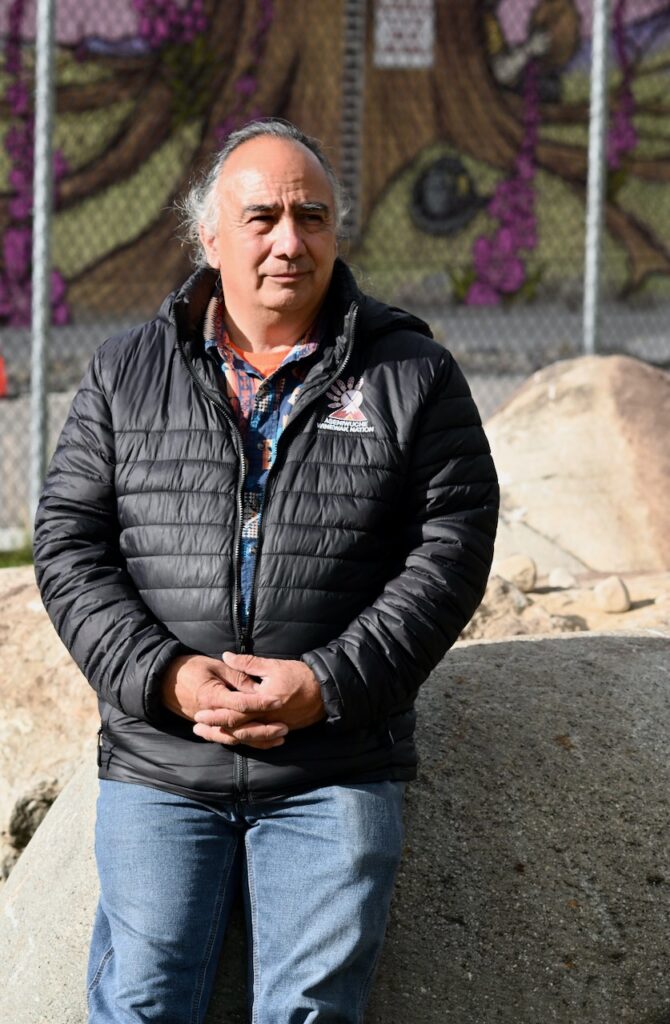
Speaking at Jasper’s National Day for Truth and Reconciliation gathering on Wednesday, September 30, the president of the Aseniwuche Winewak Nation (AWN) — the “Rocky Mountain People” — shared memories of returning to the Athabasca River valley with his adopted family, and of the generations of pain carried by a community forced from their home in the early 1900s.
“Today my heart is raw,” MacPhee told the gathering.
MacPhee remembered an elder describing the landscape where his adopted family had once lived. He talked about the prominent cliffs of the Palisades. He talked about the bumpy Snaring Road, with many bridges to cross.
And he remembered returning to the Moberly family cabins with the elder who raised him: Alex Moberly, who at the time was frail and immobile. MacPhee said Alex kneeled at his grandmothers’s grave to pray and recognized the cabins as his grandfather’s.
But some of the cabins were too far from the road for Alex to walk. “It’s too far for me,” Alex told him.
So MacPhee picked him up.
“I could feel the pull he was feeling to see his grandfather’s home,” MacPhee said.
Alex noted the precision with which many of the cabin’s logs were hewn, MacPhee said. In his day, Alex was highly skilled with a broad axe.
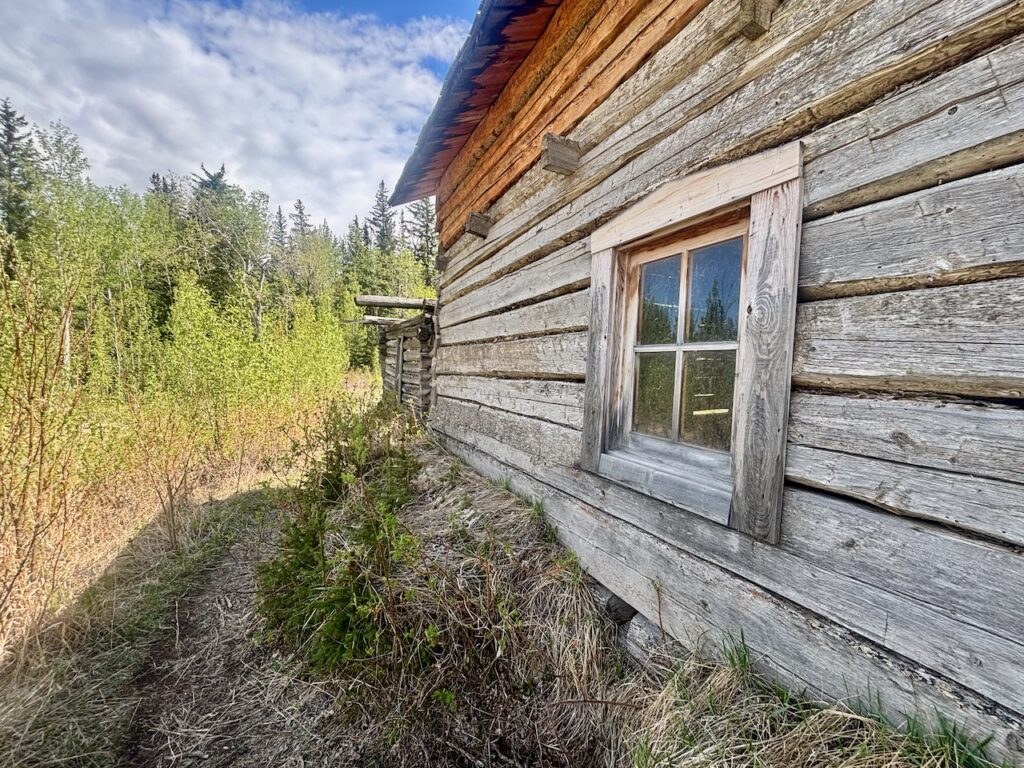
Years later, standing in the place his family had been forced to leave, Alex could only reflect on the time that had passed.
“I should’ve come back a long time ago,” he told MacPhee.
For MacPhee, those moments aren’t simply family memories. They are part of a history that continues to live in the people who inherited it.
“Part of my grief today is the grief of being evicted,” he said. “Part of it is feeling my father’s pain — his whole community’s pain.”
A journey away from home
The story of the Aseniwuche Winewak’s connection to Jasper has been explored in the 2021 documentary Resilient: The Aseniwuche Winewak Story.
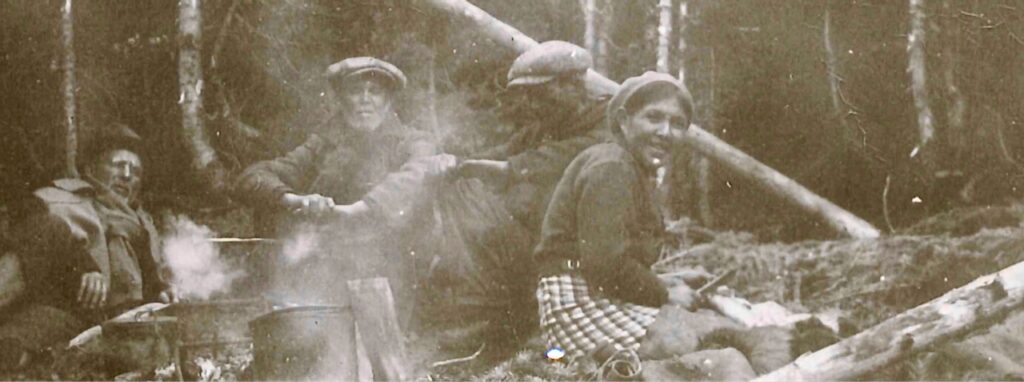
The film traces the AWN’s history from the Indigenous communities living in the upper Athabasca Valley before the creation of Jasper National Park through the upheaval caused by the fur trade, the creation of the Jasper Forest Reserve, the community’s eventual relocation to the Grande Cache area and further disruptions caused by industrial development.
The Jasper Forest Reserve was established in 1907. Three years later, Indigenous people — including Métis families with established homesteads — were forced to leave their homes within the park boundaries. Parks Canada now acknowledges that the creation of the park physically removed Indigenous people from the landscape and severed relationships with places that were fundamental to culture, spirituality, identity and ways of life.
For those who left Jasper, the journey was not a simple relocation. Families moving toward what is now Grande Cache spent two years cutting trails for their horses and cattle and transporting farming equipment. The documentary described a community that subsequently faced further disruption and harassment as industrial development transformed the Grande Cache region.

MacPhee brought that journey to life in his speech.
He remembered stories of families cutting trail from Jasper toward Grande Cache with disassembled wagons and sleighs, all set on pack horses.
He remembered his grandmother talking about the eviction: When the families received notice, she told him, nobody wanted to leave. Their rifles were taken. They were effectively starved out. They were threatened by the RCMP.
MacPhee also recalled a story about an old woman gathering wild chives. She was heart-stricken.
“At camp, she used the chives to mask the fact that she was crying,” he said.
Years later, during a traditional land-use study, MacPhee travelled by helicopter over the landscape. When the aircraft passed over a large cliff, he said, he experienced a sudden wave of grief. The geography had become inseparable from the history.
A relationship beginning to change
But MacPhee’s message on Monday wasn’t only about what happened. It was also about what is happening now.
Parks Canada says more than 20 Indigenous communities participate in the Jasper Indigenous Forum or the Upper Athabasca Valley Elders Council, working with the park on issues including reconnection to traditionally used lands, Indigenous cultural presence, stewardship and participation in park management.
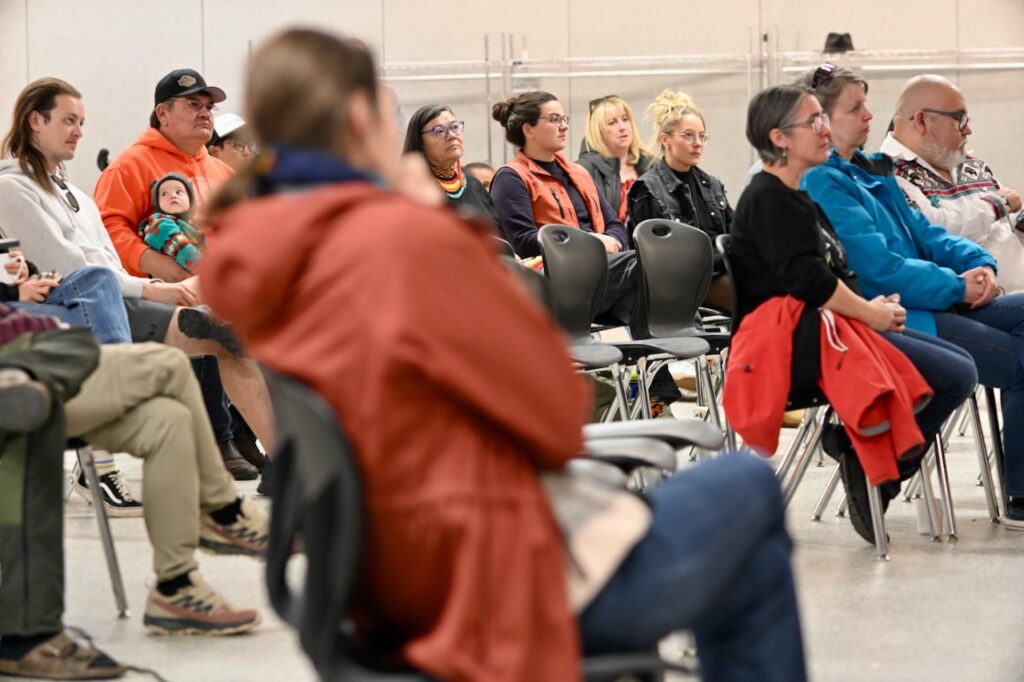
The Aseniwuche Winewak Nation is among the Indigenous partners working with Jasper National Park.
For MacPhee, that relationship represents a significant change.
Addressing Parks Canada representatives at Monday’s gathering, he said he could see a gradual shift in the relationship between the AWN and the park.
“I can feel that and I can see that,” he said.
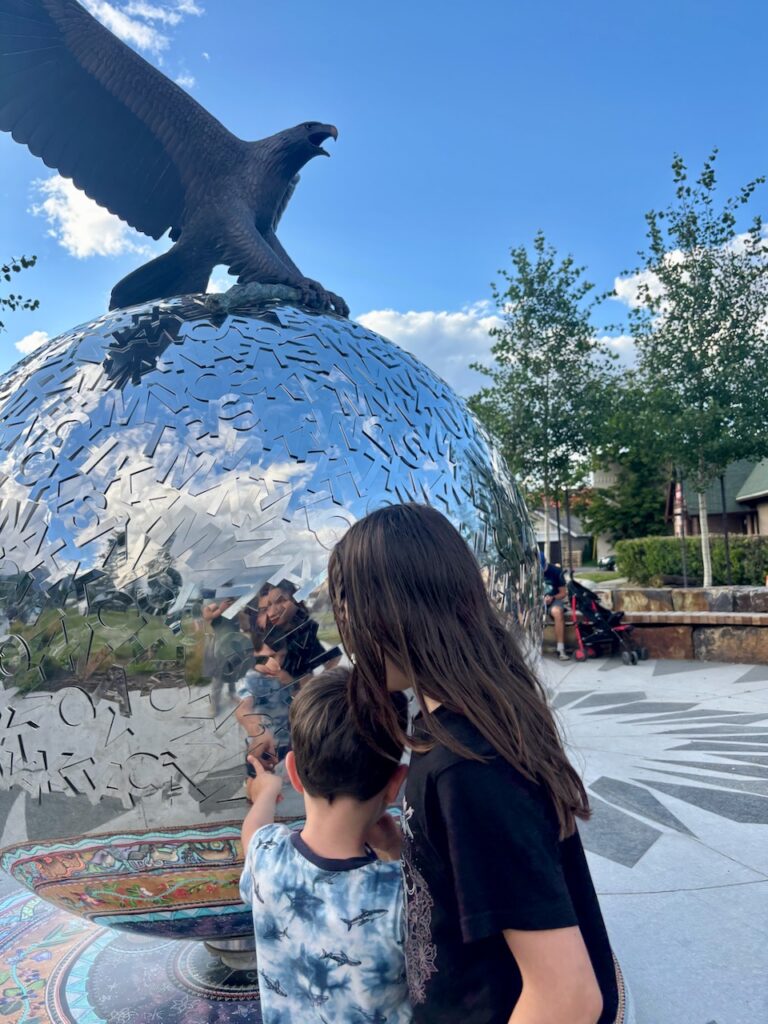
He also pointed to the bronze “Kokum” statue outside the Jasper Yellowhead Museum as an important symbol of that change.
The statue, created by artist Crystal Mossing, depicts AWN elder Lucy Wanyandie and honours the original Aseniwuche Winewak residents of Jasper. It was erected outside the museum in 2017 — a gesture that MacPhee described as deeply meaningful.
MacPhee acknowledged the courage of the Jasper-Yellowhead Historical Society and others involved in recognizing that history.
“When history exists between groups of people, it takes a lot of courage to do the right thing, to move forward.”
That movement is also reflected in Parks Canada’s current approach to Indigenous relations.
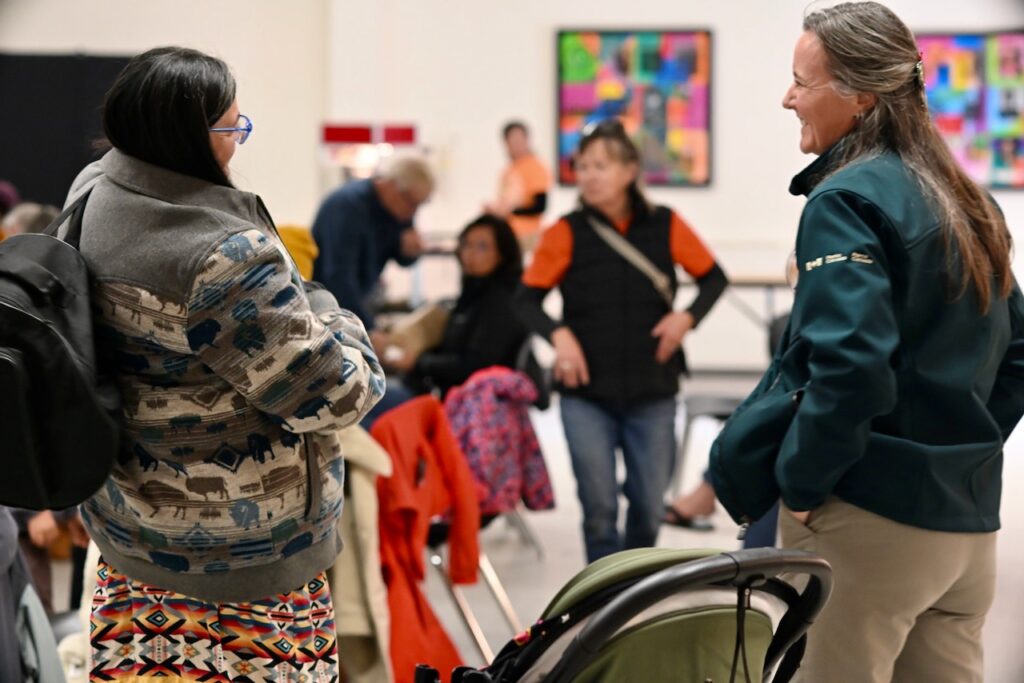
The park says its Indigenous relations work is intended to strengthen connections with traditionally used lands and waters, expand Indigenous participation in park management and ensure Indigenous histories and cultures are presented and commemorated.
An Indigenous exhibit in Jasper, developed through years of collaboration with Indigenous partners including the AWN, places displacement and its continuing impacts at the centre of the story.
For MacPhee, acknowledging the history doesn’t make the hurt disappear.
“The scars have cut my soul deep,” he said.
But he said he was glad that Canada was confronting a dark chapter of its history and trying to bring light to it.
‘It’s hard, but it can be done’
One of the most personal stories MacPhee shared had nothing to do with government policy or historical monuments. It was about his coworkers.
When discoveries of unmarked graves at former residential schools were making headlines, MacPhee said his coworkers recognized that he was hurting.
They gave him space, taking the day off early to have an informal gathering at the shop.
“They said ‘we want to be with you for a bit,’” he recalled.
He described the gesture as one of the most meaningful things anyone had ever done for him on National Day for Truth and Reconciliation.
For MacPhee, it demonstrated that reconciliation doesn’t necessarily begin with grand gestures.
Sometimes it begins with listening and simply making room for someone else’s pain. Sometimes it begins with trying to understand.
He said he could recognize when people were genuinely trying to do the right thing.
“It’s hard, but it can be done,” he said.
And that, ultimately, is where MacPhee’s story came back to Jasper.
He spoke about wanting his grandchildren to have a different future — a “sunny day” in which his community can be proud of its ancestry and culture without carrying the same burden of displacement.
He said his hope was for everyone in Canada, “both victims and offenders,” to have the opportunity to heal and celebrate life.
The history remains. The pain remains.
But so does the possibility of a different relationship with the place his adopted family was forced to leave.
“Whatever scale, whatever we can afford to do, it’s time to be honest, be true to each other,” MacPhee said.
“Because if we can be true, we can be reconciled.”
Bob Covey // bob@thejasperlocal.com