

Municipality says new policy will ask Jasperites what a “fair share” of property taxes looks like
The Jasper Park Chamber of Commerce is asking the Municipality of Jasper to rethink how commercial properties are taxed compared with residential properties, arguing the community’s 5:1 property-tax ratio no longer reflects a fair division of the municipal tax burden.
The Chamber’s position paper, submitted as the Municipality develops a new tax policy, challenges Jasper’s use of the maximum non-residential-to-residential tax rate allowed under Alberta legislation.
Under the current system, non-residential properties are taxed at roughly five times the municipal tax rate applied to residential properties. The Chamber says commercial properties account for about 44 per cent of Jasper’s total assessed value but contribute roughly 75 to 80 per cent of the municipal property-tax levy.
The Chamber argues that disparity should be reconsidered, particularly because commercial properties already tend to have higher assessed values.
“A tax system that pushes businesses toward unsustainability is not a problem for business alone — it is an existential risk to the economic base the whole community depends on,” the Chamber writes in its policy paper.
But the question of whether 5:1 is actually unfair is not one the Municipality of Jasper’s administration is prepared to answer.
CAO Bill Given said the municipality is deliberately leaving that question open as it develops a tax-policy framework for Council and the community.
“I don’t think administration has an opinion on what the right ratio is,” Given said.
Instead, he said, the municipality wants to establish a transparent philosophy for determining how the tax burden should be shared — something he said has historically been missing.
Given said that rather than being rooted in a formally adopted municipal policy, the 5:1 ratio has evolved over time.
Alberta once allowed municipalities to set much higher ratios. After the province established a maximum ratio of 5:1, Jasper Council directed administration in 2021 to bring the community’s ratio down from approximately 5.1:1 to the provincial limit. That decision divided the council of the day, but there has long been an underlying rationale for placing a greater share of property taxes on businesses, Given said.
Jasper’s economy is heavily dependent on visitors, and businesses derive revenue directly from that visitor economy. At the same time, the municipality historically had relatively few ways to capture visitor-generated revenue directly.
Property taxation therefore became one of the tools available to connect the cost of serving a visitor-driven economy with the businesses benefiting from it.
That rationale, however, has never been formally written into municipal policy.
“There has been a philosophy that’s been discussed many times,” Given said. “But it’s not actually codified anywhere.”
The Chamber argues that Jasper should instead look more closely at the costs created by tourism when determining how taxes are allocated.
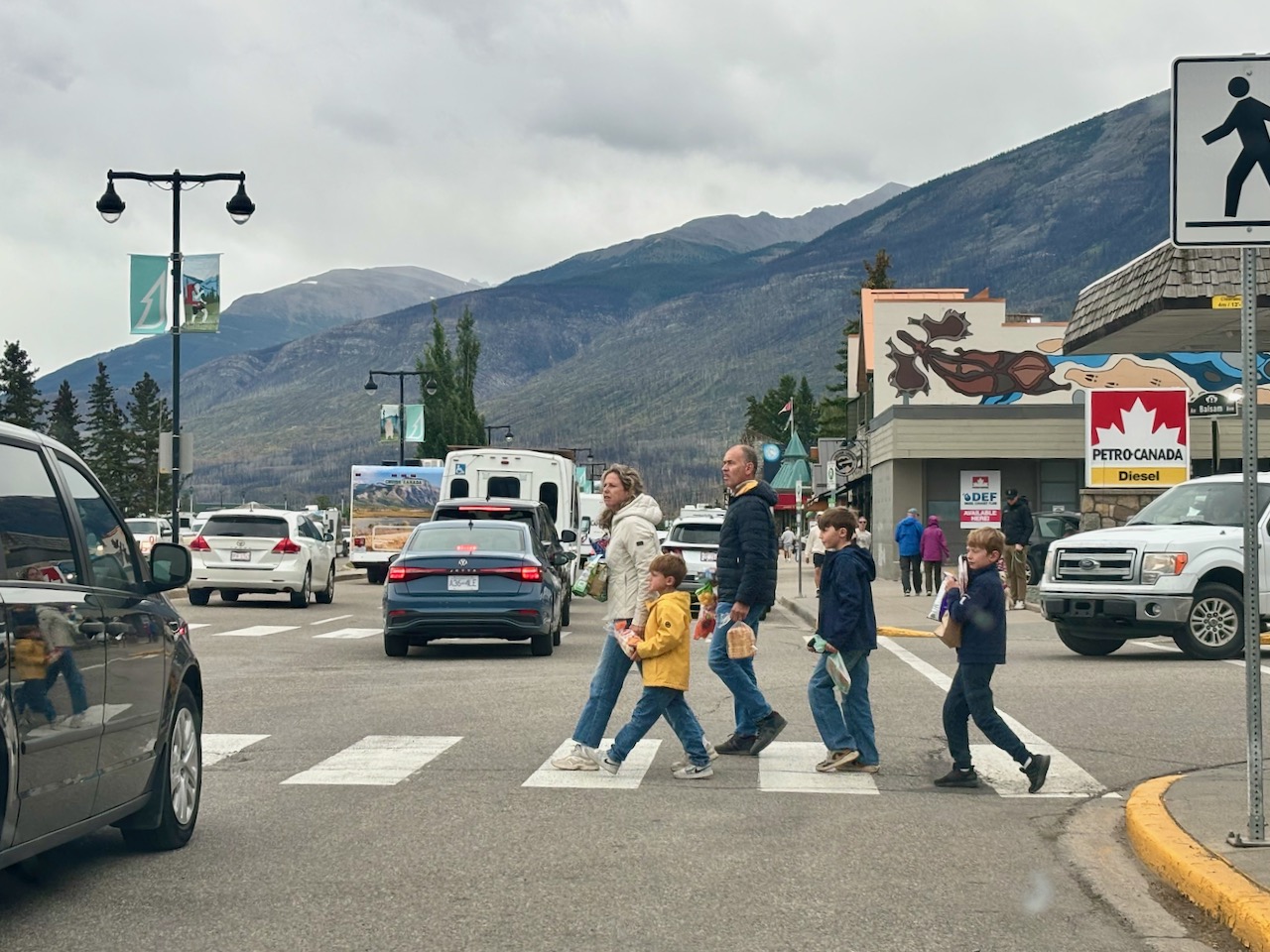
It points to a 2022 study by Verum Consulting, commissioned by Jasper, Banff and Canmore, which estimated that approximately 32 per cent of Jasper’s municipal expenditures were related to serving visitors. The Chamber calculates that, if that visitor-serving cost were allocated proportionally, a significantly lower non-residential-to-residential tax ratio could theoretically result.
The Chamber’s paper models ratios between approximately 2.18:1 and 2.94:1, while emphasizing that it is not asking Council to immediately adopt one of those figures.
Given said the municipality agrees with the study’s central premise: Jasper’s visitor economy creates additional municipal costs. He citied examples such as public washrooms, downtown maintenance and higher service and infrastructure expectations.
“The central point, that the visitor economy increases our costs, I think, is consistent with the Municipality of Jasper,” he said.
Where the debate becomes more complicated is how those costs should be paid.
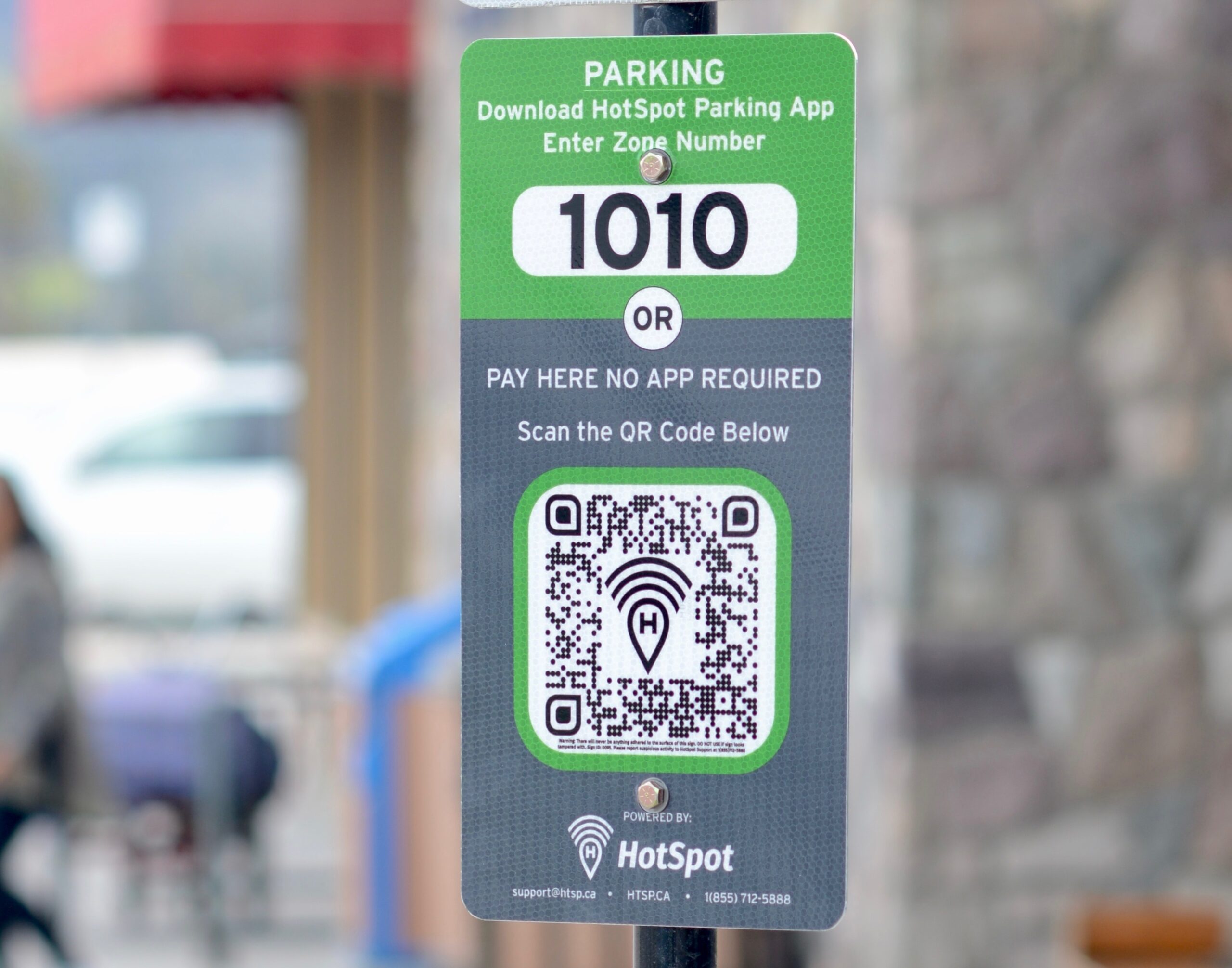
The Chamber argues that visitor-generated revenues — particularly paid parking — should be used to reduce the non-residential tax burden.
Given said Council has directed administration to use visitor-paid parking to reduce the overall cost of municipal services, but has not directed that those savings should accrue exclusively to commercial taxpayers.
If, for example, $700,000 in parking revenue covers part of a $10-million municipal expenditure, that $700,000 no longer needs to be raised through property taxes, he explained. Under the current ratio, both residential and non-residential taxpayers benefit.
Directing the entire saving to the commercial tax class, as the Chamber proposes, would effectively shift more of the remaining tax burden onto residential taxpayers, Given said.
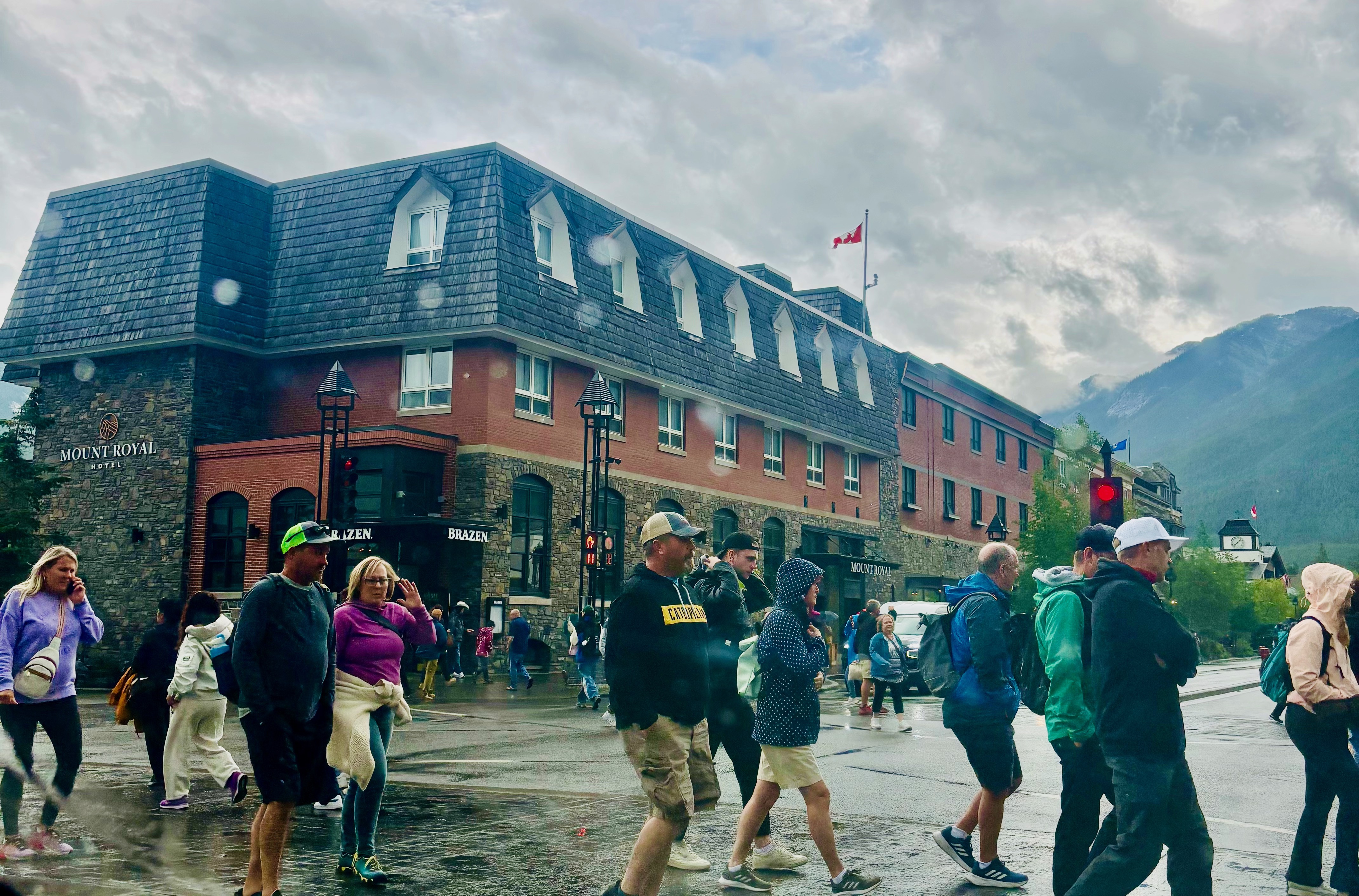
The Chamber also points to Banff and Canmore, where non-residential-to-residential ratios are approximately 4:1 and 3:1 respectively.
Given said Banff is a useful comparison because, like Jasper, it is a national-park community with significant development constraints. Canmore, however, has the ability to add substantial new development and taxpayers, changing the way its tax burden is distributed.
Whether Jasper should use either community as a benchmark is itself a question included in the municipality’s public survey.
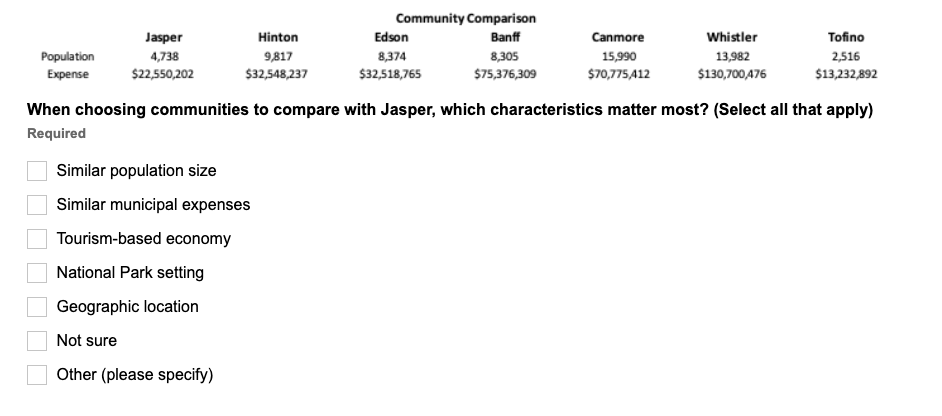
The Chamber has also criticized the municipality’s tax-policy engagement process. It has questioned the use of 2023–2026 data, particularly because 2024 was dominated by the Jasper wildfire. The brief also argues that residents should first have been given more educational information before being asked for their opinions.
“[The survey] presents contestable baseline data as established fact and asks the public to form opinions about complex tax policy without the foundation Council said was necessary,” it reads.
Given disagrees with that characterization of the survey.
He said each question provides context about Jasper’s tax system, including the current ratio, assessment distribution, tax-revenue distribution and comparisons with other communities.
And Given said the municipality chose the 2023–2026 period because individual years can be distorted by unusual circumstances, he said, noting that the COVID years also present problems as a baseline.
Ultimately, Given said the municipality’s goal is not to defend the existing ratio, but to help Council establish a clear policy for determining what constitutes a fair share of municipal taxation.
Everyone, he said, wants a fair system. The disagreement is over what “fair” means.
The municipality intends to use the Chamber’s position paper, survey responses and other public input to develop a draft tax policy. That draft is expected to come before Council for discussion by the end of September, ahead of the November budget process.
The community will have another opportunity to comment once the draft policy is released, Given said.
For the Chamber, the push is ultimately about changing the principle behind the ratio rather than simply choosing a new number.
For the municipality, the exercise is about putting that principle on paper for the first time.
And for Jasper taxpayers, the question now emerging is a more fundamental one: When tourism drives both municipal costs and commercial revenues, who should pay for the difference?
Bob Covey // bob@thejasperlocal.com