

Open houses (tonight and Saturday) and a survey give residents a chance to help shape how the community prepares for future wildfires
Jasper residents have an opportunity to help shape the municipality’s next five years of wildfire mitigation work, including what might make it easier for homeowners to reduce fire risks on their own properties.
The Municipality of Jasper (MOJ) is developing a FireSmart Strategic Plan to guide its investments, programs and priorities, and is asking residents to weigh in on what’s working, what’s not and what would help the community become more wildfire resilient.
Three public open houses are being held as part of the engagement process. The first took place Thursday, Nov. 26, with additional sessions scheduled for Friday, Nov. 27, and Saturday, Nov. 28. Residents can also complete an online survey, which remains open until Dec. 6.
Christine Nadon, the municipality’s director of protective and legislative services, said the resulting plan will serve as a roadmap for municipal wildfire mitigation efforts and help guide future budget requests and applications for grant funding.
“This is going to guide our efforts and investments for the next five years,” Nadon said.
But developing that roadmap requires understanding why some FireSmart measures aren’t gaining traction among residents, and what the municipality could do differently to encourage action.
“We need to get into people’s yards. We need to get in onto people’s houses,” Nadon said, pointing to combustible materials around homes, wood piles, clutter and vegetation growing too close to structures as examples of issues that can increase wildfire risk.
The municipality wants to understand what’s preventing homeowners from addressing those hazards. Is it a lack of information? The cost of removing a large tree or replacing combustible building materials? Or something as practical as having nowhere convenient to dispose of yard waste?
Nadon said those barriers matter because a successful wildfire resilience strategy needs to give residents the tools and support to take action, rather than simply telling them what they should be doing.
For example, she pointed to neighbourhood yard-waste collection bins, similar to a program offered in Banff, as one possible way to make property cleanup easier. Financial incentives for removing hazardous trees or upgrading combustible decks and roofing materials could also help.
The municipality is also interested in understanding what FireSmart initiatives residents believe have worked well in Jasper and where improvements are needed.
More than clearing trees
One of the misconceptions Nadon hopes to address is that FireSmart is primarily about vegetation management.
While clearing or thinning trees and other fuels is important, it’s only one component of a much broader approach. The strategic plan will examine seven FireSmart disciplines, including vegetation management, education, interagency cooperation, legislation and development.
That means considering everything from how homes are constructed and what materials surround them to municipal bylaws, emergency preparedness and coordination between the municipality and Parks Canada.
The planning process also recognizes that wildfire resilience needs to be considered at several scales: individual properties, the wildland-urban interface immediately surrounding the community, the broader landscape and the community as a whole.
The municipality is working alongside Parks Canada on the initiative, recognizing that the forested landscape surrounding Jasper — much of it under federal jurisdiction — cannot be considered separately from the town’s own mitigation efforts.
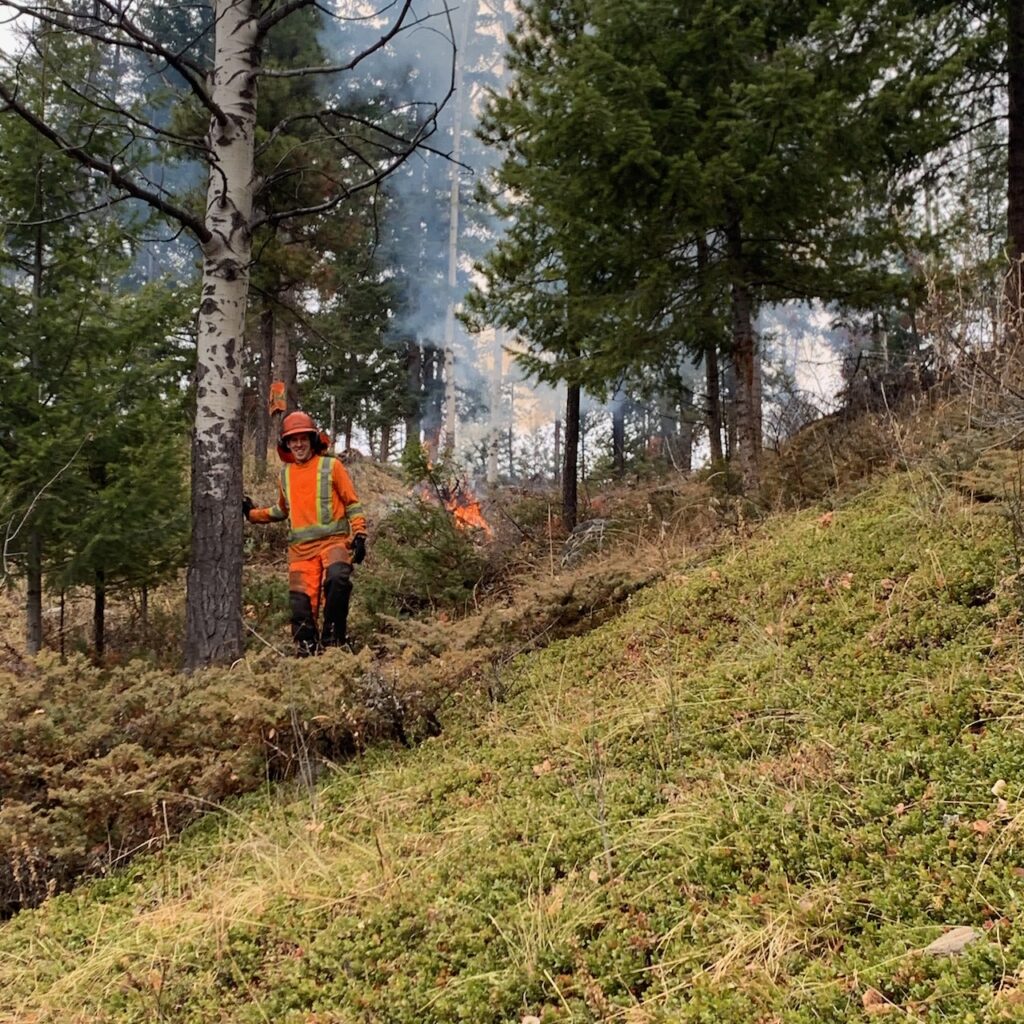
That includes reviewing previously established fuel-treatment areas to determine where vegetation management work may need to be repeated or expanded.
And while the 2024 Jasper wildfire significantly reduced forest fuels in parts of the South Valley, Nadon cautioned against assuming that has made the community safe from future wildfire threats.
“Those fuels are changing,” she said.
Grasses and other vegetation are already growing in the fire-affected landscape, creating a different fuel environment than the one that existed before the wildfire. Meanwhile, significant forested areas elsewhere around Jasper remain part of the broader wildfire risk picture.
An updated assessment of those hazards is part of the planning process.
Ultimately, Nadon said, there is no single project or intervention that will make Jasper wildfire resilient.
People often focus on removing trees or replacing cedar-shake roofs, she said, but those are just individual tools in a much larger toolbox.
“There is no single action or initiative that’s going to move the community toward resilience,” she said. “It’s a combination of all the efforts across the seven disciplines.”
Residents invited to weigh in
Nadon said the municipality needs to hear directly from residents about what would help them take greater responsibility for wildfire mitigation on their own properties, as well as their views on the work being done around the community.
She also acknowledged that public engagement can be challenging, particularly as the distance from the traumatic 2024 wildfire grows and the urgency of that experience begins to fade.
But building resilience requires sustained attention, not just a flurry of activity during particularly hot or dry summers.
The open houses are intended to provide an opportunity for residents to learn more about the broader FireSmart approach, share their experiences and help shape programs that will actually work for Jasper.
The remaining open houses are scheduled for Friday, Nov. 27, from 5-8 p.m. and Saturday, Nov. 28 from 10 a.m. – 1 p.m. Residents unable to attend can provide feedback through the municipality’s online survey, open until Dec. 6.
Bob Covey // bob@thejasperlocal.com