
logo
  • News
    • Community
    • Local Government
    • Sports
    • Alberta Politics
    • Opinion
    • Obituaries
  • Jasper Builds
  • Peaks & Valleys
    • Wildlife
    • Hiking and Climbing
    • Biking
    • Fishing
    • Snow Sports
  • Culture
    • Jasper Arts & Culture
    • Local Dining
    • Local Literature
  • Jasper History
  • Support
    • News
      • Community
      • Local Government
      • Sports
      • Alberta Politics
      • Opinion
      • Obituaries
    • Jasper Builds
    • Peaks & Valleys
      • Wildlife
      • Hiking and Climbing
      • Biking
      • Fishing
      • Snow Sports
    • Culture
      • Jasper Arts & Culture
      • Local Dining
      • Local Literature
    • Jasper History
    • Support
Walking Through Fire: The Land
A newly visible kame, seen looking north from the mile 5 bridge. // Andrea Ziegler
Environment, Jasper History, News, Peaks & Valleys, Science
By Kirsten Schmitten, Guest contributor
Wednesday, August 20, 2025
Walking Through Fire: The Land

Part 3: Seeing the forest floor through the trees

In Part 1 of our Walking Through Fire series, we discussed how post-fire vegetation bounces back. In Part 2 we looked at animals’ attraction to fire. But what did the fire uncover about the landscape itself?


The Jasper 2024 fire exposed an epic story of the shaping of a landscape.

It is a chilling tale of glacial force, raging waters, and human activity. It all adds up to quite the thrill for a geography major, who typically studies geomorphology by reading textbooks. Now, simply from taking in the new views – whether hiking to Old Fort Point or driving down the Icefields Parkway – we can see the land showing its primordial plotline.

Take a drive from Jasper townsite, heading south. Ignore the burned forest and look at the landscape. An ice age story reveals itself. Notice the differing elevations, the boulders littering the forest floor. Upon closer inspection, you might see random piles of rocks, lakes in impossibly round forms, and cone-shaped hills so uniform you might think humans made them.

Many of these features were crafted by the retreat of the last ice sheets that covered the Rocky Mountains. This chapter of the landscape saga started over 12,000 years ago, during the end of the last ice age, when valleys, more than a kilometer thick with glacial ice, began to melt. Today, with the land exposed by fire, we can see the results of both the ice and the power of melt water.

We can start to uncover this story not far from the Jasper townsite.

When we cross Highway 16, heading south on Athabasca Road (93A), peering to either side of the road reveals where the forest recently hid a turbulent past. Thanks to the fire, now we can see boulders strewn everywhere. Notice that most of the rock is rounded, giving us a clue that the boulders were transported a great distance in tumultuous, fast-running water. The glacial meltwaters acted like a giant rock tumbler, rounding and smoothing these geological hitch hikers before spitting them out in the flat valley bottom.

Alluvial fan deposits left behind by glacial meltwater. // Andrea Ziegler

On that same drive, just before the Tekkara Lodge property, travellers can easily spot a fascinating type of lake, known as a kettle lake. This spot was once covered by a glacier. Sand and gravel, carried in meltwater on top of the ice, eventually settled out here. The resulting thick accumulation of debris prevented heat from reaching the ice beneath, so when the glacier melted back, an insulated, monster block of ice remained. Eventually, this monster melted, and the settled-out sand and gravel fell into the depression it left behind. A text-book kettle lake (known locally as Dead Man’s Hole) is now on full display – 11.6 meters (38 feet) deep and perfectly round. 
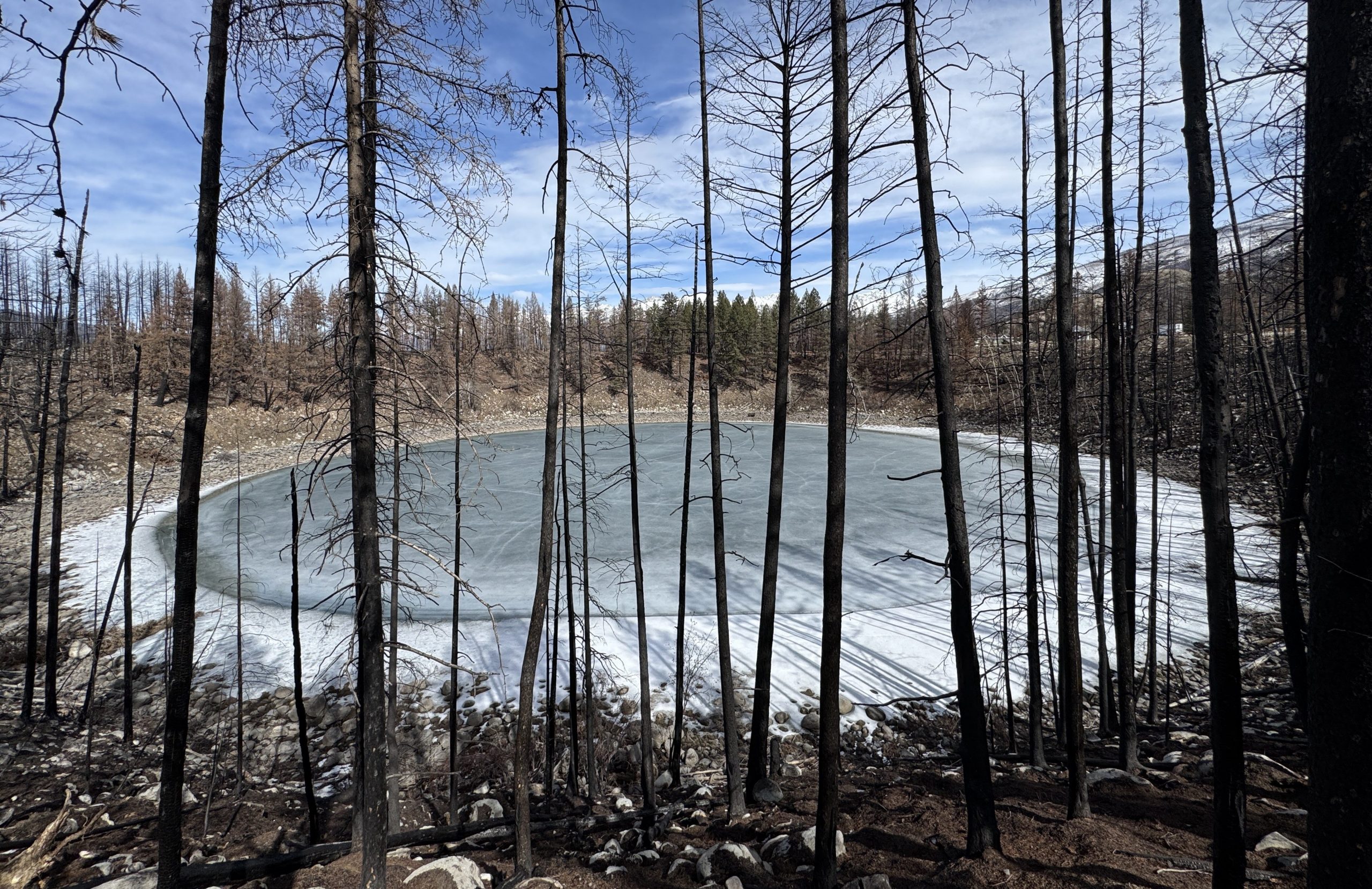
Dead Man’s Hole in winter, a classic kettle lake. // Andrea Ziegler

Kettles give us a clue that we should be looking for kames. As you drive south on the Icefields Parkway, peeking out from behind Marmot Meadows’ interim housing community, you can see a cone-shaped hill. It is the kind of shape you might see if you slowly dumped out a bucket of sand on the beach. This feature, known as a kame, was formed when the glacier actively melted. Where deep hollows in thinning ice developed, meltwater deposited gravel and sand into the depressions. When the glacier melted back, these cool cones were left intact.
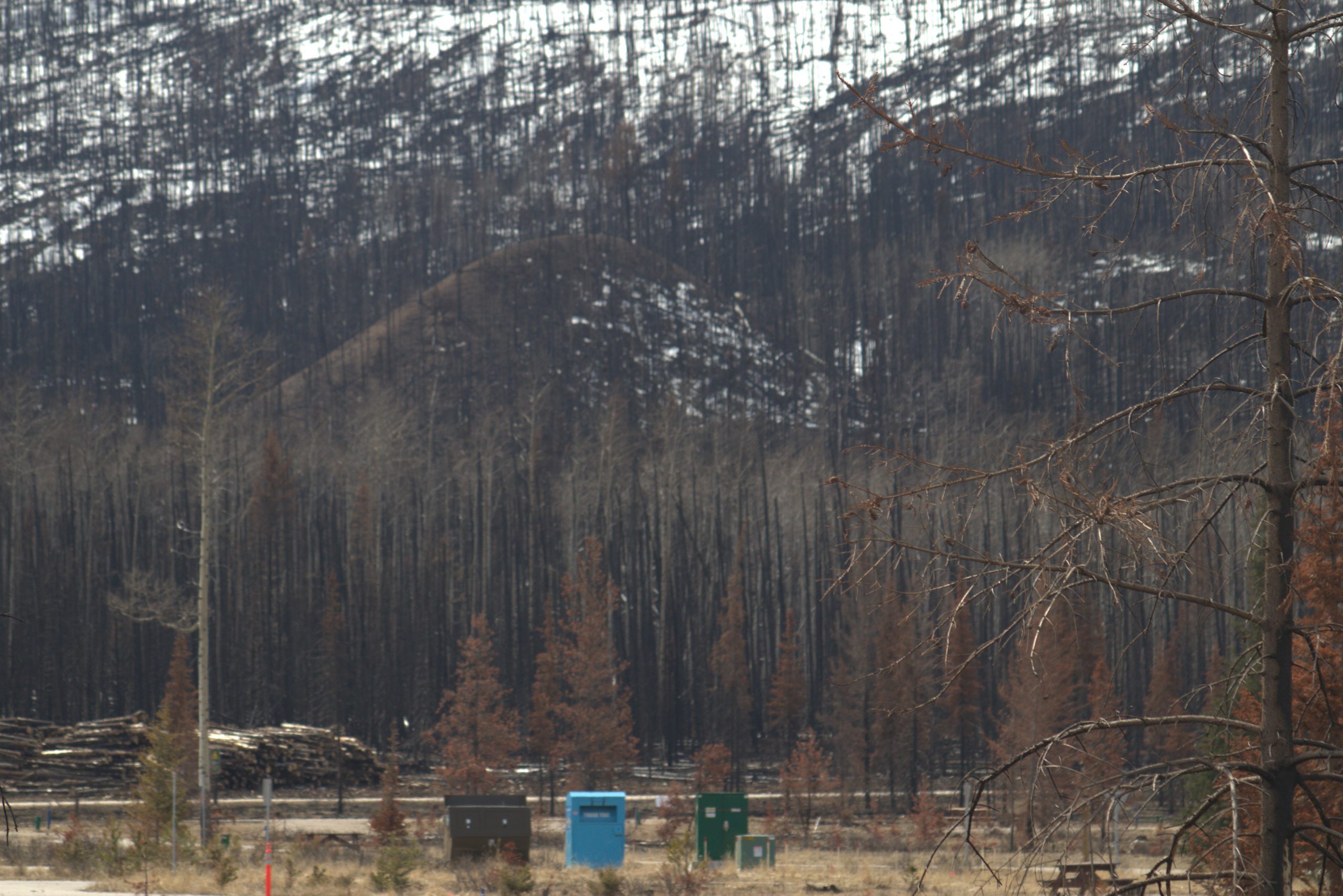
Once hidden, the kame behind Whistler campground is now clearly visible. // Supplied

Travelling along this section of the Icefield Parkway is a good time to look for defined flat terraces. You can see them best when you look out across the Athabasca River.  These features are a legacy of a past river system that happened during an older glacial melt period. Looking at the terraces you get a feel for the power of glacial meltwater as it wore down the earth it flowed over.
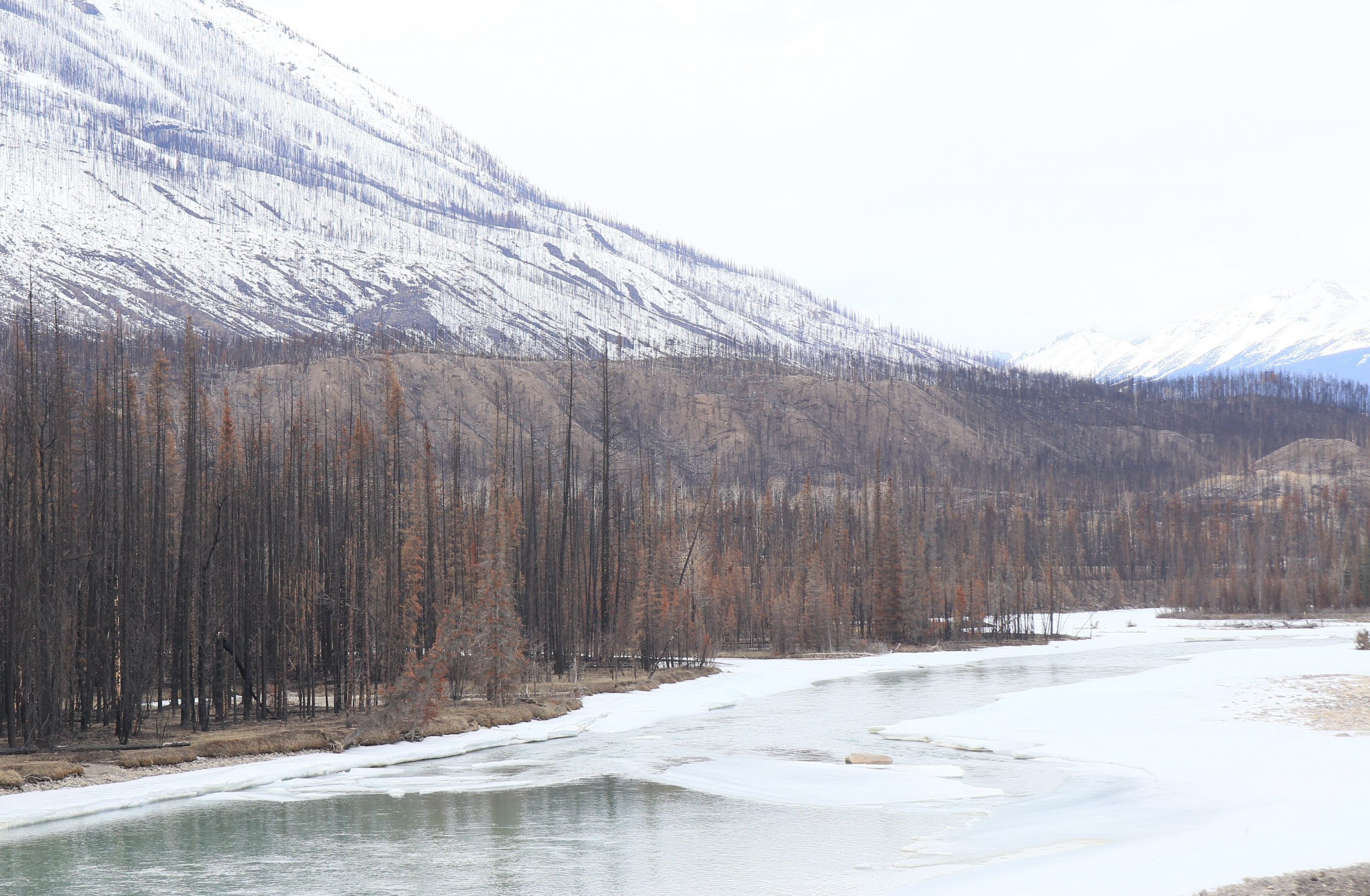
Terraces at the base of Whistler Mountain are a legacy of a past river system during an older glacial melt period. // Andrea Ziegler

Humans on the move

After all the drama of ice and floods from glacial meltwater, people quickly started returning to the mountains. Archeologists often head to post-fire areas looking for artifacts left behind from cultures that inhabited these mountains for thousands of years. If you run into any, leave them where they are and contact Parks Canada. Artifacts are best left in place to give context to their story.

On my walks, the fire has revealed glass pop bottles and beer bottles, telling me there was a boozy litterbug period in our not-so-distant past.

And what about all the graves we will run into? Mike Dillon, Jasper’s former Parks Canada History specialist, predicts a trend of newly-discovered burial sites. Most of these, Dillon suggests, will turn out to be merely the interesting aftermath of a tree’s last stand, because when a tree topples over, sometimes the roots get pulled out of the ground. Rocks which the roots clung to are brought up by force, and eventually, the soil and roots disappear, leaving grave-shaped mounds of rocks. Without the right context, this sight can make for spooky sights in darkened forests.
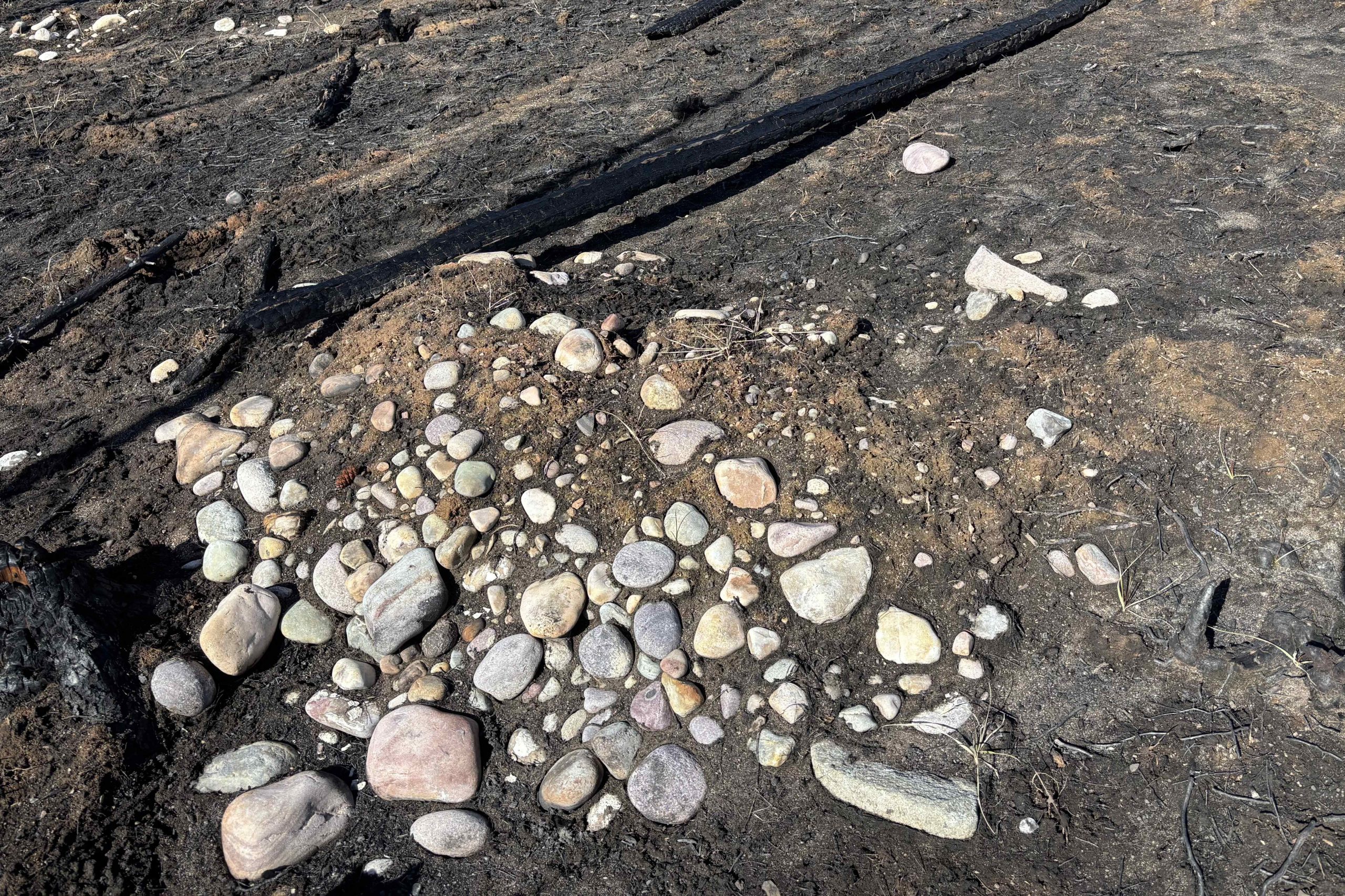
Mounds of rocks, left behind when a tree falls, can be mistaken for graves. // Kirsten Schmitten

After the fire, it might seem we can’t see the forest for the burnt trees. Instead, we get to find stories once hidden under a thick green shroud. An entire unveiling of the land’s history awaits your discovery.


Kirsten Schmitten // info@thejasperlocal.com

About the author:

Kirsten Schmitten is a certified Master Interpretive Guide and a writer who loves All Things Wild. Want to learn more? Book one of All Things Wild’s guided hikes, talks or step-on guides to find out about Jasper’s natural and historical stories. Call 780-931-6044 or visit allthingswild.ca

Articles You May LIke ›
Reel ambition: How Jasper stocked the Rockies
Environment
Reel ambition: How Jasper stocked the Rockies
John Wilmshurst, guest contributor 
Thursday, May 7, 2026
For millennia, the high-elevation lakes and rivers in Jasper knew not of fish. This may have been due to the hard, mountain winters. Or perhaps to wat...
this is a test
Rocky road: The bumpy backstory of one of the world’s most scenic drives
Jasper History
Rocky road: The bumpy backstory of one of the world’s most scenic drives
John Wilmshurst, freelance contributor 
Tuesday, March 31, 2026
More than a ribbon of tar and gravel, the Icefields Parkway is a meandering journey of stories and adventures. In 1971, Rory Flanagan was fed up. More...
this is a test
Walking Through Fire: Wildlife
Environment
Walking Through Fire: Wildlife
Kirsten Schmitten 
Friday, July 4, 2025
Part 2: Home is where the hearth is In Part 1 of our Walking Through Fire series , we discussed how post-fire vegetation bounces back. But what about ...
this is a test
Fully funded bridge proposal rebuffed by Jasper’s superintendent
News
Fully funded bridge proposal rebuffed by Jasper’s superintendent
Bob Covey 
Friday, May 5, 2023
Jasper National Park Superintendent Alan Fehr has declined a private offer to rebuild a washed-out bridge at Simon Creek, a structure which would allo...
this is a test
Most Read ›
Jasper digs into next phase of wildfire utility repairs
Community
Jasper digs into next phase of wildfire utility repairs
Peter Shokeir, Local Journalism Initiative Reporter 
Thursday, August 13, 2026
The Municipality of Jasper recently wrapped up the first phase of repairing water and sanitary infrastructure damaged by the Jasper wildfire. Logan Ir...
this is a test
Latest ›
Hinton lowers cap on short-term rentals
Community
Hinton lowers cap on short-term rentals
Peter Shokeir, Local Journalism Initiative Reporter 
Wednesday, July 22, 2026
The Town of Hinton has lowered its cap on short-term tourism suites following pushback from the community and the hotel industry. Council approved an ...
this is a test
Council briefs: Cenotaph rehab not urgent
Community
Council briefs: Cenotaph rehab not urgent
Peter Shokeir, Local Journalism Initiative 
Monday, July 20, 2026
The Municipality of Jasper is in no rush to replace or refurbish the Jasper Cenotaph, which staff say is only showing some signs of wear and tear. On ...
this is a test
Municipal Affairs minister says Jasper needs new tools to fund infrastructure
Alberta Politics
Municipal Affairs minister says Jasper needs new tools to fund infrastructure
Peter Shokeir, Local Journalism Initiative Reporter 
Saturday, July 18, 2026
The Alberta government says it will be looking into alternative ways for municipalities to finance critical infrastructure without raising taxes. Whil...
this is a test
Pursuit commits $400K to expand Jasper childcare spaces
Community
Pursuit commits $400K to expand Jasper childcare spaces
Thursday, July 16, 2026
A major investment from one of Jasper's largest tourism employers will help bring 22 new childcare spaces to local families, addressing a longstanding...
this is a test

NEXT ARTICLE

Jasper RCMP make stolen vehicle arrest

News

Most Read ›
Jasper digs into next phase of wildfire utility repairs
Community
Jasper digs into next phase of wildfire utility repairs
Peter Shokeir, Local Journalism Initiative Reporter 
Thursday, August 13, 2026
The Municipality of Jasper recently wrapped up the first phase of repairing water and sanitary infrastructure damaged by the Jasper wildfire. Logan Ir...
this is a test
Latest ›
Jasper digs into next phase of wildfire utility repairs
Community
Jasper digs into next phase of wildfire utility repairs
Peter Shokeir, Local Journalism Initiative Reporter 
Thursday, August 13, 2026
The Municipality of Jasper recently wrapped up the first phase of repairing water and sanitary infrastructure damaged by the Jasper wildfire. Logan Ir...
this is a test
Repairs to Jasper’s fire-impacted roadways underway
Community
Repairs to Jasper’s fire-impacted roadways underway
Tuesday, August 11, 2026
Roadwork to cause delays on several Jasper-area roads through October Parks Canada says safety projects on fire-impacted roads will mean alternating t...
this is a test
First captive-bred Jasper caribou take their chances in the wild
Environment
First captive-bred Jasper caribou take their chances in the wild
Monday, August 10, 2026
Five animals released into Tonquin Valley in historic first step for conservation breeding program For the first time, Parks Canada biologists opened ...
this is a test
Jasperite swims the length of Maligne Lake
News
Jasperite swims the length of Maligne Lake
Cameron Jackson, freelance reporter 
Monday, August 10, 2026
Jasper boat captain becomes the first recorded person to swim the 22-kilometre length of one of the Rockies’ most iconic lakes At 6:30 a.m. on Monday,...
this is a test
This site complies with Jasper requirements
Contact us
Privacy Policy
Advertise With Us
About The Jasper Local
Accessibility Policy
Support

Follow Us

Advertise with us

Measurable, targeted, local. Email example@thejasperlocal.com

ePaper
coogle_play
app_store

© Copyright The Jasper Local