

Five animals released into Tonquin Valley in historic first step for conservation breeding program
For the first time, Parks Canada biologists opened a gate and watched caribou they had raised in captivity walk into the wild.
They knew the five animals were ready. The animals had been eating native vegetation, drinking from natural water sources and exploring the mountain environment around their temporary enclosure, near Amethyst Lake in Jasper National Park.
But there was no way to know exactly what would happen next.
The four male yearlings and one adult bull had never climbed a mountain, crossed a rushing creek or navigated a talus slope. They had never travelled long distances through the backcountry or encountered a grizzly bear.
In short, they had never been caribou living in the wild.
“Releasing the animals was both exhilarating and nerve-racking,” said Parks Canada caribou biologist Layla Neufeld. “We felt that they were ready.”
The animals were transported from Jasper National Park’s Conservation Breeding Centre to the Tonquin Valley on June 10 and spent two weeks acclimating in a temporary pen near Amethyst Lake.
On June 24, biologists opened the gate.
The timing was deliberate. Wild Tonquin caribou were moving from their winter ranges into the central Tonquin Valley, where fresh green vegetation was emerging as the snow receded. Parks Canada hoped the released animals would encounter the wild herd and join it.
That is exactly what has happened so far.
GPS collars show the four yearlings have explored much of the Tonquin summer range, including crossing large creeks and travelling long distances over significant elevation.
All five released caribou have also joined groups of wild caribou.
“So far, they are showing wild caribou behaviours in wild caribou habitats alongside wild caribou cows, bulls, and calves – exactly what we’d hoped to see,” Neufeld said.
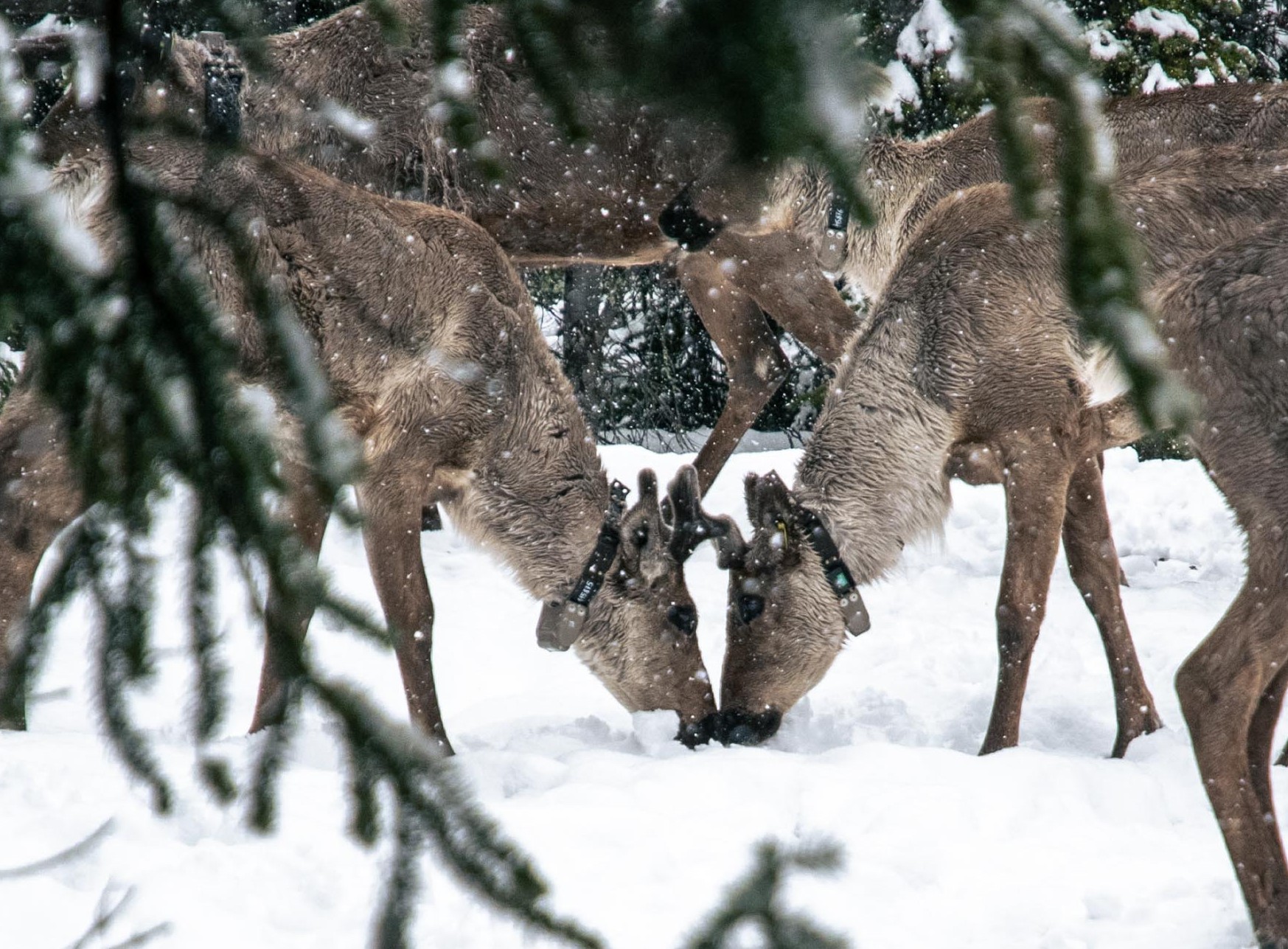
For the scientists behind Jasper’s Caribou Conservation Breeding Centre, the behaviour is an encouraging first test of a program years in the making.
The breeding centre was established to help rebuild Jasper’s southern mountain caribou populations, which have declined dramatically over the past several decades. The long-term goal is to produce enough animals to help establish a self-sustaining wild population.
The program is already producing its next generation.
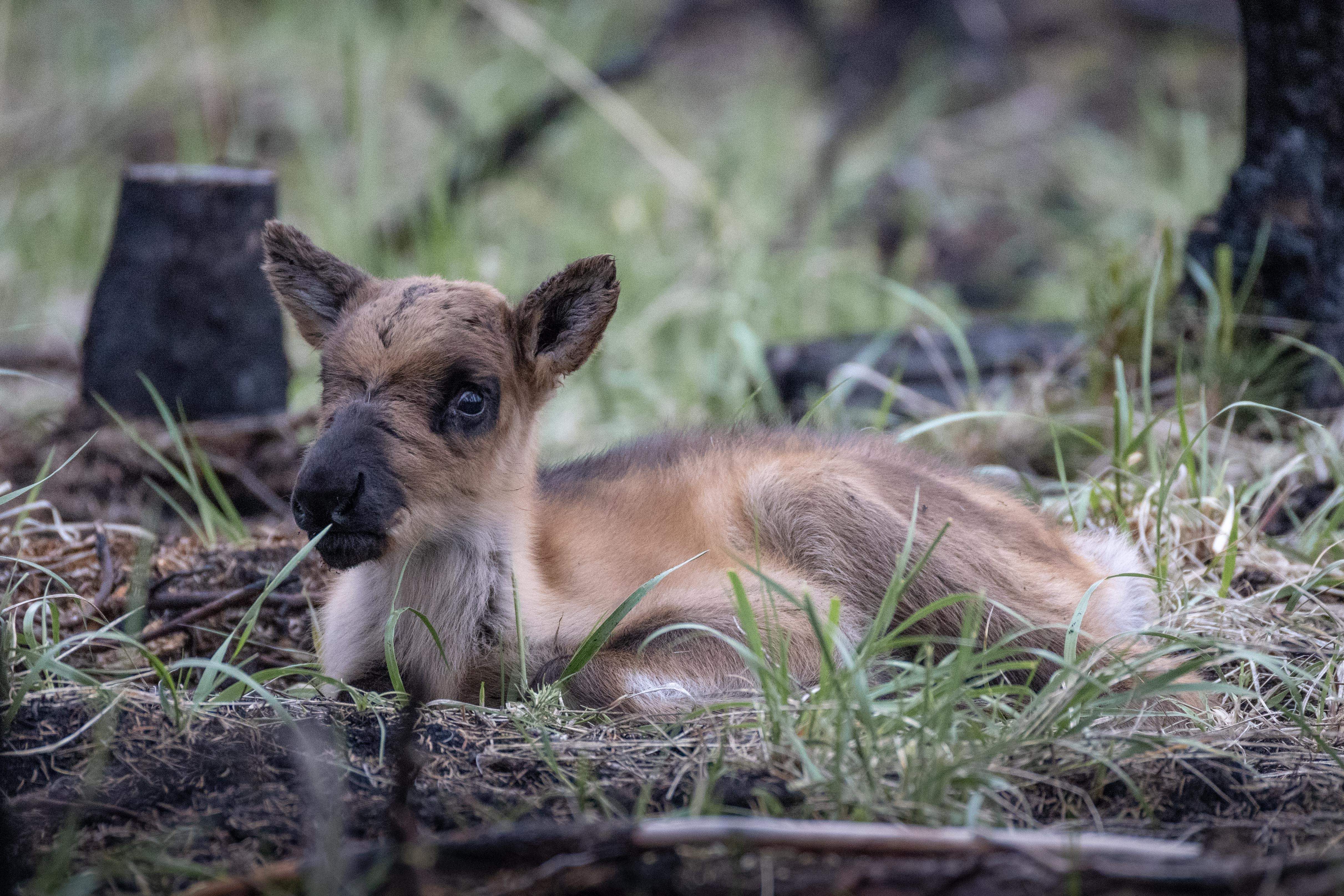
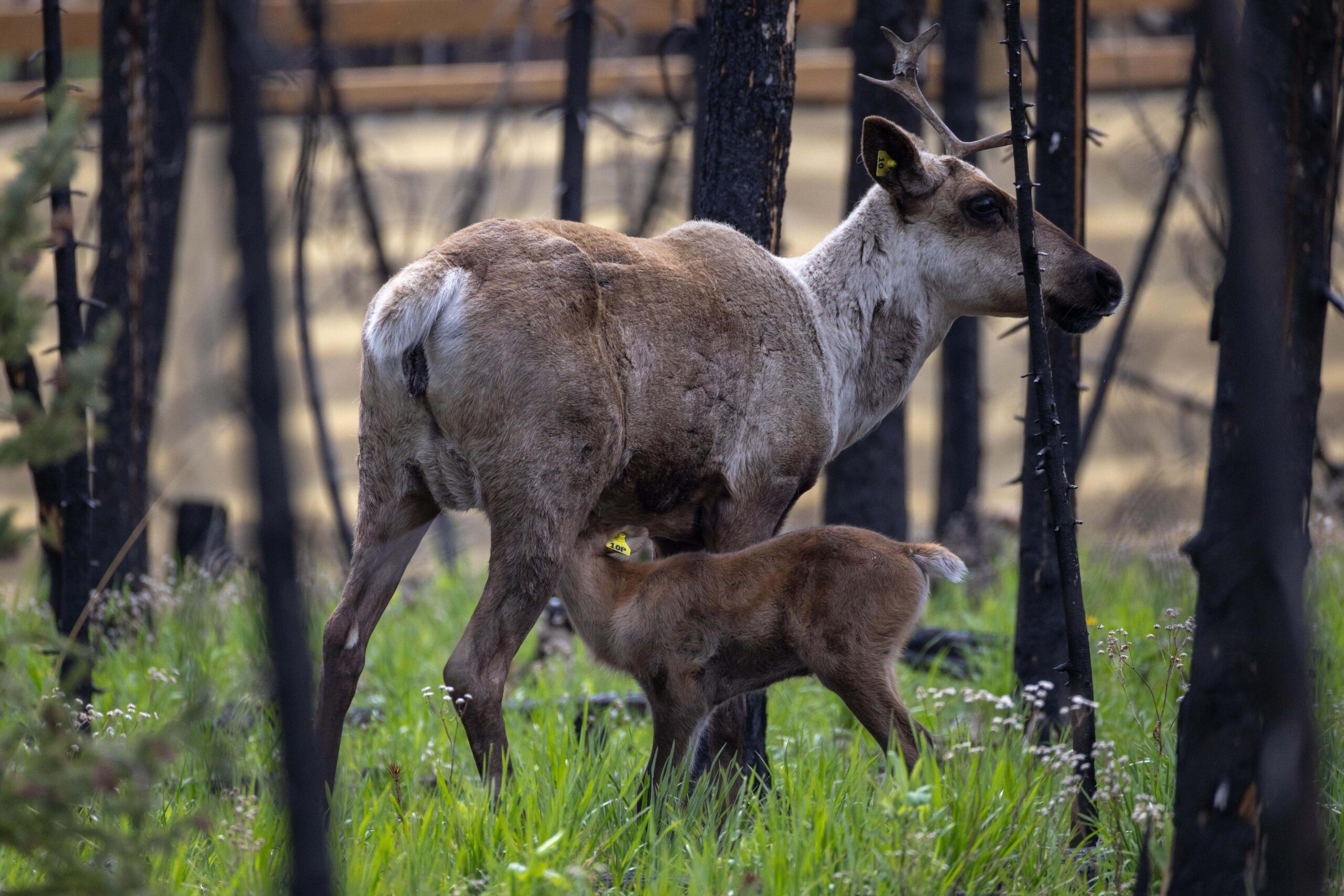
Eight calves—four females and four males—were born at the centre in May and June. Five were conceived naturally in captivity, while three were conceived in the wild before their mothers joined the breeding program.
The calves are now exploring the pens alongside their mothers. Although they will continue nursing for several months, they have begun grazing on vegetation and eating pellets.
Six more caribou—five females and one male—were brought into the breeding centre from within Jasper National Park in March, joining 18 animals already in the program.
That growing captive herd is important because the first release is only the beginning.
“We are all overjoyed that the program has had many successes despite its steps into uncharted and uncertain territory,” Neufeld said. “After many years of planning and building, now with one release behind us, we are all looking forward to our program’s next releases and to watching the Tonquin herd grow.”
Watching the wild herd
While Parks Canada monitors the newly released animals, biologists are also working to determine how many wild caribou remain in Jasper.
During winter surveys, the monitoring team observed a minimum of 27 caribou in the Tonquin range, including 10 adult females and six calves. Another minimum of 52 caribou were observed in the À la Pêche range, while no caribou or caribou tracks were detected in the Brazeau range.
Those numbers are minimum counts, not population estimates.
Aerial surveys cannot account for every animal in a large, mountainous landscape, so Parks Canada also collected more than 280 scat samples from the Brazeau, Tonquin and À la Pêche ranges between October 2025 and January 2026.
DNA analysis can identify individual caribou in the samples. By comparing animals identified during different sampling periods—a method known as mark-recapture—biologists can estimate how many animals are actually in a herd, including those missed during aerial surveys.
The DNA results are expected this summer and will be combined with aerial survey and cow-calf data to produce the 2025 Tonquin population estimate.
The previous estimate, from 2024, put the Tonquin herd at between 43 and 50 animals.
For now, though, attention is focused on the five caribou making their first summer in the wild.
Parks Canada is following their movements with GPS collars as they learn the landscape their wild counterparts have inhabited for generations.
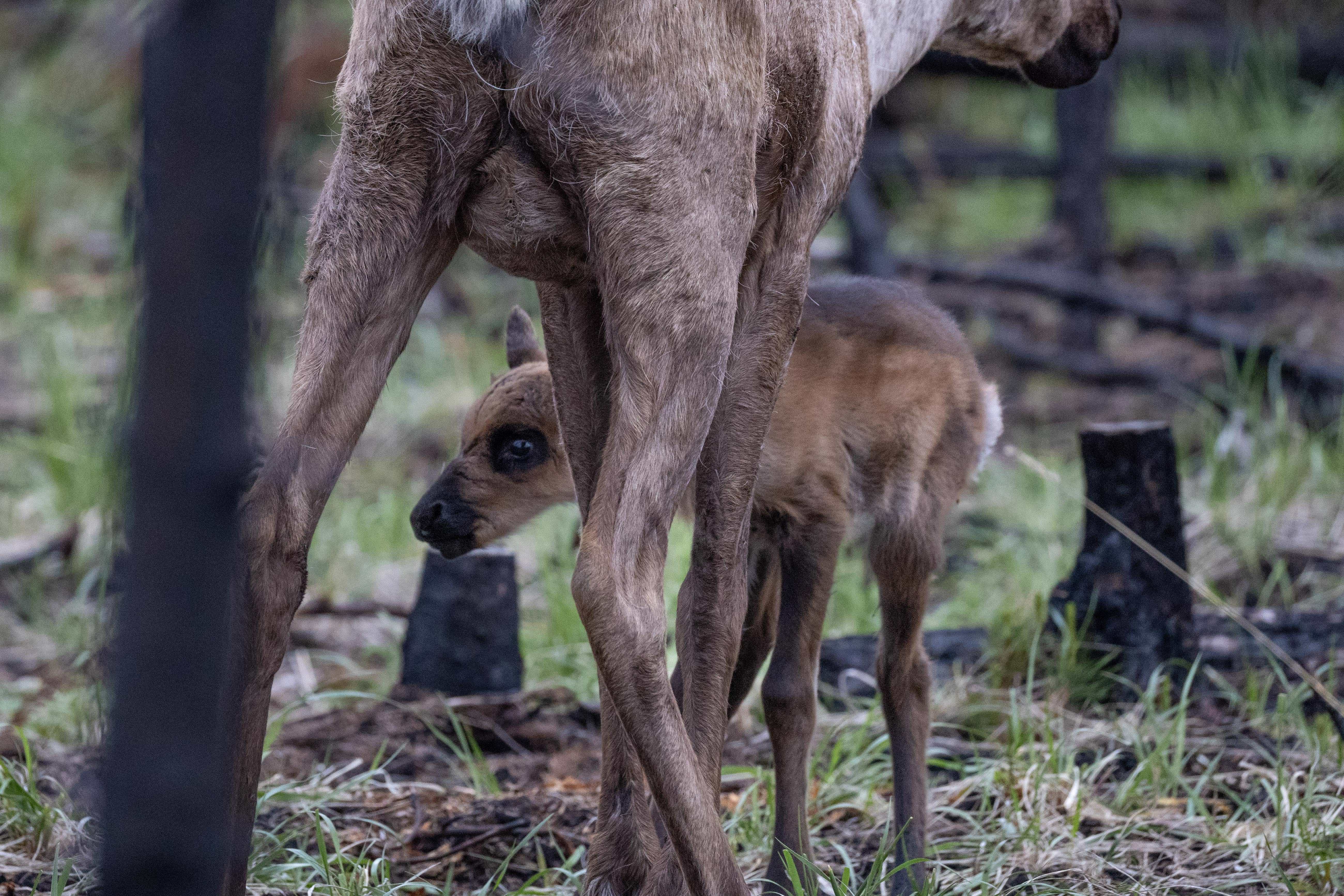
The first release has given the recovery team something it has never had before: a glimpse of what happens when a caribou raised inside the breeding program is finally given the freedom to choose where to go.
So far, the animals appear to be making the right choices.
Jasper Local staff // info@thejasperlocal.com
-with files from Karly Savoy, Jasper National Park PR and communications officer