

Jasper Local readers are worldly enough to know the biggest bird on earth (ostrich), as well as the the smallest (bee hummingbird). Most know the the fastest flyer (peregrine falcon) and the most clever birds (corvids)…
But this time of year, it’s pertinent to ascertain what’s the most… Christmassy bird ever?
To make a defendable choice, we need to lay out our reasoning. Allow me to present:
Location, location, location
I argue that because it is the closest country to the North Pole, where the patron saint of Christmas himself lives, Canada is the country where the Most Christmassy Bird of All Time (MCBOAT) should hail from. We’ve got Ellesmere Island as the closest landmass, and Alert (Nunavut) as the closest permanent settlement to Santa. So let’s agree that the bird must be Canadian.
But which birds hang in Santa’s hood? Polar oceanographers know the North Pole is in the Arctic Ocean, some 700 km away from any land (really, it’s mostly floating sea ice, so there’s very few contenders for most Christmassy anything, let alone most Christmassy bird). Kids, however, know that any depiction of Santa’s workshop shows it firmly on land and surrounded by at least a few trees.

Given our Christmas quest, I think we have to assume that Santa lives somewhere near the treeline separating the Boreal Forest from the Arctic Tundra…so let’s likewise reason that our MCBOAT ought to also hail from there. We’re getting warmer…
No shade on their shades
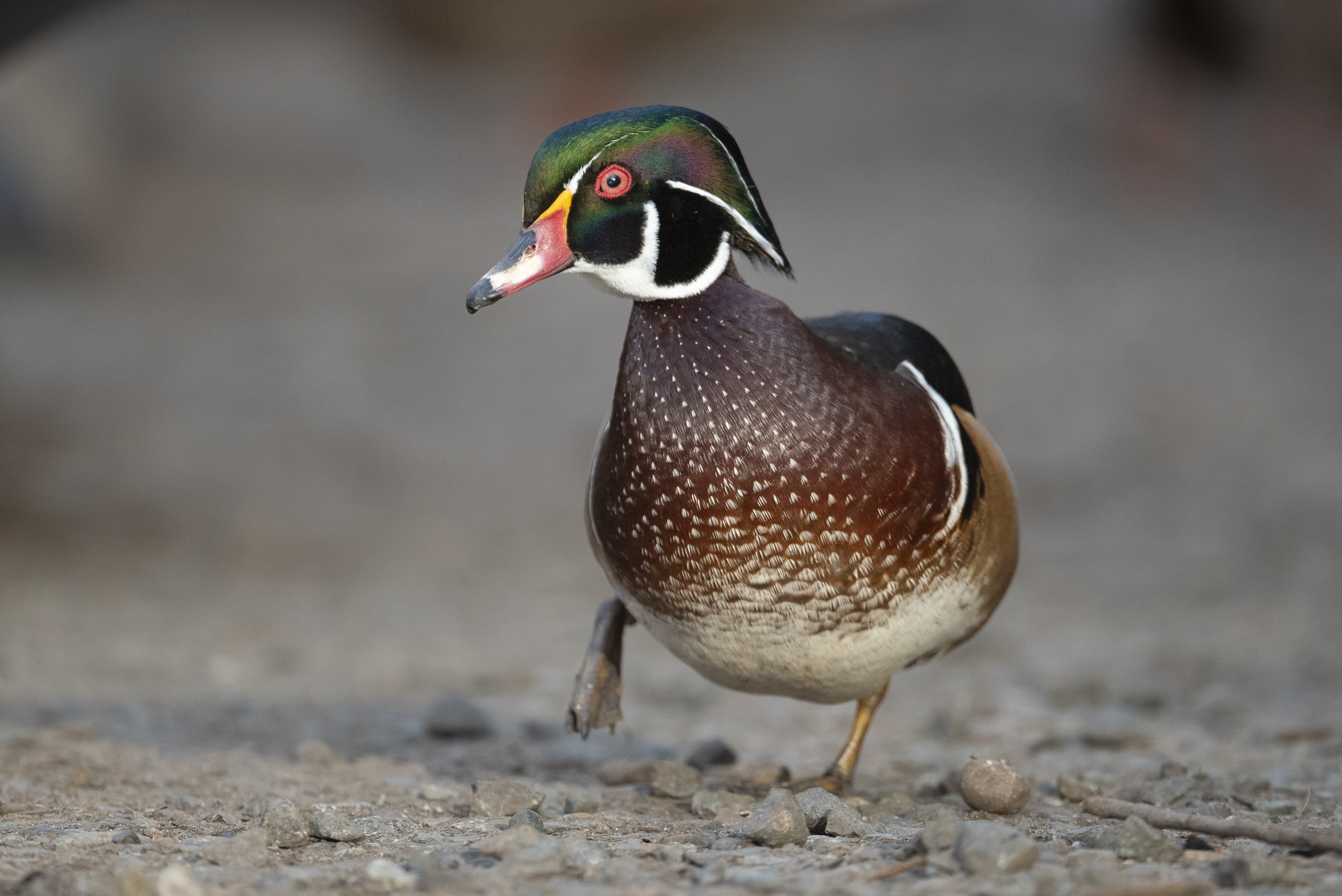
In keeping with our Walking in a Winter Wonderland theme, I argue that white is the most Christmassy hue. Some might suggest red and green as the classic colours of Christmas, but most birds with green coloration have only small spots of green—Mallards, Wood Ducks and Black-throated Green Warblers, for example. Not Christmassy enough for this guy.
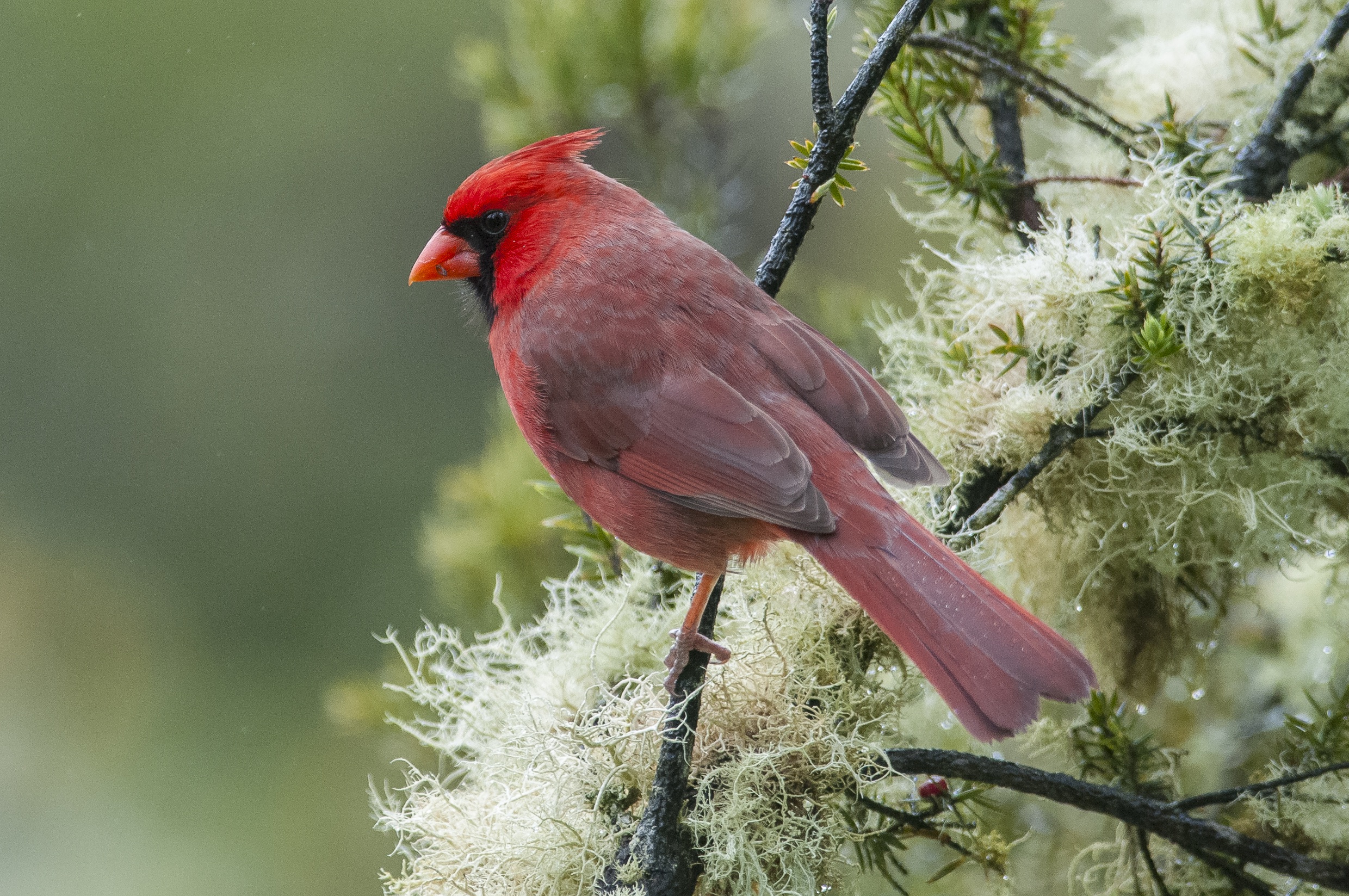
As far as red birds, we could reasonably consider the Northern Cardinal—the star of so many holiday cards—but this America-first bird doesn’t even fly as far north as the 49th parallel. If only on the basis of tariff retaliation, I suggest as our Christmas choice, the cardinal is out. That means we are still on the search for a bird of white.
The culture of Christmas
My last criteria for determining the MCBOAT is the avian’s ability to assimilate into Christmas lore. Which birds, for example, are sculpted for snow globes, painted on advent calendars or depicted on wrapping paper? More revealing yet: which feathered friends get shout-outs in holiday carols?
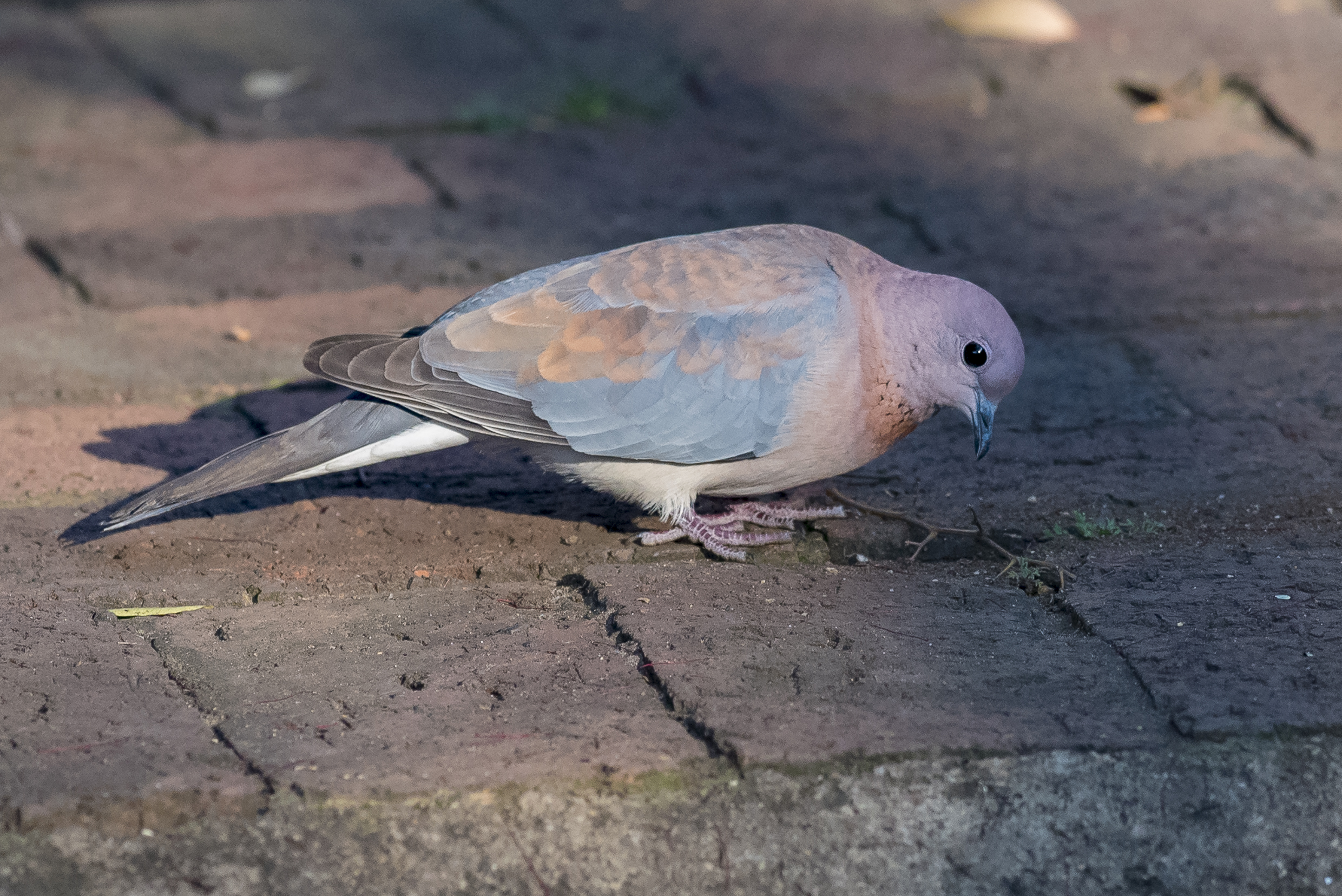
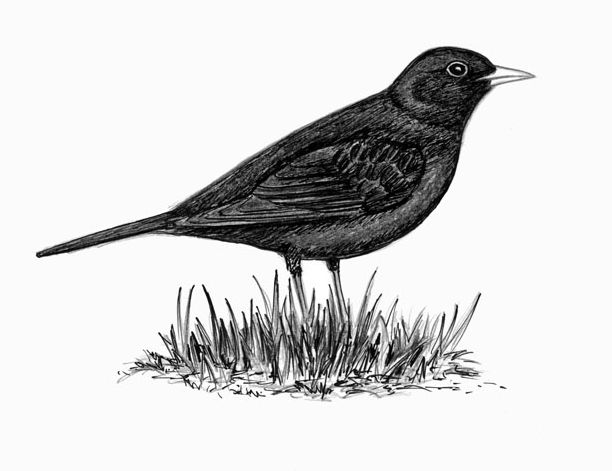
The 12 Days of Christmas specifically mentions flocks of birds: partridges, Turtle Doves, French Hens, calling birds, Swans-a-swimming, and Geese-a-laying, for crying out loud. Let’s eliminate the Turtle Doves and French Hens for their lack of North Pole proximity, and let’s scrap the Swans and Geese for migrating south in winter. That means we’re left with calling birds and partridges. A little digging reveals that ‘calling birds’ is in fact a corruption of ‘colly birds’—an old English term for Eurasian Blackbirds (related to our robins). Don’t take it personally, colly birds, but to this Christmas critic, you don’t make the cut.
That means, just like at the end of each of the song’s 12 interminable verses, we are left with…a partridge in a pear tree. Now, if you’re a bird nerd, you know partridges are closely related to White-tailed Ptarmigans.
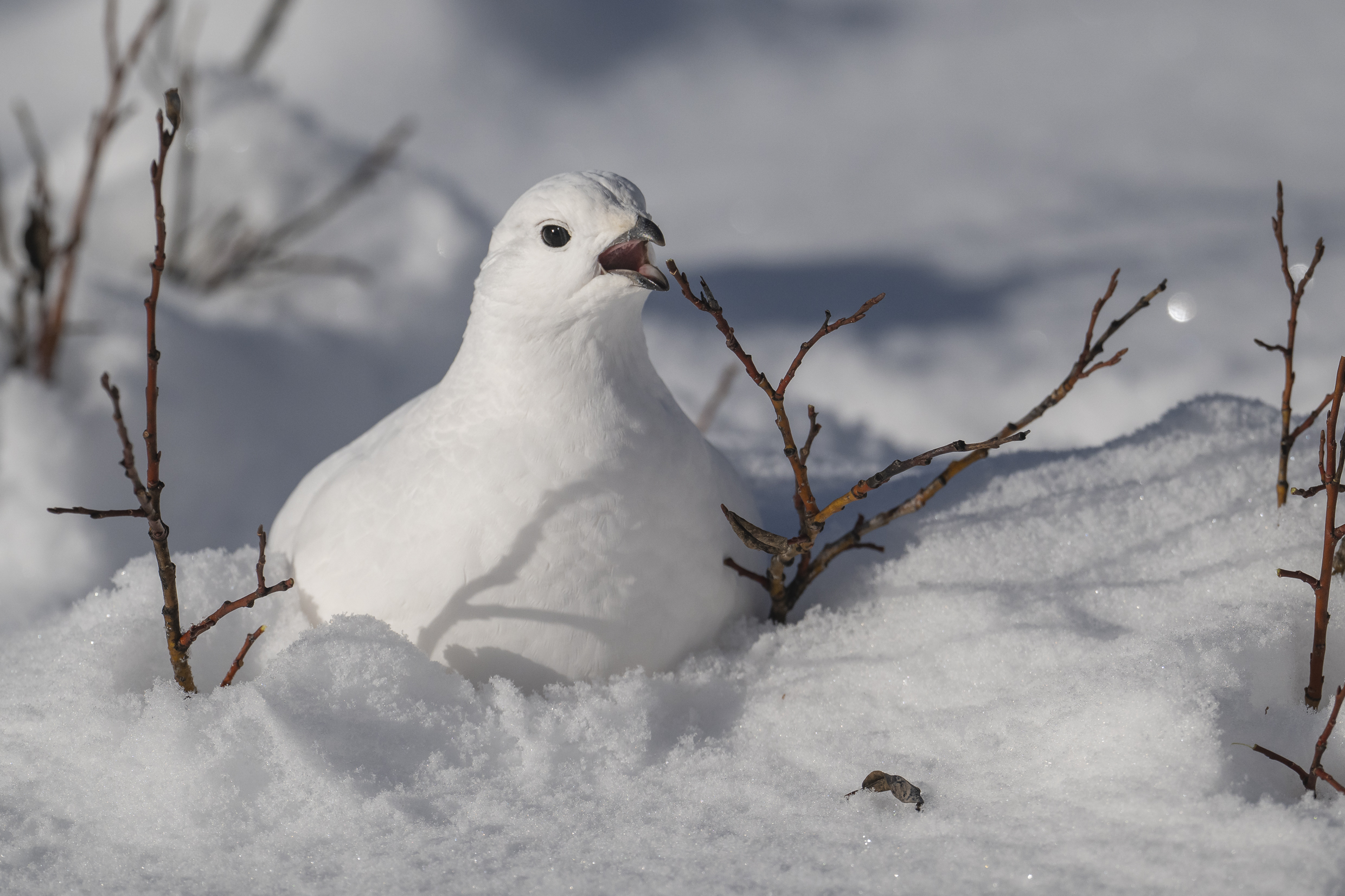
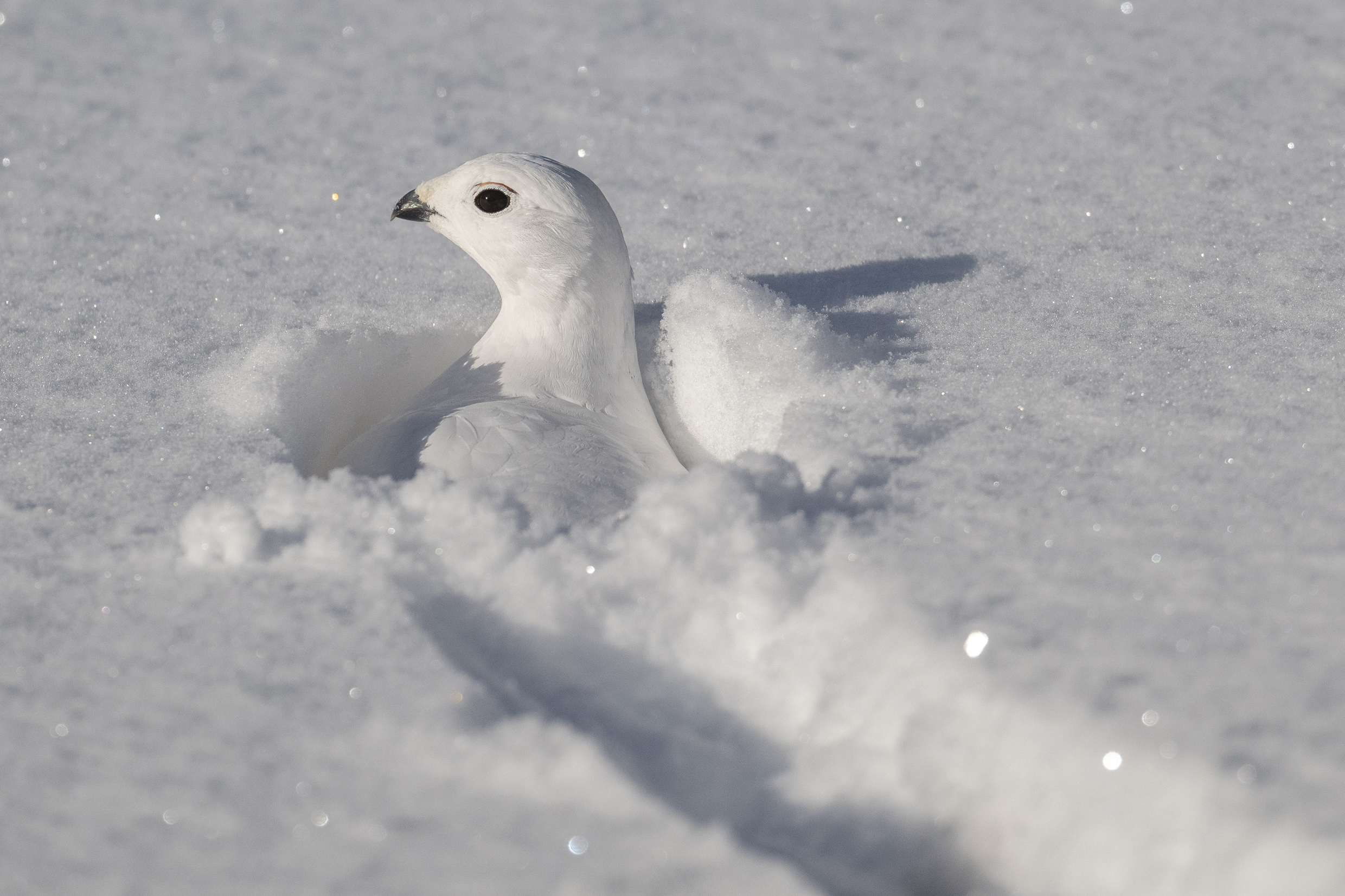
Therefore, taking into account their northern habitat, their snow-white colour and their (relatives’) name being dropped by choirs all over creation, the White-tailed Ptarmigan must be, by my Christmas calculations, the MCBOAT.
Christmassy things come in small packages
What can I tell you of the White-tailed Ptarmigan, our newly-crowned Christmas bird? First of all, they’re small. In fact, of the approximately 20 species of grouse around the world, White-tailed Ptarmigans are the smallest, weighting just one pound. Second, there are four ptarmigan species in the world, all of which make their homes in cold, northern hemisphere tundras. Willow Ptarmigan, Rock Ptarmigan, Red Grouse (a ptarmigan as well, despite the name) and White-tailed Ptarmigan are all in the genus Lagopus, which is Latin for ‘rabbit-footed,’ which is a reference to their big, feathery feet, which they use to float in deep snow.

The Rock and Willow Ptarmigan live on the arctic tundra in North America, Europe and Asia, while our White-tailed Ptarmigan lives atop the mountains of North American. The Red Grouse lives on the moors of the UK and Ireland. Jasper actually harbours a second species of Lagopus; the Willow Ptarmigan was described by yours truly in a previous Jasper Local article.
We’re still awarding the MCBOAT title to the White-tailed, however, because the Willow Ptarmigan has black feathers on its tail and wings. Plus the White-tailed is much more common.
Basic birds
A white-tailed Ptarmigans’s diet is almost entirely plant-based: think seeds, leaves, buds and berries. However, they will also take the occasional insect and when they’re young, fast-growing ptarmigan chicks eat a lot of bugs while they are packing on the ounces. Hens lay four to eight eggs in ground nests, and raise the young without any help from the (deadbeat) ptarmigan dads.
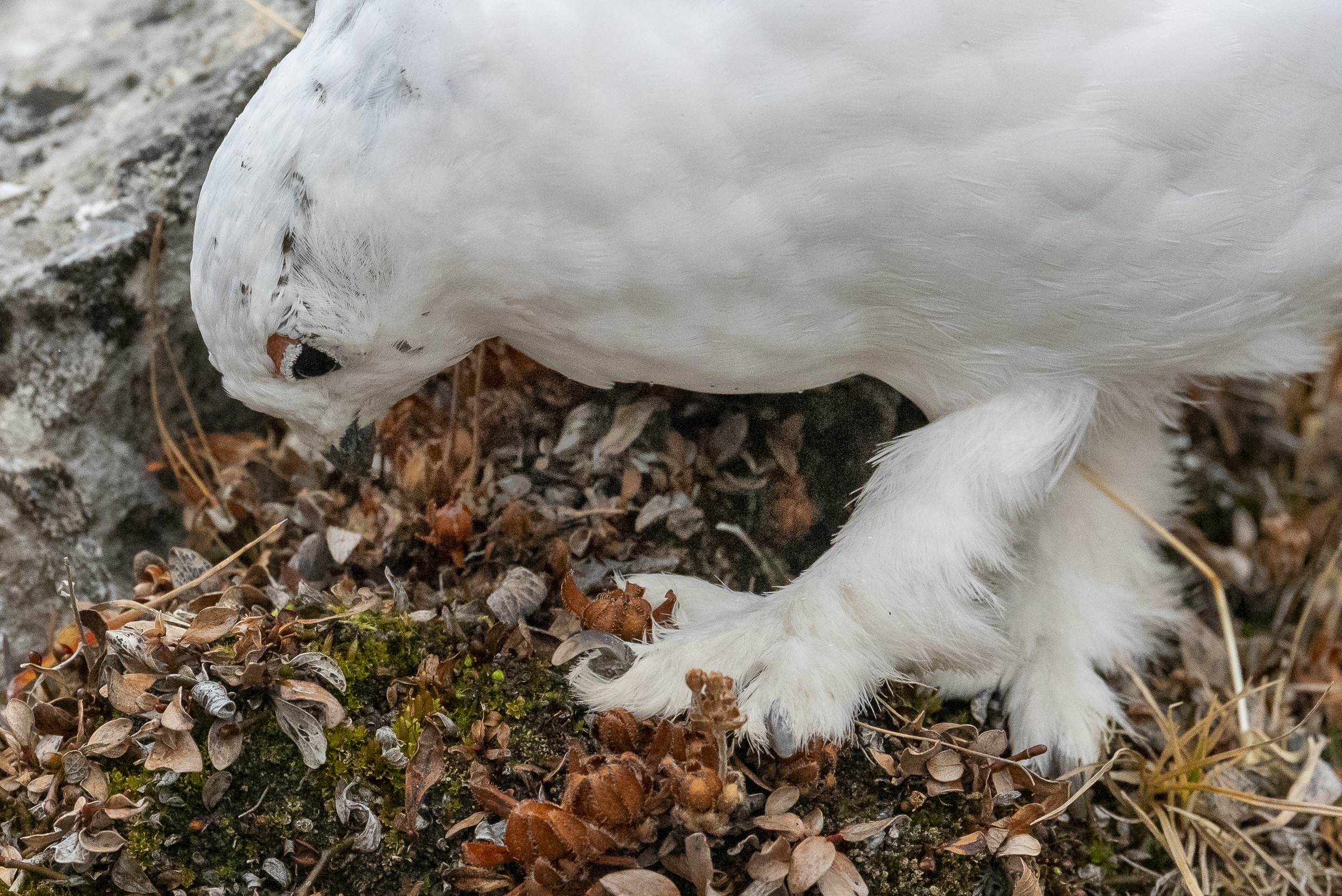
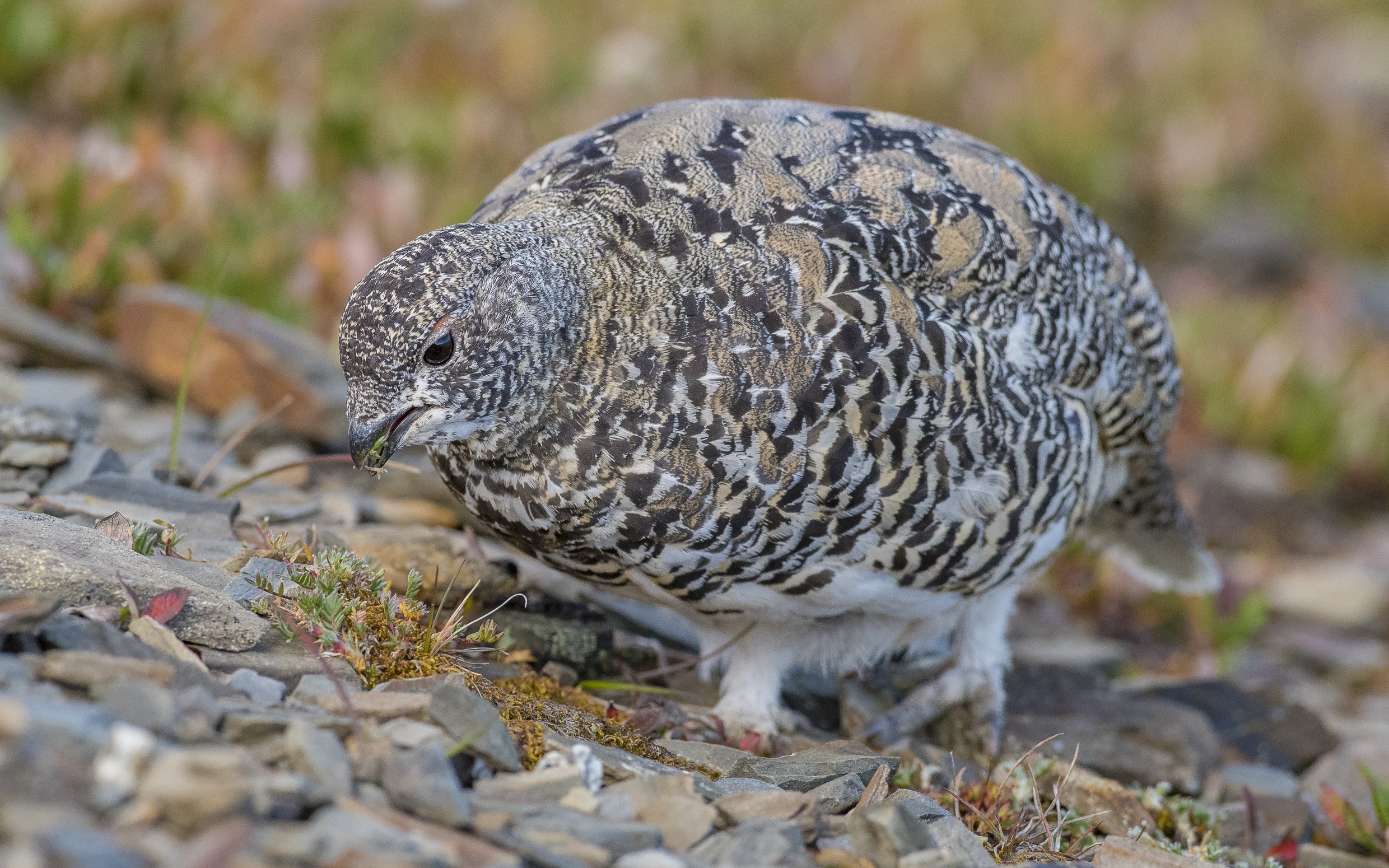
Although we claimed the ‘Christmas Bird’ title for the White-tails partly on the basis of its colour, I have to admit that they’re not always white! As with the Rock and Willow Ptarmigan, the White-tailed Ptarmigan changes colour seasonally: white in winter, but a mottled grey/brown in summer. In any season, their camouflage makes them fiendishly difficult to find. In fact, one of the collective nouns for them is an “invisibleness” of ptarmigan.
Ice breakers
Their ability to hide was brought home a couple of weeks ago when my friend Ken and I were snowshoeing in the mountains, hoping to find some ptarmigan to photograph. We had wandered about in likely habitat (willow shrubs) and had found tracks, but no birds. We had pretty much thrown in the towel and were heading back to the car when a small flock of ptarmigan exploded at our feet.
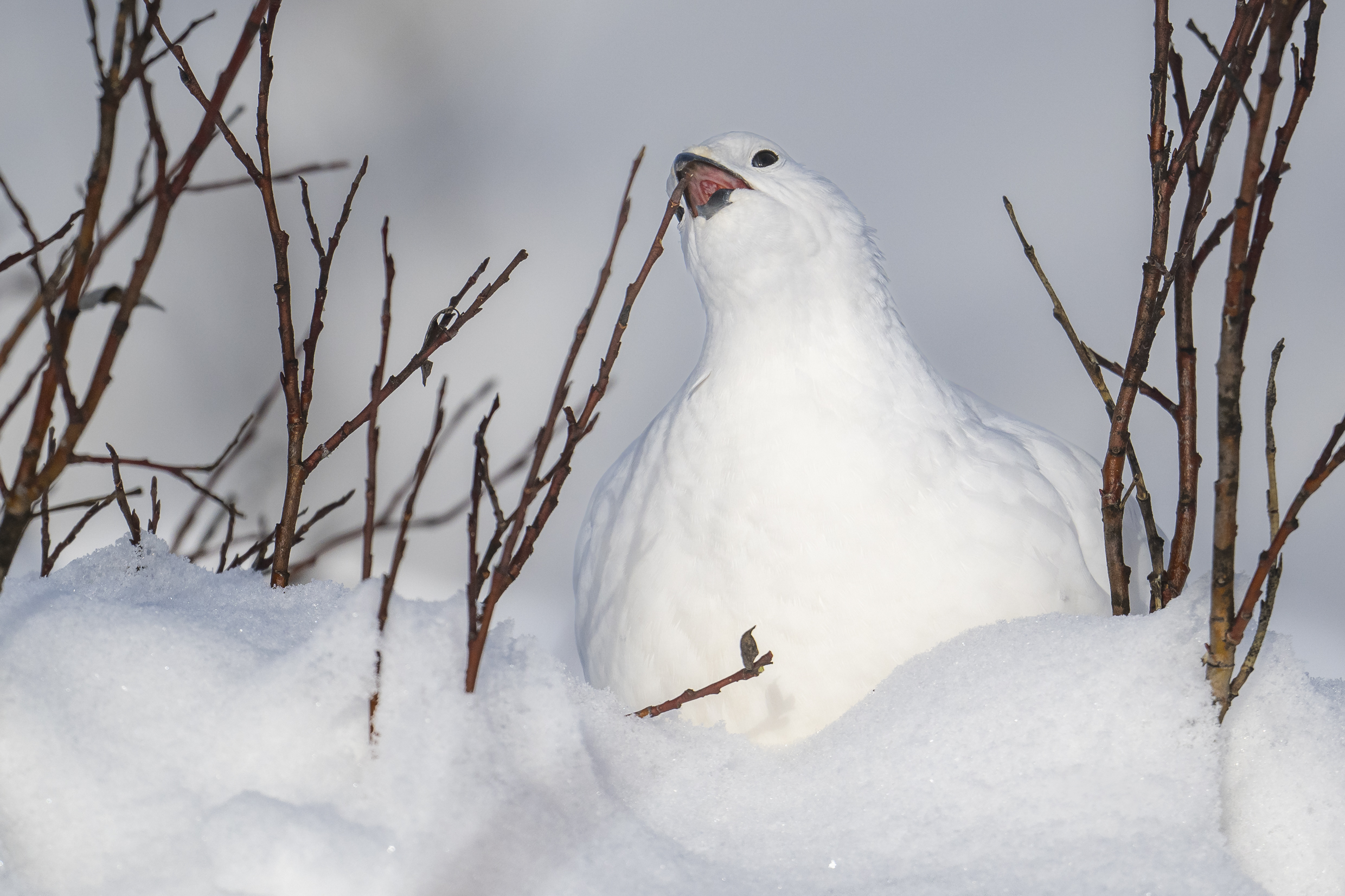
You see, not only are ptarmigans in winter almost entirely white, they will also burrow into the snow to sleep, adding even more to their “invisibleness.” Ken and I spent an enjoyable hour watching the White-tailed Ptarmigan walking around, foraging on willow buds. We even got to see them sink below the snow and then re-emerge after a nap!

So, this holiday think festive thoughts about the Jasper ‘Bird of Christmas’ and if at your holiday parties the conversation starts to lull, don’t be afraid to bring up the White-tailed Ptarmigan—the (mostly) undisputed MCBOAT.
Merry Christmas!
Mark Bradley // info@thejasperlocal.com