

The Pacific Decadal Oscillation is still being studied, but high water events in the Rockies offer clues
Medicine Lake has breached its banks for the fourth year in a row.
To visitors, the event is an interesting but perhaps unremarkable sight on their tour of many Rockies waterbodies.
To kayakers in the know, the event used to be a cue that a world-class rapid had come into shape.
But to a river scientist from the University of Lethbridge, the occurrence has not as much to do with climate change as it has to do with a reoccurring, less-understood phenomenon called the Pacific Decadal Oscillation.
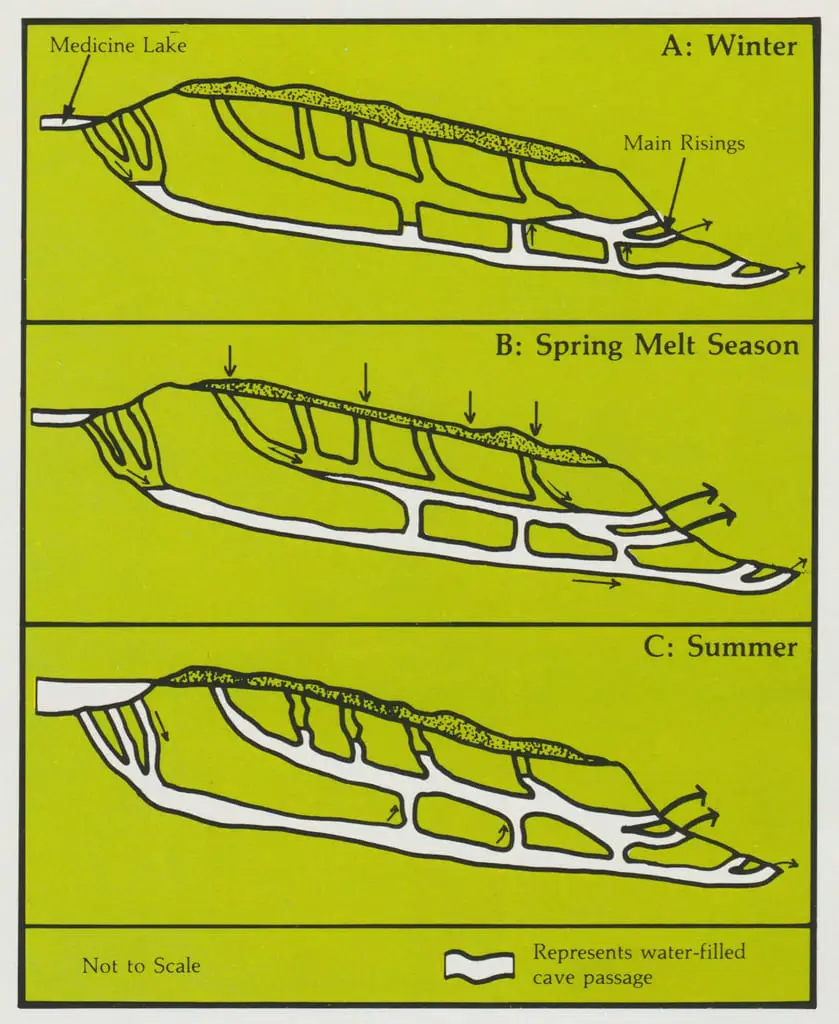
As Medicine Lake’s water rises over the lake’s rim, it flows into the steep gradient adjacent to the basin. If there is enough water volume, the ravine soon hosts a foaming, frothing torrent which, in July in Jasper National Park, hurtles itself past about 1,000 tourists per day on the Maligne Lake Road.
It used to happen every 10 years or so. But Jasper naturalist Volker Schelhas, who has kept meticulous records on a wide range of ecological occurrences in the area including bird migrations, snow levels, wildlife sightings, turning leaves and unusually-high lake levels, is noticing a new-normal.
“It’s the most frequent we’ve ever seen,” Schelhas said of Medicine Lake’s four-years-running overflow.
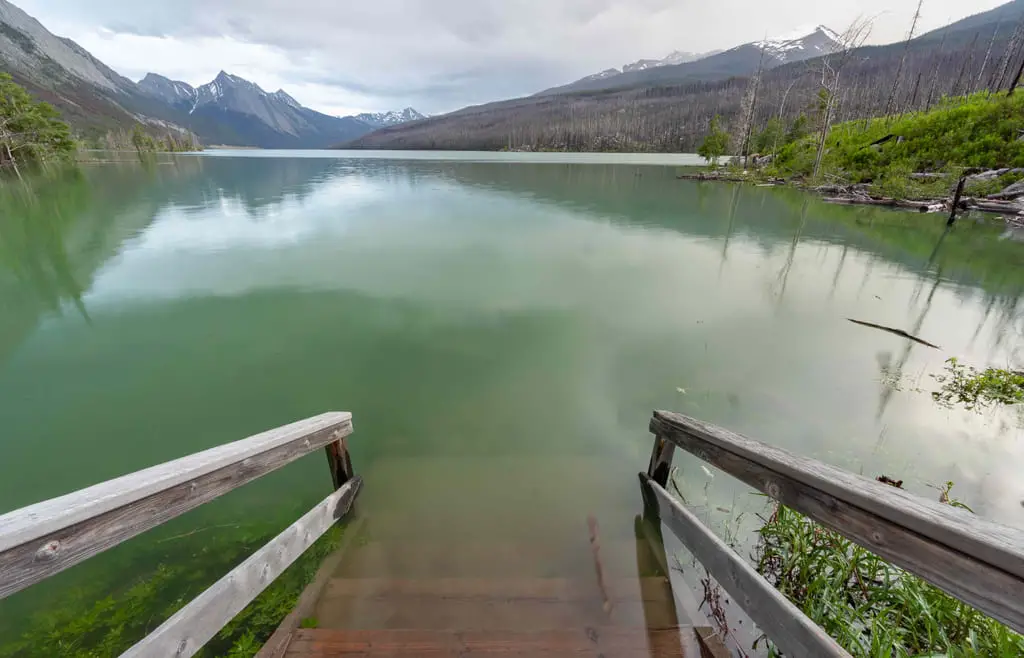
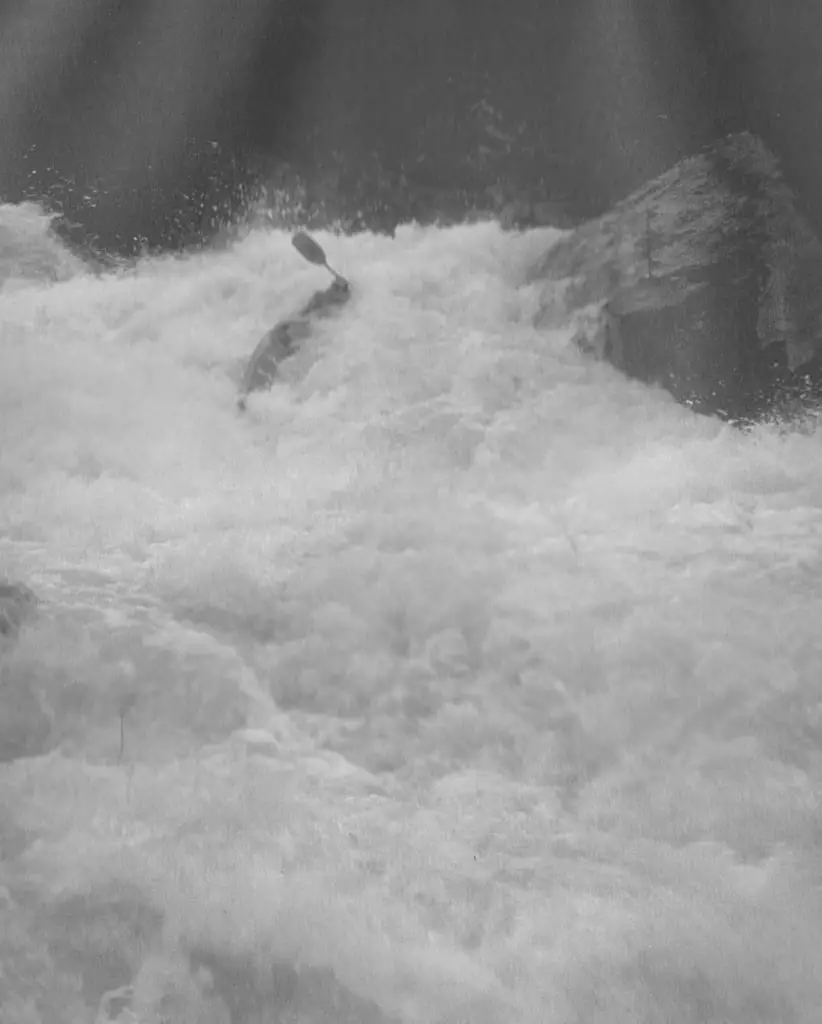
Before 2019, the last time Medicine Lake breached its banks was in 2012. Before that, Medicine Lake was recorded as overflowing in 2002, 1992, and 1990. Whitewater paddlers of a certain vintage have those dates etched into memory. The surge of water creates a massive wave and boulder-strewn run known as Excalibur.
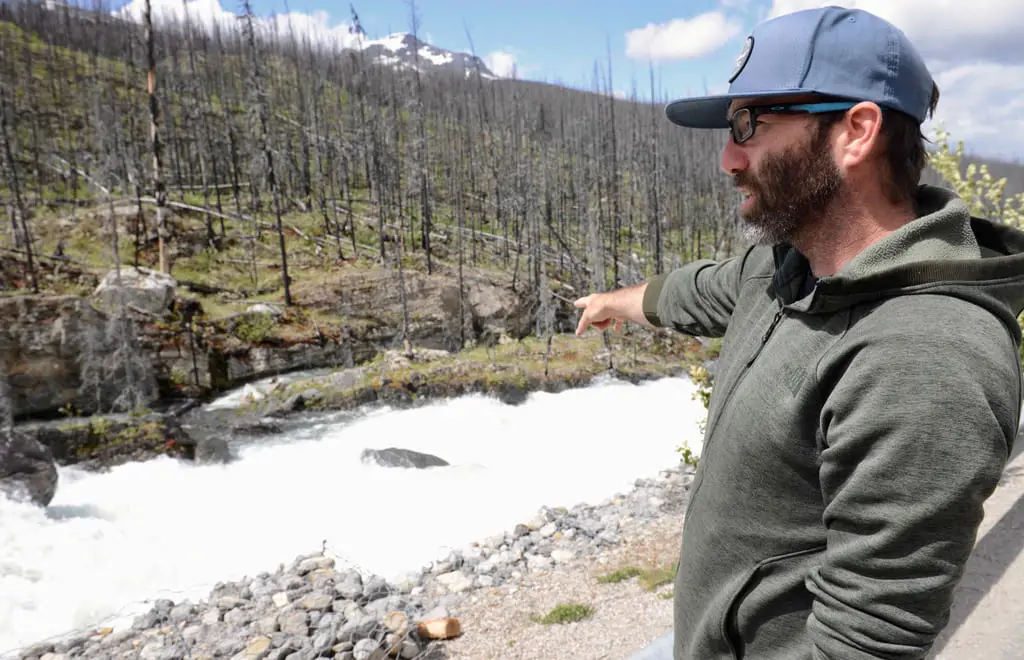
“You have to watch out you don’t get caught in that big hole,” long-time Jasper paddler Shawn Allen said, pointing into a boiling, gurgling void. “Not many people have run it twice.”
Steward Rood was a strong paddler who boated with the Alberta kayak team in the 1990s. But he wouldn’t have toyed with the drop, even in his prime, he said.
“It’s just so big and so fierce,” he said.
These days, Rood is interested in the overflowing lake for a different reason. Rood is a hydrologist studying the Pacific Decadal Oscillation (PDO). PDO relates to the surface temperature of the Pacific Ocean, says Rood, the author of Declining summer flows of Rocky Mountain rivers: Changing seasonal hydrology and probable impacts on floodplain forests.
“When you have warm water off Vancouver Island, the Rockies tend to be warmer and drier,” Rood said.
The PDO was first noted as corresponding to salmon catches, since it changes fish behaviour along Canada’s west coast. It has since shown up in reconstructed hydrology cycles in watersheds like the Athabasca River. Scientists have data going back more than a century on the Athabasca—it’s the oldest, most continuous hydro station for any North American river flowing to the Arctic Ocean—so they can look back for high water/flood history, among other events.
Searching those models for patterns, “the strongest signal is the correlation with the PDO,” Rood said.
Most paddlers—most people, for that matter—likely wouldn’t have heard of the Pacific Decadal Oscillation. But it is Rood’s hypothesis that this phenomenon is contributing to the more-consistent overflowing of Medicine Lake, among other wet-dry cycles in the Rockies.
2012 was the same summer that kayakers last boated there. The reason they haven’t been back is due to the Excelsior Creek wildfire, which burned there in 2015.
Excalibur is even more fierce than in the past because in the seven years since the 1,000 hectare fire burned, charcoal-black trees have been laid down by wind and snow, creating snarl upon snarl of jagged, towering deadfall. Because of all the wood, the run is considered unnavigable.
Rood is more concerned that the Maligne River is unmonitored. There hasn’t been a formal gauge in the Maligne system since 1979. If the Water Survey of Canada still maintained a hydrometric station on the Maligne River, river scientists of the future could potentially look back at the precise discharge data of the Maligne system and be able to correspond the overflows with the patterns of the PDO, Rood said. As it stands, the gauge on the Athabasca will have to suffice. Moreover, the PDO is still being understood.
“Climatologists don’t understand what drives the swirling of the massive, warm pools in the Pacific,” Rood said.
They’re working on it, but it’s a difficult phenomenon to grasp because the analyses are retrospective, rather than predictive. They’re seeing a pattern, they think the Pacific is involved, but they can’t yet predict it.
“What I would hypothesize is that part of the variations, and especially the clusters of years in which Medicine Lake is higher and overflows, may well correspond with a particular phase of the PDO.”
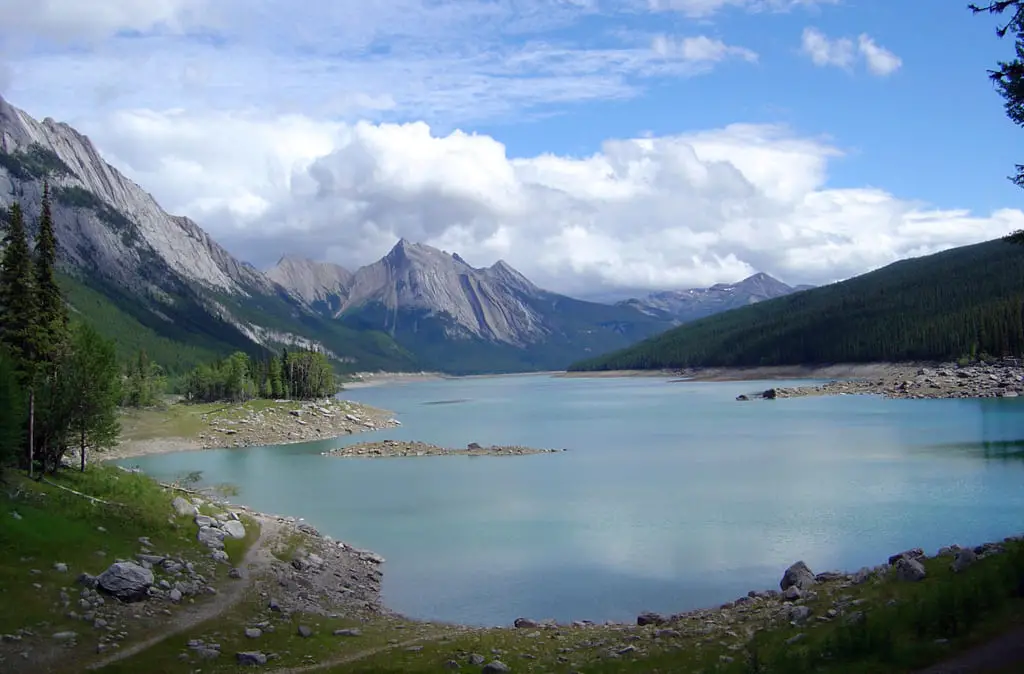
That’s all fine for Allen, who knows that unless the deadfall somehow becomes dislodged from the Medicine Lake outflow, Excalibur will probably remain unnavigable. And it’s probably more than enough information for the average visitor to Jasper National Park, who might click a few photos of the spillover phenomenon en route to a boat cruise on Maligne Lake. But for river scientists such as Rood, understanding why Medicine Lake overflows isn’t just about a curious tourist attraction or an impossible whitewater run. It’s about understanding how mountain water systems behave in a warming climate.
“My view is that while global warming is a big deal, the impact of climate change on water is a bigger deal. We really need to have these data to understand mountain hydrology.”
Bob Covey // bob@thejasperlocal.com