

Protecting Harlequin Ducks means protecting the ecosystems we depend on, too.
Back in the spring of 2005, I made my first visit to the Maligne Outflow bridge as a newly minted Jasper biologist.
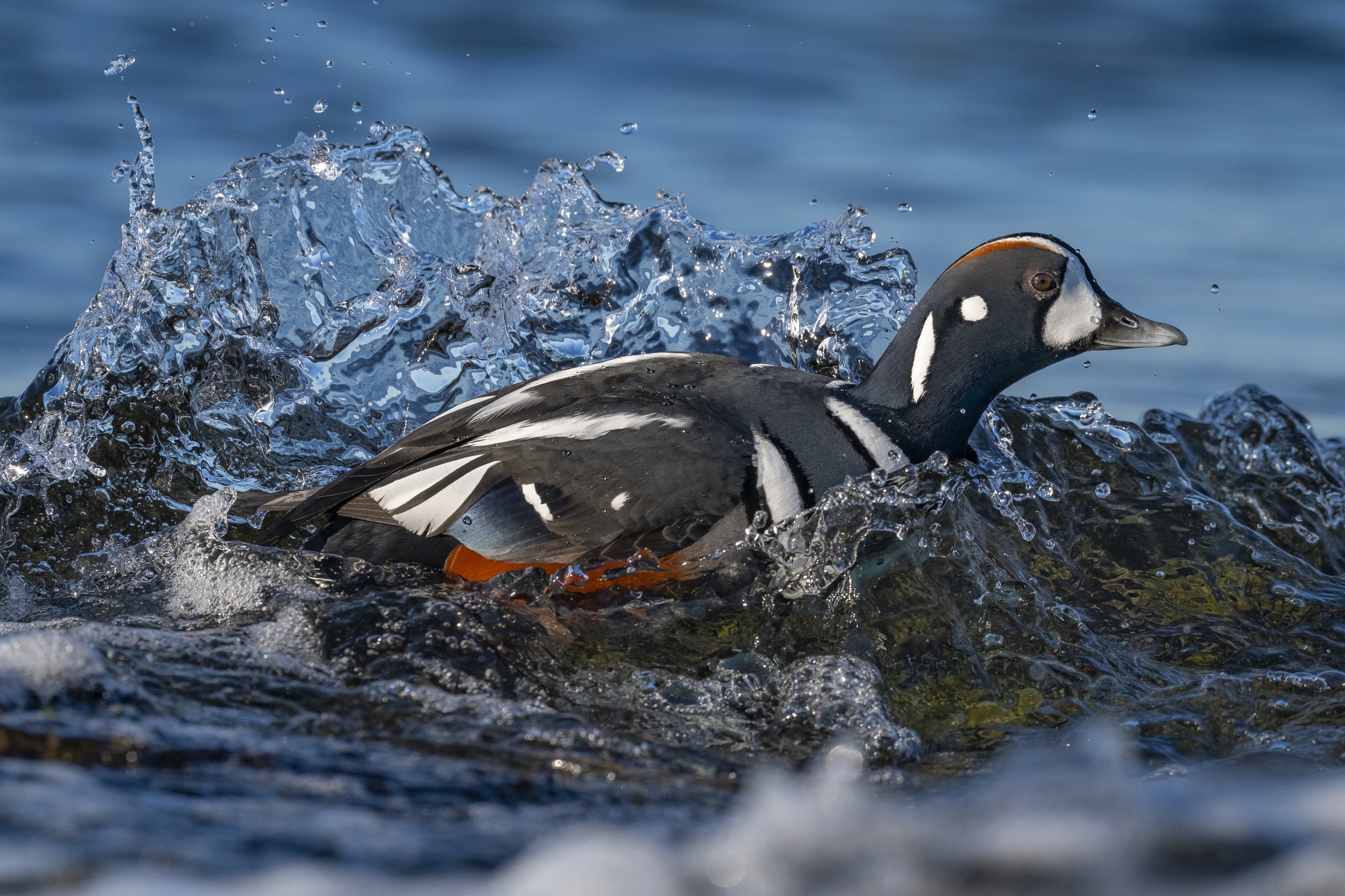
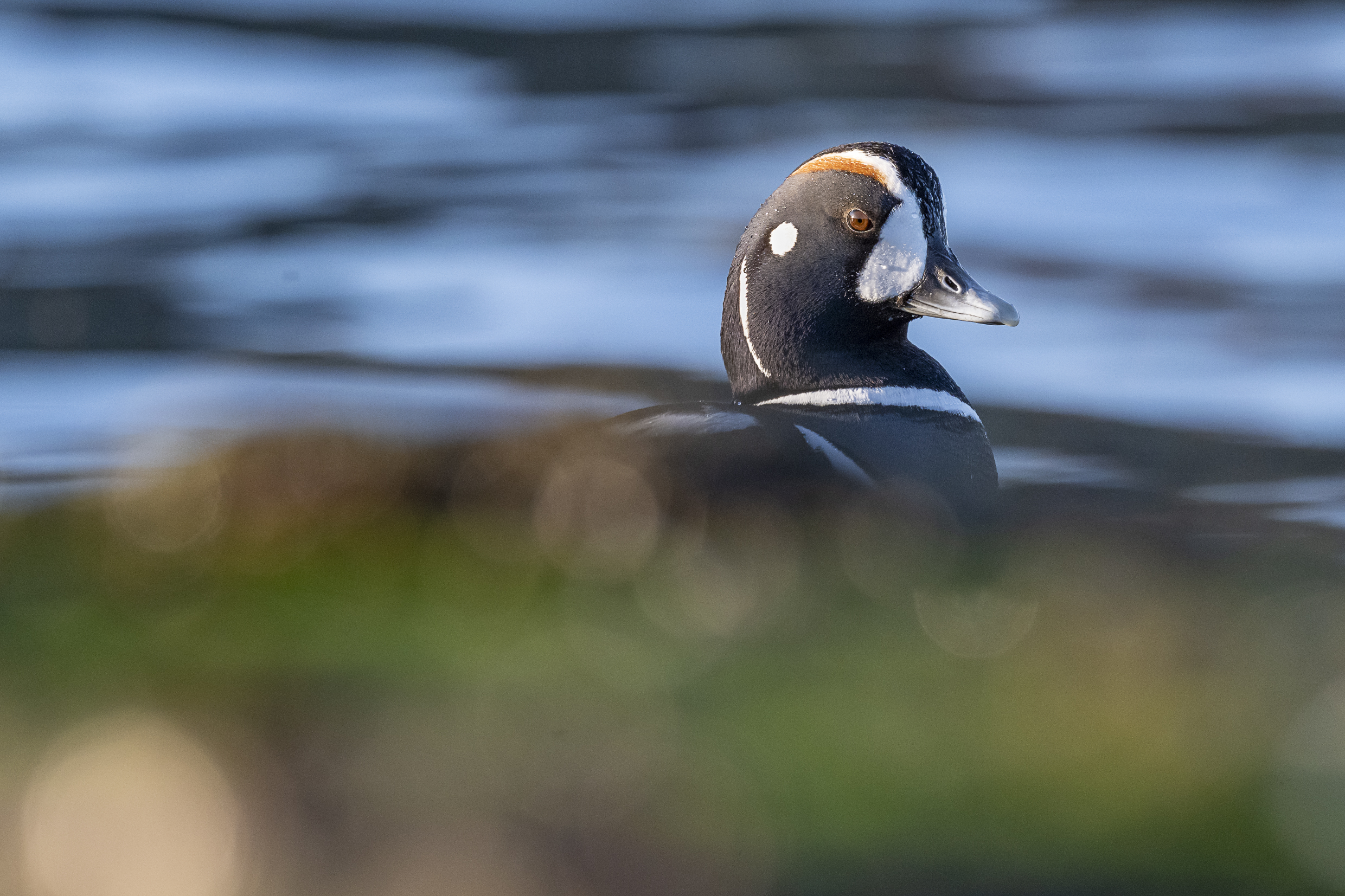
It was a beautiful sunny day. After taking in the sweeping panorama of mountains and lake water, I noticed a group of ducks unlike any I’d seen before. They were dressed in brilliant orange, white, black and rusty red, all set against a subtle blue-grey background.
They were Harlequin Ducks, and it was my first encounter with what is, in my humble opinion, the prettiest duck in the world.
Sure, there are flashy contenders. Wood Ducks are famous for their extravagant colours, and Asia’s Mandarin Duck sports feathers that remind me of the fins on a 1959 Cadillac Eldorado. But to my eye, they’re a little too gaudy. Harlequins have a more refined beauty.
The Skinny on Harlequins
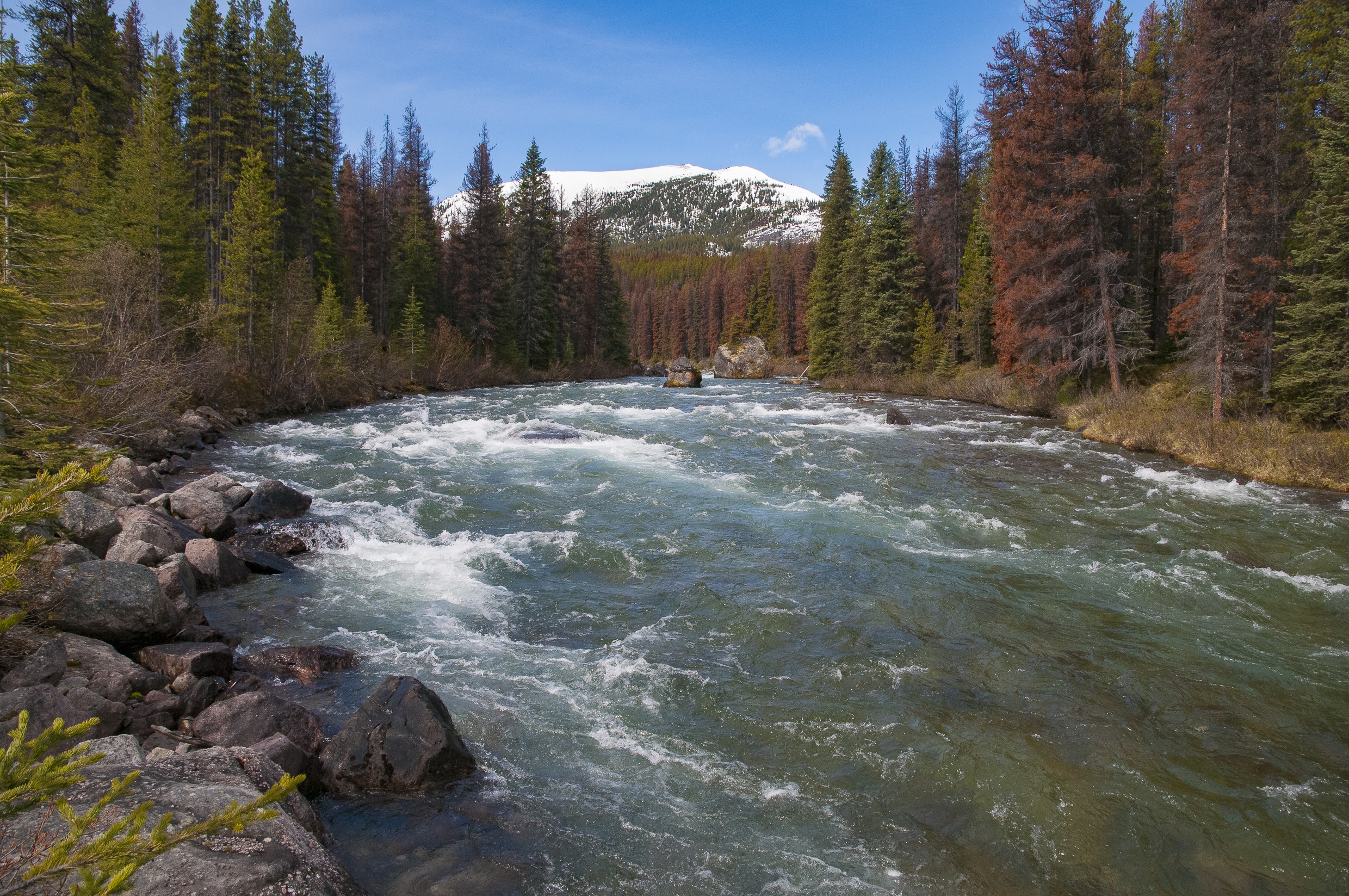
The Harlequin Duck is the only sea duck that breeds along fast-flowing mountain streams.
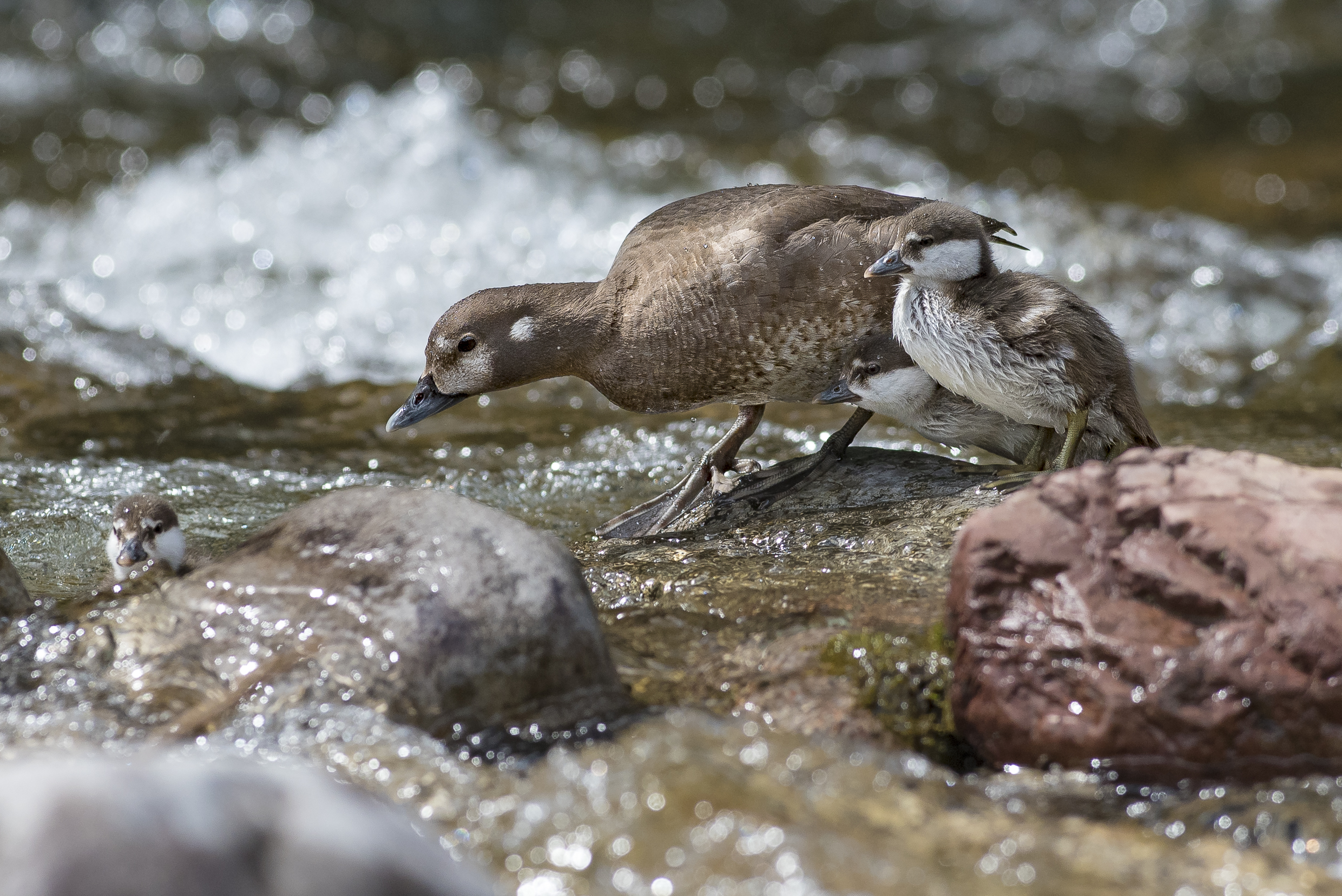
Canada has two distinct populations. Eastern Harlequins breed in Labrador’s Torngat Mountains and spend winters along the Atlantic coast. Western Harlequins breed throughout the Rocky Mountains and winter along the Pacific coast from Alaska to Washington State.
The eastern population is small and federally listed as a Species of Special Concern. Western populations are generally stable, but in Alberta the species is also considered of Special Concern because some populations have been declining for years.
The duck gets its name from the Harlequin characters of 16th-century Italian theatre, recognizable by their colourful costumes and black masks. Its scientific name, Histrionicus histrionicus, translates roughly to “stage actor.”
As ducks go, Harlequins are surprisingly carnivorous. Around Jasper they feed mainly on aquatic insects, though they’ll also eat fish eggs and small fish when the opportunity arises.
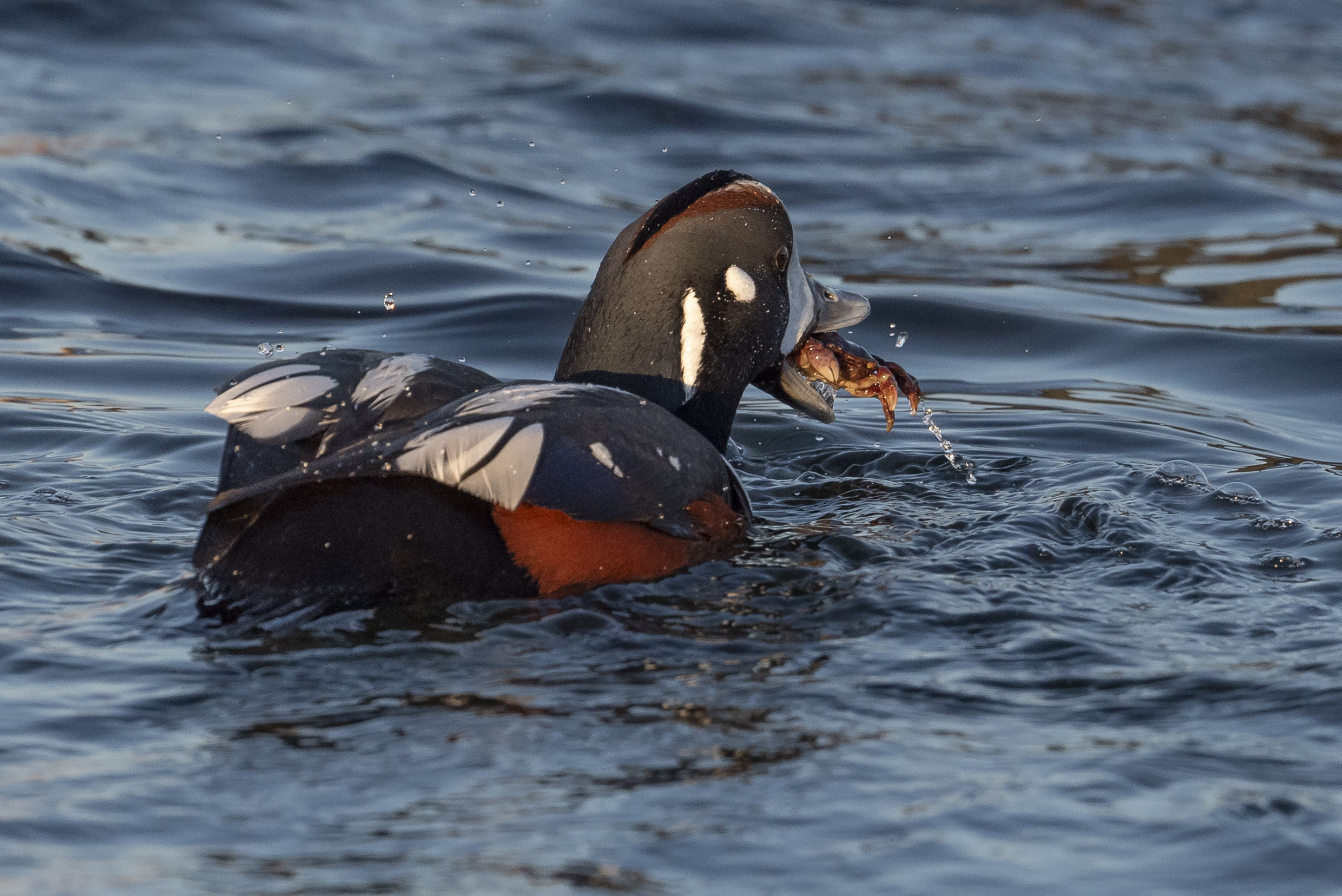
Unlike most birds, they migrate east and west rather than north and south. That’s because their preferred food can be found in mountain streams during summer and along ocean shorelines during winter.
Looking for a Smoking Gun
Sometimes a species declines because of a single, identifiable problem.
Early in my career I studied Peregrine Falcons, a species that nearly disappeared across much of North America in the mid-20th century. The culprit was DDT, a pesticide that accumulated in the food chain and caused widespread reproductive failure in birds of prey.
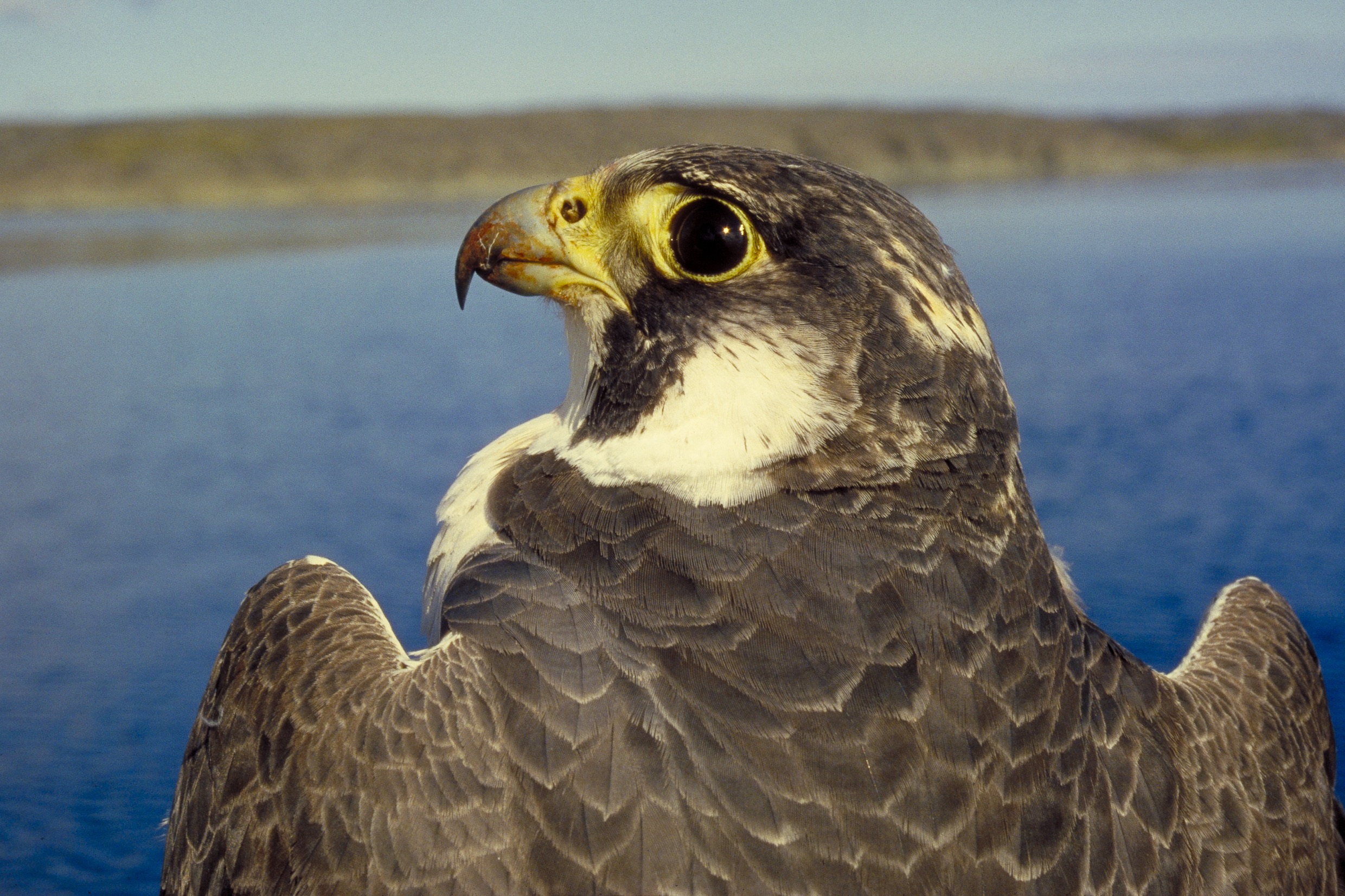
Once DDT was banned and captive breeding programs were established, Peregrine populations rebounded dramatically. By 2023, they had been removed from Canada’s Species at Risk list.
Unfortunately, conservation is rarely that straightforward.
There is no single smoking gun behind Harlequin Duck declines. Unlike adaptable species such as Peregrines, Harlequins are specialists. They depend on a narrow range of habitats: clean mountain streams for breeding and healthy coastal waters for wintering.
When either of those environments is compromised, Harlequins have few alternatives.
Potential threats include:
- Logging, which can increase sediment in streams and reduce insect populations.
- Hydroelectric development, which can alter or destroy breeding habitat.
- Mining, oil and gas development, which can affect water quality.
- Oil spills along the Pacific coast, where many Harlequins spend the winter.
- Climate change, which can both flood nesting streams and alter coastal food supplies.
- Human disturbance, including recreational activities on breeding rivers.
Harlequins occupy only a tiny fraction of the landscape, and not every mountain stream will do. They need specific water conditions, adequate cover and plenty of aquatic insects to raise their young.
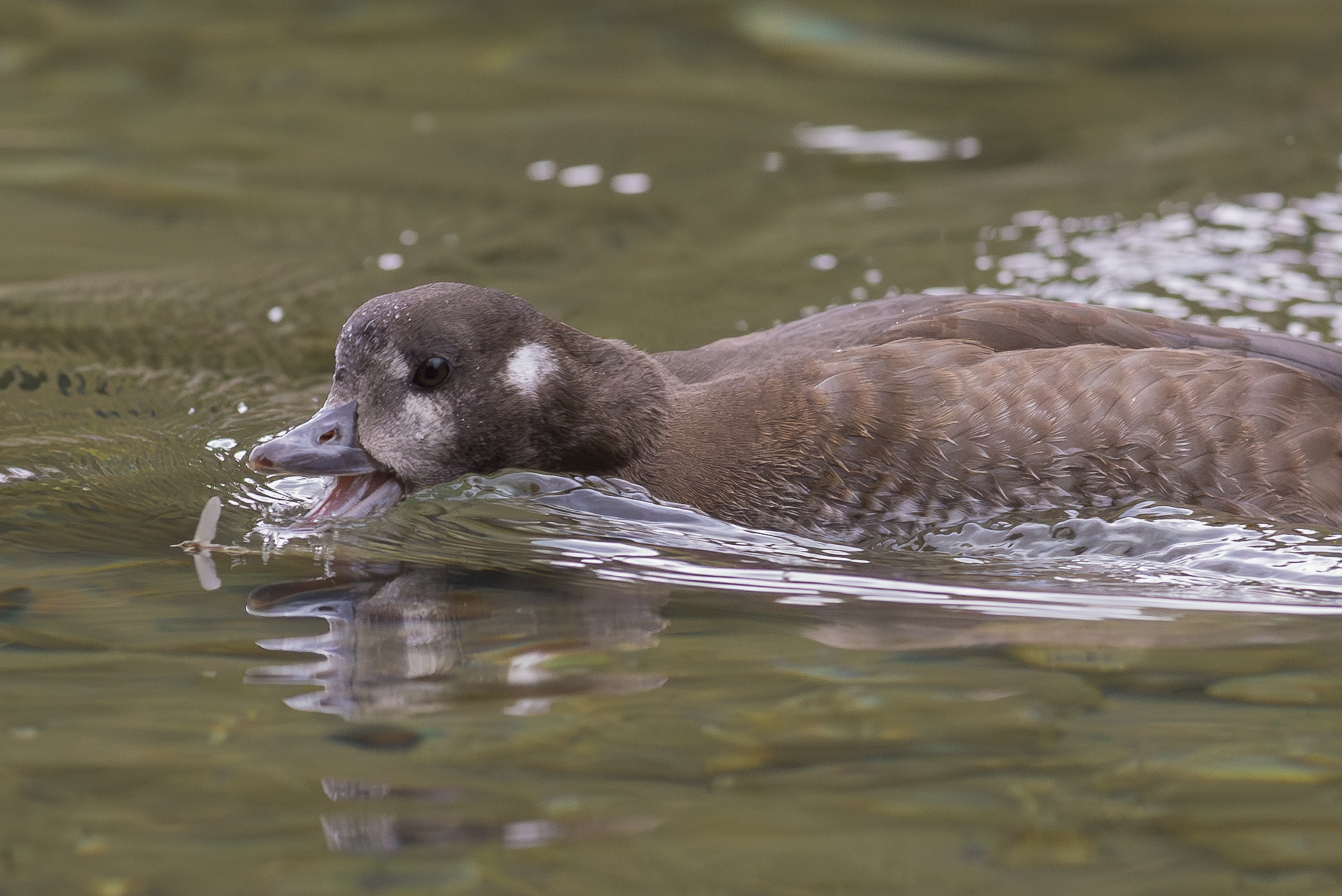
Even repeated disturbances from boats or rafts can push birds away from nesting areas, costing them precious energy and sometimes leading to nest abandonment.
What Harlequins Tell Us About Ourselves
Sensitive species such as Harlequin Ducks can serve as modern-day canaries in the coal mine.
Coal miners once carried canaries underground because the birds were more sensitive to poisonous gases than humans. If the canary stopped singing, miners knew they were in danger too.
Harlequins send us a similar warning.
When species that depend on clean water, healthy streams and intact ecosystems begin to struggle, it’s often a sign that broader environmental problems are developing.
Our new federal government has taken steps aimed at boosting economic growth, but it has also reduced some environmental safeguards and signalled a desire to speed up approvals for major industrial projects.
The challenge is finding the right balance.
Environmental reviews take time because they’re designed, in part, to identify risks before damage occurs. If we rush those decisions in pursuit of short-term economic gains, we may end up paying a much higher price in the future.
Looking after Harlequin Ducks won’t solve every environmental problem. But if we can maintain the clean rivers, healthy coastlines and functioning ecosystems they depend on, chances are we’ll be taking care of ourselves as well.
Mark Bradley // info@thejasperlocal.com